Peleș Castle: Romania's Neo-Renaissance Jewel in the Carpathians
Nestled in the Carpathian Mountains near Sinaia, Peleș Castle is a masterpiece of 19th-century architecture and a window into Romania's royal past.
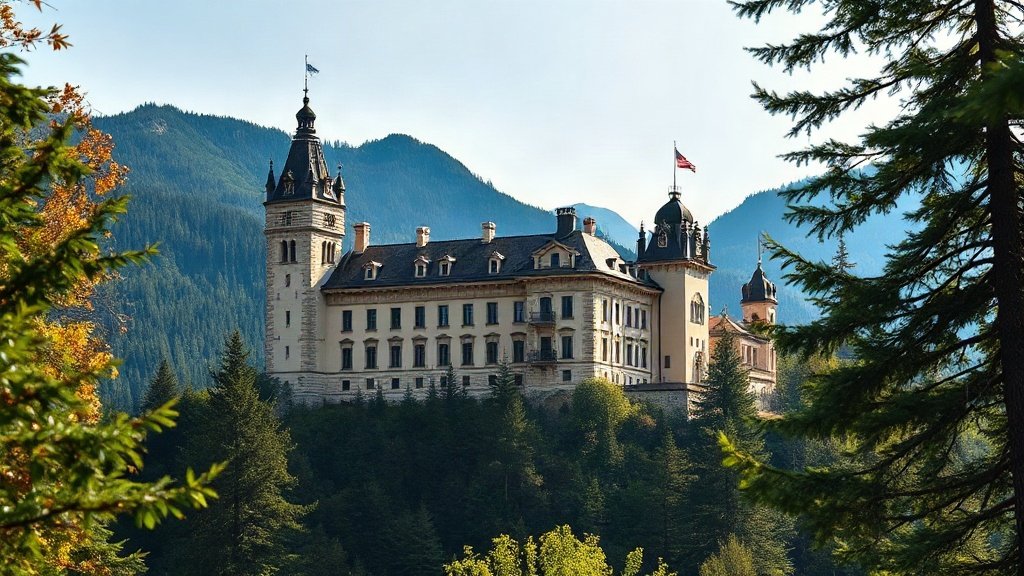
Illustration: AI-generated image
Peleș Castle rises from the forested slopes of the Bucegi Mountains like something out of a fairy tale. Located near the town of Sinaia in Prahova County, this sumptuous palace was commissioned by King Carol I in 1873 and took over four decades to complete. Today it stands as one of Romania's most beloved cultural landmarks, drawing visitors from around the world to admire its architectural splendor and rich interiors.
Unlike the medieval fortresses scattered across Transylvania, Peleș is a relatively modern creation—a summer residence built for comfort and display. Its blend of German Neo-Renaissance, Gothic Revival, and Italianate elements makes it unique in Romania. The castle's location, on the edge of a dramatic mountain valley, adds to its romantic appeal. For anyone interested in architecture, history, or simply beautiful places, Peleș is an essential stop.
A Royal Vision Realised
King Carol I chose the site after falling in love with the wild scenery of the Prahova Valley. Construction began under architect Johannes Schultz, and later continued under Carol Benesch and Karel Liman. The castle was officially inaugurated in 1883, though work on various wings and decorations continued until 1914. It served as the summer residence of the Romanian royal family until 1947, when the monarchy was abolished and the castle was taken over by the state. Since then it has operated as a museum, preserving the opulence of a bygone era.
The castle's exterior is a feast of towers, turrets, balconies, and ornate carvings. Inside, its 160 rooms are decorated in an astonishing variety of styles—from Moorish and Turkish salons to Florentine and French-inspired chambers. The attention to detail is immense: hand-painted ceilings, stained glass windows, carved wood panelling, and collections of art, weapons, and period furniture fill every space. The ground floor's Hall of Honour is particularly impressive, with its walnut panelling and intricate ceiling. The castle also boasted modern conveniences for its time, including central heating and electricity generated on site.
What to See and How to Visit
A visit to Peleș typically includes a guided tour of the ground and first floors. Highlights include the Grand Armoury, which displays one of Europe's finest collections of arms and armour; the Music Room, with its carved wooden ceiling; and the Moorish Salon, an exotic retreat with mother-of-pearl inlay. The castle's terraces offer sweeping views of the surrounding mountains—a perfect spot for photographs. The adjacent Pelișor Castle, built for King Carol I's heirs, is also open to the public and showcases Art Nouveau interiors.
Peleș is easily reached from Bucharest by train or car, with the journey taking about two hours. The town of Sinaia itself is a charming mountain resort, offering plenty of accommodation and dining options. While the castle is open year-round, the best time to visit is between May and October, when the weather is mild and the surrounding gardens are in bloom. Because it is a popular attraction, arriving early in the day is advisable. Photography is generally permitted outside, while interior photography may be restricted or require a separate fee. As with all heritage sites, visitors are encouraged to respect the preservation rules and enjoy the castle's unique atmosphere.