Romania's Wooden Churches of Maramureș: A Guide to Their History and Craftsmanship
Discover the remarkable wooden churches of Maramureș, a UNESCO World Heritage treasure of tall spires, hand-carved details, and centuries of faith.
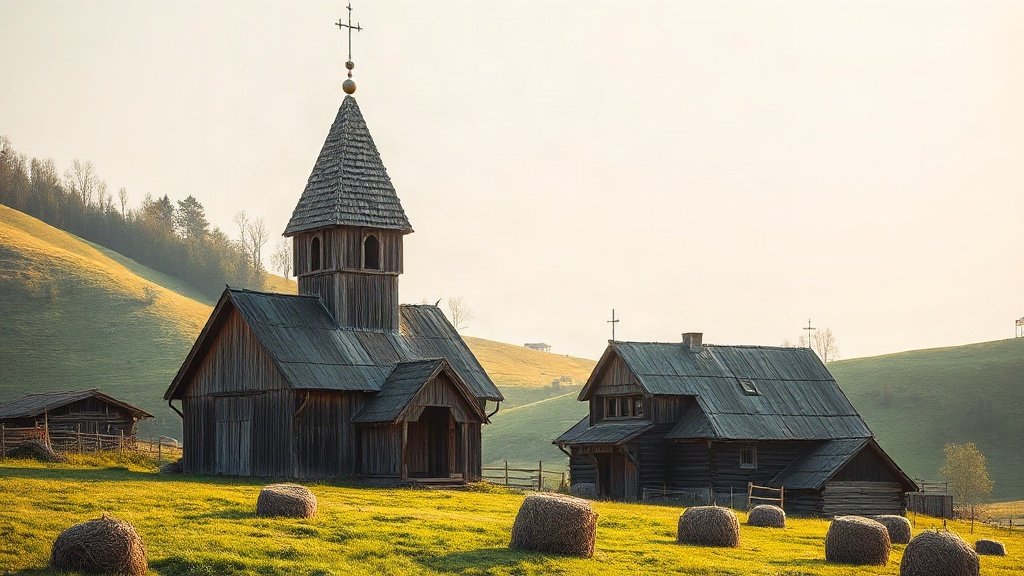
Illustration: AI-generated image
The wooden churches of Maramureș rise from the valleys and hills of northern Romania like slender sentinels of faith. Built entirely from oak and fir without a single nail, they are masterpieces of vernacular architecture and a testament to the region's deep-rooted spiritual and cultural identity. Today, around a hundred of these churches remain, with eight inscribed on the UNESCO World Heritage List as outstanding examples of religious timber construction.
What Makes Them Special
Maramureș wooden churches are instantly recognisable by their tall, tapering spires that often exceed the height of the main body of the church. The spires are not merely decorative; they symbolise a reaching towards heaven and reflect a local tradition that blends Orthodox faith with pre-Christian symbols of the cosmic tree. The churches are built using a technique known as blockbau, where horizontal logs are interlocked at the corners. The walls are relatively low, while the roof towers above, often with multiple tiers and overhanging eaves that protect the timber from rain.
History and Origins
The tradition of building wooden churches in Maramureș dates back several centuries, with the oldest surviving examples from the 17th and 18th centuries. During periods when stone churches were forbidden or unaffordable for local communities, wood became the primary material. Skilled carpenters and master builders passed down their knowledge through generations, creating structures that could last for centuries with careful maintenance. The churches served not only as places of worship but also as community centres and landmarks visible from great distances.
Architectural Features
Inside, the churches are small and intimate, often divided into three main sections: a pronaos (narthex), a naos (nave), and an altar area. The interiors are decorated with mural paintings, some executed by local artists in a distinctive naive style. Biblical scenes, saints, and floral motifs cover walls and vaults, often in vibrant colours. The iconostasis—a screen separating the nave from the altar—is often elaborately carved and painted. The low doorways, some only a metre high, were designed to force visitors to bow upon entering, a physical act of humility.
Visiting the Churches
The most celebrated wooden churches are spread across several villages, including Bârsana, Ieud, Poienile Izei, and Rogoz. Each church has its own character and history. Visitors are welcome, but it is important to remember that these are active places of worship; modest dress and quiet behaviour are appreciated. The surrounding landscapes of the Iza and Mara valleys add to the experience, with haystacks, orchards, and traditional wooden gates framing every view. A journey through Maramureș in search of these churches is as much about the scenery and village life as it is about the buildings themselves.
Preservation and Significance
The wooden churches of Maramureș are not frozen museum pieces; many still host regular services and holidays. Local communities are deeply involved in their upkeep, which requires periodic re-shingling of roofs and conservation of paintings. The UNESCO designation has helped raise awareness and support for preservation efforts, but the churches remain first and foremost living monuments of faith. They embody a harmonious relationship between people, landscape, and craft that continues to inspire visitors from around the world.