Alba Iulia: A Visitor's Guide to Romania's Star-Shaped Citadel
Alba Iulia's mighty Vauban fortress is a highlight of Transylvania, combining 18th-century military architecture with a pivotal moment in Romanian history.
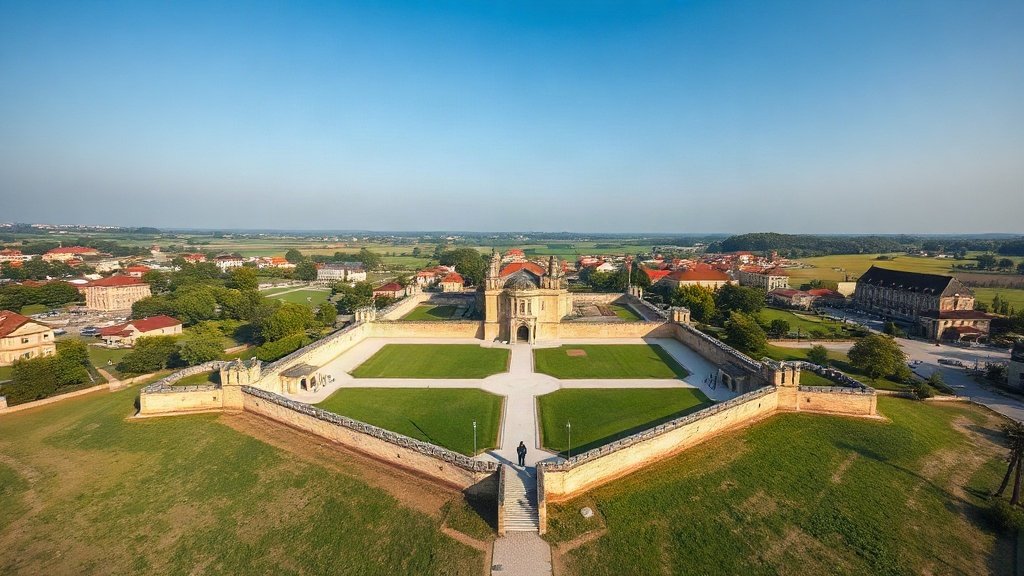
Illustration: AI-generated image
Few places in Romania pack as much history into one walkable area as Alba Iulia. The city's vast, star-shaped citadel—built in the early 18th century on the site of older fortifications—is the largest Vauban-style fortress in the country and a major draw for visitors to Transylvania. Whether you are a history enthusiast, an architecture lover, or simply looking for a pleasant day out, the citadel offers a rich blend of military engineering, religious landmarks, and symbolic national heritage.
Known in Romanian as Cetatea Alba Carolina, the fortress was constructed between 1715 and 1738 under Habsburg rule. Its seven bastions and four grand gates form a near-perfect star when seen from above, a design that made it exceptionally difficult to attack. Today, the entire complex is open to the public, and walking its ramparts or strolling through its quiet streets feels like stepping into a living history book.
Why Alba Iulia Matters
Alba Iulia holds a special place in Romanian hearts. On 1 December 1918, the Great National Assembly met here and proclaimed the union of Transylvania with Romania—an event now celebrated as Romania's National Day. The citadel's Union Hall and the nearby Coronation Cathedral are powerful reminders of that moment. Even without a deep knowledge of the details, visitors can sense the weight of history in the carefully restored buildings and monuments.
What to See Inside the Citadel
The citadel is not an empty shell; it contains a small historic town with several important sights:
- The Roman Catholic Cathedral of St. Michael—one of the oldest cathedrals in Transylvania, with a mix of Romanesque and Gothic elements.
- The Orthodox Coronation Cathedral—built in the 1920s to commemorate the coronation of King Ferdinand and Queen Marie as rulers of Greater Romania.
- The Union Museum—housed in the former Habsburg military barracks, it tells the story of the 1918 union and regional history.
- The Third Gate and the Obelisk of Horea, Cloșca, and Crișan—a monument to the leaders of the 1784 peasant uprising, who were executed on this spot.
- The changing of the guard—a ceremonial event that takes place regularly at one of the main gates, with soldiers in period uniform.
Most visitors enter through the Third Gate, the most ornate of the four, which leads directly onto the main street. From there, it is easy to explore on foot, and information panels provide useful context in several languages.
Walking the Walls and Practical Tips
One of the best ways to appreciate the citadel's scale is to walk along the top of the walls. The full circuit takes about 40 minutes at a leisurely pace and offers views over the moat (now a grassy ditch) and the surrounding city. The ramparts are mostly level and accessible, though some sections have steps.
There is no entry fee to wander inside the citadel, and it is open at all hours, though museums and certain attractions have their own schedules. Parking is available outside the walls, and the historic centre is small enough to cover on foot. Cafés and restaurants line the main street, making it easy to pause for a coffee or a traditional meal.
Alba Iulia is well connected by train and bus from major cities such as Cluj-Napoca, Sibiu, and Bucharest, so it makes an easy day trip or a relaxed overnight stop. The citadel is especially atmospheric in the late afternoon, when the low sun warms the brick walls and the crowds thin out.