Scoarțe: The Art and Meaning of Romania's Woven Wool Rugs
From the loom to the living room, scoarțe are more than floor coverings — they are woven stories of Romanian village life, colour and protection.
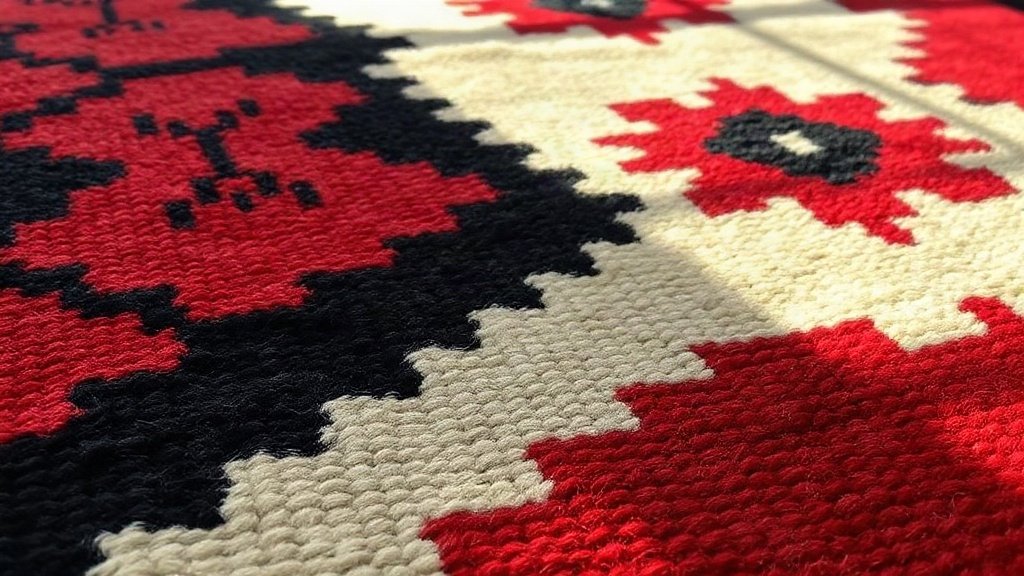
Illustration: AI-generated image
In villages across Romania, the rhythmic clatter of the wooden loom has long accompanied the turning of seasons. From this daily work emerges scoarța (plural: scoarțe), a hand-woven wool rug that is far more than a household item. For centuries, these textiles have wrapped homes in colour, warmth and protective symbols, making them a cherished piece of Romania's living folk art.
What are scoarțe?
Scoarțe are thick, double-sided rugs woven on horizontal or vertical looms using natural wool, usually from local sheep. The word "scoarță" originally means "bark" or "crust", reflecting the rug's role as a protective layer — just as bark shields a tree. Traditionally, they were woven by women, often in the long winter months when agricultural work paused, and they served both practical and decorative purposes: covering beds, benches, walls, and floors.
Unlike many commercial rugs, scoarțe are woven with the weft completely covering the warp, producing a dense, sturdy fabric that can last for decades. The wool is hand-spun and often dyed with natural pigments derived from plants, bark, and insects, though modern pieces may use synthetic dyes. The result is a rich palette of deep reds, blacks, greens, yellows, and undyed cream.
Regional patterns and meanings
Every region of Romania has its own distinctive motifs, passed down through generations. In Maramureș, rugs often feature bold geometric patterns in red and black, with stripes and zigzags that echo the carved wooden gates of the region. In Oltenia and Muntenia, you'll find more curvilinear designs, such as spirals, rosettes, and the "tree of life", symbolising fertility and continuity. In Transylvania, particularly in Saxon and Hungarian-influenced areas, scoarțe may incorporate more floral or stylised animal motifs, reflecting a blend of cultures.
Common symbols include the rhombus (protection), the ram's horn (strength), the sun wheel (life-giving energy), and the "hook" or "wolf's tooth" (a defence against evil). Colours also carry meaning: red for life and passion, black for the earth and stability, green for nature and hope. These rugs were not just decoration; they were a silent language of beliefs, blessings, and identity.
How scoarțe are made
The process begins with shearing sheep, washing and carding the wool, and spinning it into yarn. The warp is set up on a loom, often a vertical frame that can be leaned against a wall. The weaver then passes the weft threads over and under the warp, packing each row tightly with a wooden comb or beater. Traditional scoarțe are woven with a technique called "tapestry weave" or "slit weave", where coloured weft threads are worked in sections to create the pattern, leaving small slits that are later sewn closed for durability.
This method allows for great freedom in design, as the weaver can change colours and motifs row by row. Many scoarțe are woven in two identical halves on a narrow loom and then sewn together, which explains the vertical seam often visible in antique pieces. A single rug can take weeks or even months to complete, depending on size and complexity.
Uses and traditions
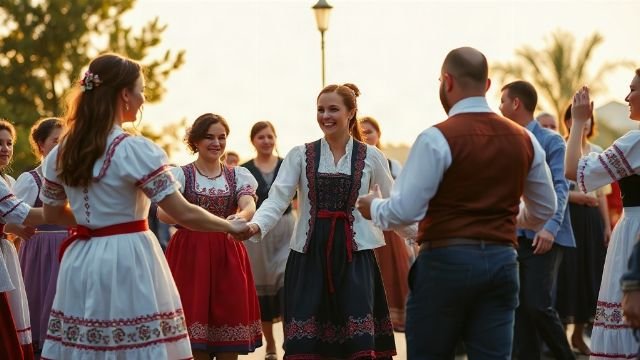
In rural homes, scoarțe were hung on walls as insulation and decoration, spread over beds as blankets, placed on benches and carts, and given as dowry items. A bride's trousseau always included several scoarțe, which demonstrated her skill and her family's status. They were also used in religious settings, such as covering icons or church floors, and during ceremonies like weddings and funerals. Today, while fewer women weave for daily necessity, scoarțe are prized as folk art, collected by museums and enthusiasts, and used in modern interiors to add warmth and authenticity.
Visitors to Romania can admire scoarțe in ethnographic museums across the country, such as the National Museum of the Romanian Peasant in Bucharest or the Village Museum, and in many private collections. Learning to read their patterns is like deciphering a map of Romania's cultural landscape — thread by thread, colour by colour, a story of resilience and beauty.