How to Paint Romanian Easter Eggs: A Guide to Încondeiere
Discover the ancient craft of încondeiere, Romania's wax-resist Easter egg decoration. Learn the symbolism, materials, and basic technique to create your own traditional eggs.
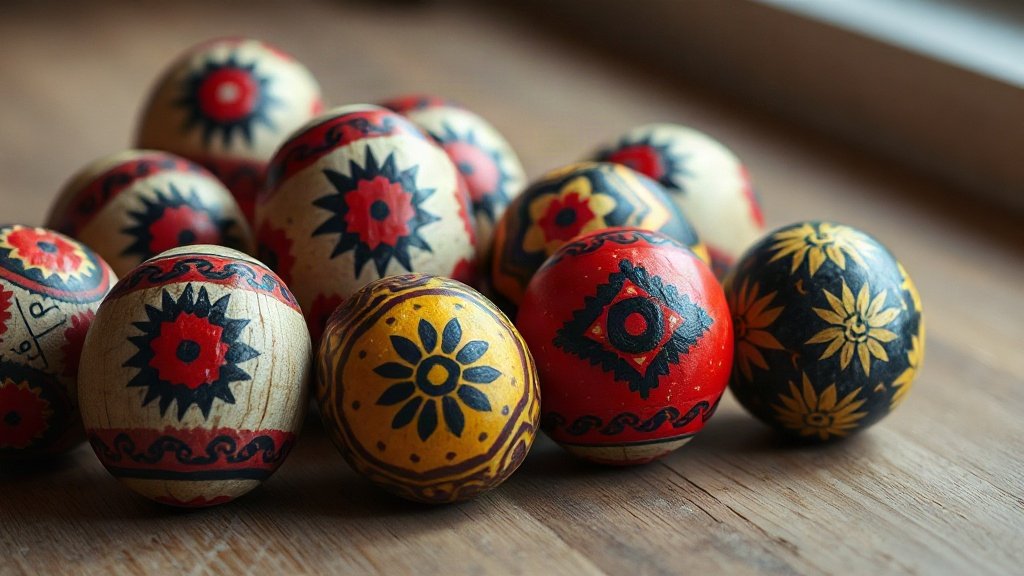
Illustration: AI-generated image
Încondeiere is the traditional Romanian art of decorating Easter eggs using a wax-resist method. The word comes from "condei," meaning a writing instrument, because patterns are drawn with a small tool dipped in hot wax before the egg is dyed. This craft is practised across Romania, but it is especially associated with the region of Bucovina, where intricate geometric and floral designs have been passed down through generations. Painted eggs are not just a springtime decoration; they are rich in symbolism, representing renewal, protection, and the continuity of life.
The technique dates back centuries and was originally connected to pre-Christian spring rituals. Over time, it became integrated into Orthodox Easter celebrations, with eggs blessed in church and exchanged as gifts. Today, încondeiere remains a living tradition, often taught in schools and workshops, and many families still create their own eggs each year.
Understanding the Symbols on Romanian Easter Eggs
Every motif on a traditional Romanian Easter egg carries meaning. The most common symbols include:
- The sun – represented by circles, spirals, or rosettes, symbolising life and energy.
- The cross – a Christian symbol of faith and protection.
- The tree of life – often shown as a branching motif, representing growth and connection.
- Waves and lines – signifying water, purification, and the flow of time.
- Animals – such as stags, horses, or birds, each with specific meanings like strength or freedom.
- Geometric patterns – zigzags, triangles, and diamonds that may represent cultivated fields, mountains, or the continuity of life.
The colours also have traditional significance. Red is the most important, symbolising life, blood, and the sacrifice of Christ. Black represents eternity and the unknown, yellow stands for light and harvest, and green signifies nature and hope.
Materials and Preparation
To practise încondeiere at home, you will need a few simple materials. Traditionally, eggs are emptied of their contents by piercing small holes at each end and blowing out the yolk and white. The empty shells are then cleaned and left to dry. Some artisans prefer to work with boiled eggs, but hollow eggs last longer and are easier to preserve.
The wax used is usually beeswax, which melts at a low temperature and adheres well to the shell. A special tool called a chișiță (or condei) is used to apply the wax. It consists of a small wooden handle with a tiny metal funnel at the end, which holds a drop of molten wax. If you do not have a traditional tool, a fine paintbrush or even a pinhead can be used, though with less precision.
For dyes, natural ingredients are traditional. Onion skins produce a rich reddish-brown, red beetroot gives a deep red, walnut shells create a dark brown, and various leaves or flowers can yield greens and yellows. Synthetic dyes are also commonly used today, as they offer brighter and more consistent colours.
Step-by-Step Technique
The basic process is straightforward but requires patience:
- Prepare the egg: clean the shell and, if desired, empty it. Let it dry completely.
- Melt the beeswax in a small container over low heat. Keep it warm but not smoking.
- Dip the tip of the chișiță into the wax to pick up a small amount.
- Draw your design on the eggshell. Start with the outlines and major motifs. The wax will harden quickly, protecting those areas from the dye.
- When the first wax layer is complete, place the egg in a light dye bath (usually yellow). Leave it for a few minutes, then remove and let dry.
- Add more wax to cover areas that should remain yellow, then dye the egg in a darker colour, such as red. Repeat this process as many times as desired, going from light to dark dyes.
- After the final dyeing, let the egg dry completely. Then gently warm the egg (for example, over a candle flame or in a warm oven) to melt the wax. Wipe it off with a soft cloth to reveal the colourful design underneath.
- Optionally, coat the finished egg with a thin layer of oil or varnish to add shine and protect the colours.
The wax-resist method means that the areas covered by wax in each step resist the next dye, building up layers of colour. Skilled artisans can create incredibly complex designs with dozens of steps, but even a simple two-colour egg can be beautiful.
Tips for Beginners
- Start with a simple design on a boiled egg to practise wax application before moving to hollow shells.
- Keep the wax hot enough to flow smoothly but not so hot that it smokes or burns the shell.
- Work in a well-ventilated area if using synthetic dyes or heating wax.
- Be gentle when handling hollow eggs; they are fragile.
- If you make a mistake, you can gently scrape off the wax with a warm knife and redraw the line.
- Allow plenty of time: traditional eggs are not rushed. Enjoy the meditative process.
Încondeiere is a beautiful way to connect with Romanian culture, whether you live in the country or simply admire its crafts from afar. With a little practice, you can create your own symbolic eggs to display, give as gifts, or keep as family heirlooms.