Ciorbă de Perișoare: Romania's Hearty Meatball Soup
A comforting bowl of sour soup with tender meatballs, rice and herbs – Ciorbă de Perișoare is a classic Romanian dish you can easily make at home.
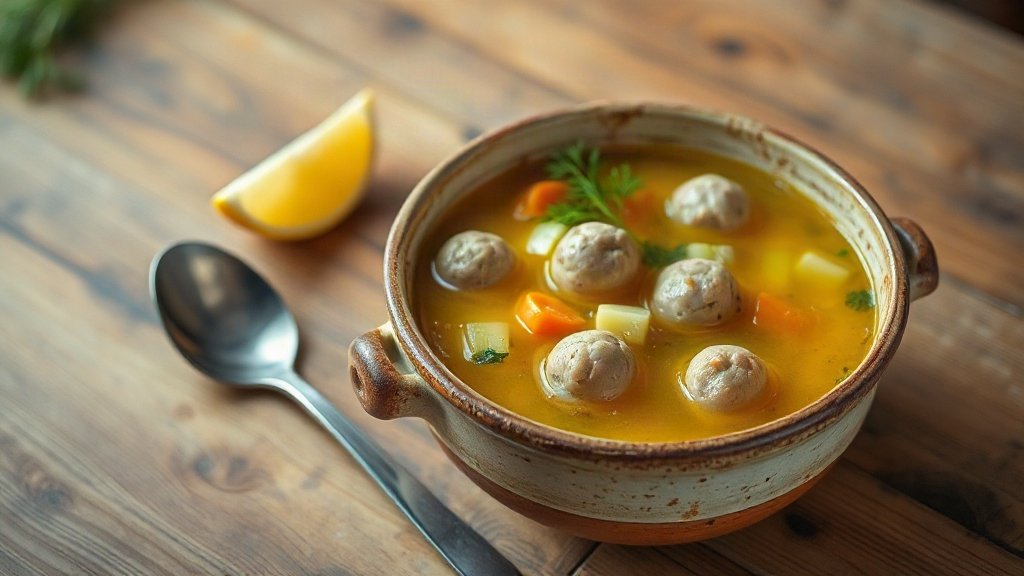
Illustration: AI-generated image
Ciorbă de perișoare is a beloved sour soup found on tables across Romania, especially when the weather turns cold. Translating roughly to "meatball soup," it combines tender, herby meatballs with a tangy broth enriched with rice and vegetables.
Unlike many Western soups that rely on cream or stock for depth, this dish gets its distinctive character from a souring agent – traditionally borș, a fermented wheat bran liquid, though lemon juice or vinegar are common substitutes. The result is a comforting, slightly acidic soup that feels both hearty and refreshing.
What is Ciorbă de Perișoare?
Ciorbă de perișoare is a staple of Romanian home cooking and a regular feature on restaurant menus, often served as a starter before a main course. It belongs to the broad family of Romanian ciorbe – sour soups that range from clear vegetable broths to rich meaty stews. The word "perișoare" means "little pears," a nod to the shape of the meatballs, which are typically rolled into small ovals.
The soup is appreciated for its balance: the meatballs provide substance and savoury depth, while the sour broth cuts through the richness, making each spoonful feel lighter than it is. It is a common sight at family lunches, particularly on Sundays or during the colder months, and is considered one of the most comforting dishes in the Romanian repertoire.
Key Ingredients and Flavours
The meatballs are usually made from minced pork, sometimes mixed with beef for extra flavour. To the meat, home cooks add finely chopped onion, garlic, raw rice, an egg as a binder, and generous amounts of fresh herbs – dill and parsley are essential. The rice swells as the meatballs simmer, giving them a soft, almost fluffy texture.
The soup base is built on classic aromatics: carrots, celery, onion and sometimes parsnip, all finely diced or grated. Tomato paste or fresh tomatoes add a subtle sweetness and a warm colour. Potatoes may be included for extra body, and the whole pot is seasoned with salt, pepper and sometimes a bay leaf.
The defining element, however, is the souring. Traditionally, cooks add borș – a fermented liquid made from wheat bran and cornmeal – which lends a complex, slightly earthy sourness. If borș is not available, lemon juice, white vinegar or even a splash of sauerkraut brine work well. The souring is usually added at the end of cooking, just before serving, to preserve its bright flavour.
How to Serve It
Ciorbă de perișoare is always served hot, often with a generous dollop of smântână (sour cream) stirred in at the table. A sprinkle of fresh dill or parsley adds colour and freshness. Many Romanians also enjoy it with a slice of crusty white bread or a piece of mămăligă (polenta) on the side, which helps soak up the tangy broth.
- Sour cream or smântână for topping
- Fresh herbs like dill and parsley
- Crusty bread or polenta
- Optional: a few drops of hot chilli sauce or a fresh chilli pepper
Making It at Home
The process is straightforward and forgiving, making it a great introduction to Romanian cooking. Start by mixing the meatball ingredients in a bowl – minced meat, finely chopped onion, garlic, rice, egg, herbs and a pinch of salt. Roll the mixture into small balls, about the size of a walnut, and set them aside.
In a large pot, sauté the diced vegetables in a little oil until softened. Add tomato paste and enough water or light stock to cover, then bring to a gentle simmer. Drop the meatballs into the liquid one by one, being careful not to overcrowd the pot. Let them cook slowly for about 20–30 minutes, until the meatballs are cooked through and the rice is tender.
Just before serving, add the souring agent – borș, lemon juice or vinegar – to taste. The soup should be pleasantly tangy but not overwhelmingly sour. Adjust the seasoning with salt and pepper, then ladle into bowls and top with sour cream and fresh herbs.
Once you have tried it, you will understand why ciorbă de perișoare holds such a special place in Romanian hearts. It is a dish that manages to be both humble and deeply satisfying, perfect for a chilly evening or a leisurely weekend lunch.