How to Make Zacuscă: Romania's Beloved Vegetable Spread
Zacuscă is a rich, smoky vegetable spread that captures the taste of late summer in a jar. Here's how to make it at home with simple ingredients and a bit of patience.
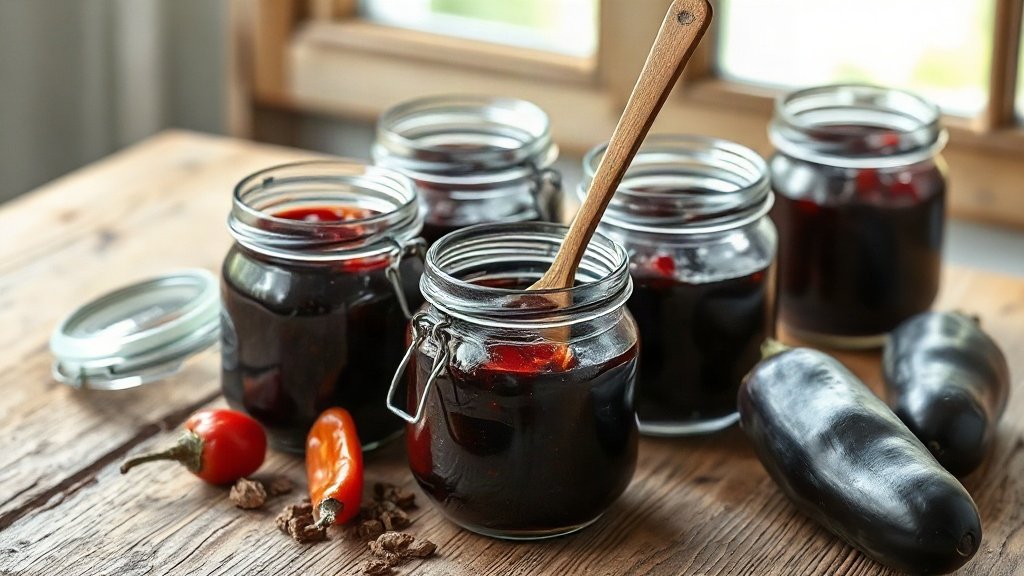
Illustration: AI-generated image
Zacuscă is one of Romania's most cherished pantry staples—a thick, savoury spread made from roasted eggplant, red peppers, onions and tomatoes. It appears on tables throughout autumn and winter, often served with fresh bread as an appetiser or a light meal. Making your own zacuscă at home is a rewarding way to preserve the harvest and bring a taste of Romanian tradition to your kitchen.
What is zacuscă?
The name comes from the Turkish word for a mezze or appetiser, but over generations it has become deeply Romanian. The base is always roasted eggplant and red peppers, which give the spread its characteristic smoky depth. Onions and tomatoes add sweetness and body, while oil, salt, pepper and bay leaves round out the flavour. Some families add mushrooms, beans or even fish roe, but the classic version remains the most popular.
When is zacuscă made?
Traditionally, zacuscă is made in late summer and early autumn, when eggplants and peppers are at their peak and affordable. In villages and towns alike, families gather to roast vegetables over open flames or in ovens, then simmer large pots of the spread for hours. The result is jarred and stored in cool pantries (cămări) or cellars (beciuri), providing a taste of summer well into the cold months.
Choosing your ingredients
For the best results, use ripe, fleshy eggplants and sweet red peppers (kapia or bell). The eggplant should feel heavy for its size and have shiny, unblemished skin. Red peppers should be thick-walled and fully red—green peppers will make the zacuscă bitter. Onions can be yellow or white; tomatoes should be very ripe or replaced with good-quality tomato passata. Sunflower oil is traditional, but any neutral oil works.
Roasting the vegetables
The smoky flavour comes from charring the eggplant and peppers. You can do this on a gas hob, a barbecue, or under a hot grill. Pierce the eggplants a few times with a fork to prevent bursting, then place them directly on the flame or grill. Turn occasionally until the skin is blackened and the flesh soft. For the peppers, char them until the skin blisters all over. Once cool enough to handle, peel off the skins, remove the stems and seeds, and drain any excess liquid. Chop the flesh roughly or put it through a mincer.
Cooking the zacuscă
Finely chop the onions and cook them slowly in oil until soft and golden. Add the chopped roasted eggplant and peppers, then the tomatoes (peeled and chopped, or passata). Season with salt, pepper and a bay leaf or two. Simmer gently, stirring often, for at least an hour—the mixture should thicken and the flavours meld. The zacuscă is ready when a spoon drawn through the pot leaves a trail that doesn't immediately fill with liquid.
Preserving and serving
Spoon the hot zacuscă into sterilised jars, leaving a small gap at the top. Seal tightly and let the jars cool upside down to create a vacuum. Stored in a cool, dark place, the spread will keep for months. Once opened, refrigerate and use within a couple of weeks. Zacuscă is traditionally served on slices of crusty bread, sometimes with a drizzle of oil or a sprinkle of fresh herbs. It also makes a great addition to a platter of cheeses and cured meats.
Making zacuscă is a simple but time-honoured process that rewards the cook with a versatile, deeply flavourful spread. Whether you have a garden full of vegetables or just a craving for a taste of Romania, this recipe connects you to a culinary tradition that has comforted generations.