Borș: Romania's Traditional Fermented Bran Liquid for Souring Soups
Discover borș, the tangy fermented wheat bran liquid that gives Romanian ciorbă its distinctive sourness, and learn how to make and use it at home.
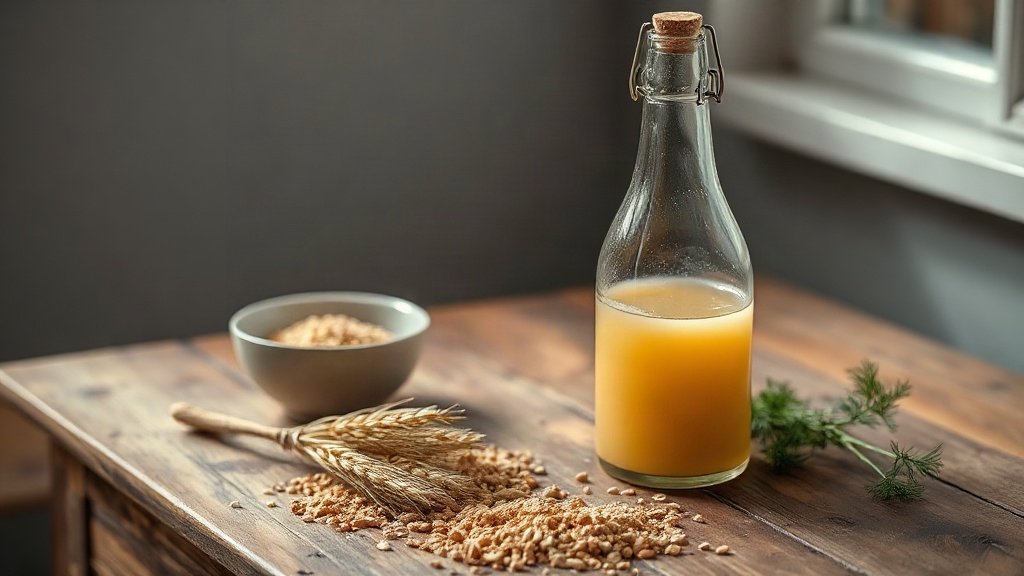
Illustration: AI-generated image
Walk through any Romanian kitchen and you will likely find a bottle of cloudy, yellowish liquid tucked in the fridge or pantry. That is borș, the traditional fermented bran liquid that gives many Romanian soups their signature tang. Unlike the beetroot soup common in other Eastern European cuisines, Romanian borș is a souring agent — a natural, probiotic-rich base made from wheat bran and water.
What exactly is borș?
Borș is a fermented liquid produced by soaking wheat bran in water and allowing naturally occurring yeasts and bacteria to work. The result is a sour, slightly yeasty broth with a complex flavour that goes beyond simple acidity. It is an essential ingredient in ciorbă, the category of Romanian sour soups, but it is also used to add depth to stews and sauces.
The name borș comes from the Slavic word for fermented liquid, linking it to a long tradition across the region. In Romania, borș has been made in homes for centuries, often in large ceramic crocks kept in cool cellars.
How borș is made
The traditional method is straightforward but requires patience. Coarsely ground wheat bran is mixed with warm water in a clean container, sometimes with a handful of cornmeal or a slice of sourdough bread to speed fermentation. Aromatic herbs such as lovage, dill, and cherry leaves are often added for flavour. The mixture is left at room temperature for several days, stirred occasionally, until it develops a pleasantly sour taste and a slightly cloudy appearance. It is then strained and stored in bottles or jars.
Some modern recipes use a starter from a previous batch or add a little vinegar to jump-start the process, but purists insist that true borș must be naturally fermented. The fermentation not only creates sourness but also introduces beneficial bacteria, making borș a traditional probiotic food.
Using borș in Romanian cooking
Borș is added to soups at the end of cooking, just before serving, to preserve its delicate flavour and nutritional value. Boiling borș for too long can dull its tang and destroy some of the beneficial enzymes. A typical ciorbă begins with vegetables, meat, or beans simmered in water or stock, then finishes with a generous splash of borș. The result is a soup that is both sour and savoury, with a depth that lemon juice or vinegar cannot replicate.
Common soups made with borș include ciorbă de perișoare (meatball soup), ciorbă de legume (vegetable soup), and ciorbă de fasole (bean soup). Borș is also sometimes used to deglaze pans for sauces or to add a sour note to stews like tochitură.
Making borș at home
Making your own borș is a rewarding project. Start with clean, unchlorinated water — chlorine can inhibit fermentation. In a large jar, combine about one part wheat bran with four parts warm water, plus a few sprigs of lovage or dill if available. Cover with a cloth to keep out dust and leave at room temperature. Stir twice a day. After three to five days, the mixture should smell pleasantly sour. Strain through a fine sieve, pressing to extract all liquid. Bottle the borș and refrigerate; it will keep for several weeks.
If you are short on time, small-batch borș can be made quickly by adding a tablespoon of sourdough starter or a pinch of yeast to speed fermentation. Experiment to find the level of sourness you prefer.
Where to find borș
In Romania, borș is sold in many grocery stores and traditional markets, often bottled by local producers. Look for unpasteurised versions that still contain live cultures for the best flavour. If you live outside Romania, you may find borș in Eastern European food shops or make your own using readily available wheat bran.
Borș is more than a souring agent; it is a taste of Romanian home cooking, a living tradition passed down through generations. Next time you make a hearty soup, reach for borș and taste the difference.