Tochitură: Romania's Hearty Pork Stew with Polenta and Egg
A rich, garlicky pork stew from Moldova, tochitură is traditionally served over mămăligă with a fried egg and crumbled cheese. Here's what makes it special and how to enjoy it like a local.
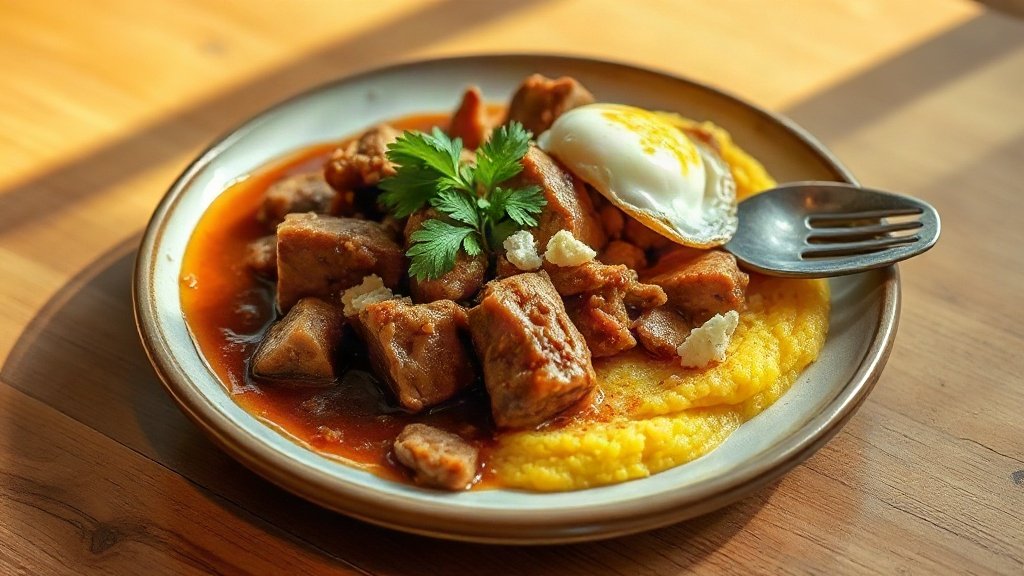
Illustration: AI-generated image
If you ask a Romanian to name the country's most soul-warming comfort food, many will point to tochitură. This rich pork stew, hailing from the Moldova region in the east, is a beloved staple in homes and traditional restaurants alike. It's not elegant or refined; it's hearty, garlicky, and deeply satisfying—the kind of dish that fills you up after a long day or a chilly walk through the Carpathians.
What is tochitură?
At its core, tochitură is a slow-cooked stew made from pork, usually a mix of cuts like shoulder, belly, and sometimes offal such as liver or heart. The meat is simmered in its own juices with generous amounts of garlic, often with a splash of white wine or broth, until it becomes tender and the sauce reduces to a glossy, flavourful coating. Regional variations exist: some cooks add smoked pork or sausages, while others include mushrooms or a spoonful of tomato paste, but the essential character is always savoury, garlicky, and unapologetically porky.
The dish's name comes from the Romanian verb a topi, meaning "to melt" or "to render," a nod to the slow cooking process that breaks down the meat and fat into a luscious stew. Traditionally, tochitură was a shepherd's meal, prepared over an open fire after a day of work, and it remains a favourite for Sunday lunches and festive gatherings.
How it's served
Tochitură is never eaten alone. The classic presentation is a generous scoop of the stew served over or alongside a mound of mămăligă, Romania's golden polenta. The polenta soaks up the rich sauce, providing a soft, comforting base. On top, you'll almost always find a fried egg with a runny yolk, which adds a silky richness when broken. A crumble of brânză de burduf (a salty sheep's cheese aged in fir bark) or telemea (a feta-like cheese) brings a sharp, tangy contrast. Many restaurants also serve a side of murături—pickled cucumbers, green tomatoes, or cabbage—whose acidity cuts through the fat.
If you're eating tochitură in a traditional restaurant, you might notice that it's often listed as tochitură moldovenească to distinguish it from other regional stews. In some places, it's served in a small cast-iron skillet, still sizzling from the stove. Don't be shy about mixing everything together on your plate; that's the intended way to enjoy it.
Where to find it
Tochitură is a menu staple at hanuri (traditional inns) and restaurants specialising in Romanian cuisine, especially in the Moldova region—think Iași, Suceava, or Bacău—but you'll find it in Bucharest and other cities too. Look for it on menus under "Mâncăruri tradiționale" (traditional dishes). For the most authentic experience, seek out a place that makes its own mămăligă and serves the stew with a runny egg. While it's a heavy dish, most portions are generous, so come hungry or consider sharing if you plan to have dessert.
Making tochitură at home is also rewarding. A basic version requires only pork, garlic, salt, pepper, and a little liquid; the key is patience. Brown the meat well, then let it simmer slowly until tender. Serve it exactly as described above, and you'll have a taste of rural Romania on your table.