Romanian Clear Soups: A Guide to Supă and Traditional Broths
While ciorbă gets the attention, Romania's clear soups (supă) are a comforting staple. Learn about chicken noodle, dumpling, and vegetable broths.
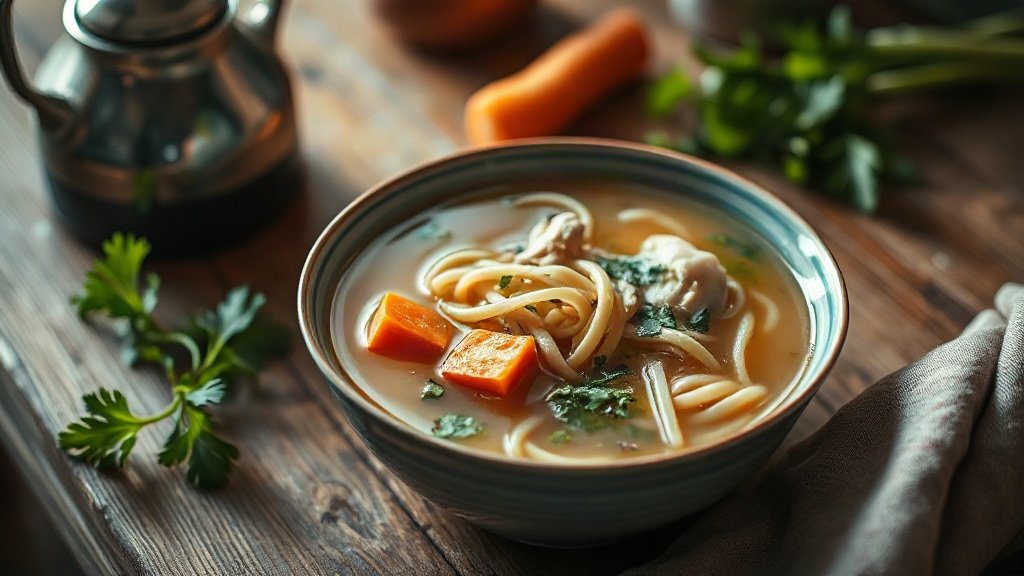
Illustration: AI-generated image
When people think of Romanian soups, the sour ciorbă often comes first. But the country also has a deep tradition of clear soups, known as supă. These lighter broths are a mainstay of home cooking and are equally loved as a starter or a light meal on their own.
What is Supă?
Supă is a clear, typically unsoured soup made from meat, poultry, fish, or vegetables. Unlike ciorbă, which gets its tartness from borș, lemon juice, or fermented bran, supă relies on the natural flavours of its ingredients. It is usually served hot, often with homemade noodles or dumplings floating in the golden broth.
Popular Clear Soups
- Supă de pui cu tăieței – Chicken noodle soup, the classic comfort food. Tender chicken, thin egg noodles, and root vegetables in a clear broth.
- Supă de găină – Made with an older hen, this broth is richer and more flavourful, often recommended for convalescents.
- Supă de legume – A pure vegetable soup, sometimes with rice or small pasta, perfect for light meals or fasting days.
- Supă cu găluște – Broth with soft semolina dumplings, a favourite among children and adults alike.
- Supă de văcuță – Beef broth, typically cooked long and slow with bones for extra depth, served with vegetables and sometimes beef pieces.
- Supă de pește – A clear fish soup, especially common in the Danube Delta, made with river fish and seasoned simply with lovage.
Key Ingredients and Seasonings
The base of most supă is a mix of root vegetables: carrots, parsley root, celery, and onion. Sometimes parsnip or a small piece of celeriac is added. The broth is seasoned with salt, whole peppercorns, and a bay leaf. Fresh herbs like parsley and lovage (leuștean) are added at the end for aroma. Dill is occasionally used, especially with fish soups.
Serving and Enjoying
Supă is traditionally served as the first course of a lunch, but it can also stand alone as a light dinner. It is brought to the table in deep bowls, often with a slice of fresh bread on the side. In many homes, the meat or vegetables used for the broth are served separately as a second course, with a little horseradish or mustard.
Making Supă at Home
Making a good supă is straightforward. Start by simmering meat or bones with cold water and a pinch of salt. Skim off any foam that rises, then add the whole vegetables and seasonings. Cook gently until everything is tender. Strain the broth, return it to the pot, and add noodles or dumplings. Simmer until they are cooked, then finish with chopped fresh herbs. The result is a clear, comforting soup that reflects the simplicity of Romanian home cooking.