Ciorbă de Burtă: Romania's Rich Tripe Soup Explained
Discover the comforting, garlicky tripe soup that divides opinion but is a staple of Romanian menus, often served with sour cream and hot peppers.
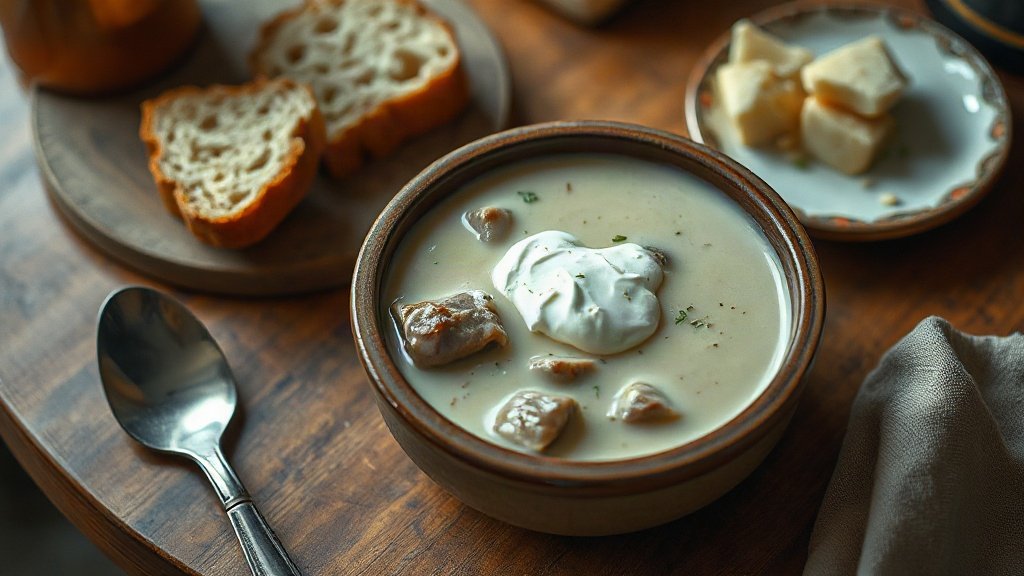
Illustration: AI-generated image
Ciorbă de burtă is one of Romania's most distinctive soups. Made from beef tripe simmered until tender in a rich, sour broth, it is thickened with eggs and soured cream, then finished with plenty of garlic. The result is a pale, creamy, deeply savoury soup that many Romanians consider a comfort food classic, though its unusual texture can surprise first-time visitors.
What is ciorbă de burtă?
The name translates literally as "tripe soup", and tripe—the edible lining of a cow's stomach—is the star ingredient. The soup begins with beef tripe and often beef bones, which are boiled together with vegetables such as carrots, parsnips, celery and onion to create a clear, flavourful stock. To this, sourness is added, usually in the form of vinegar or borș, a fermented wheat bran liquid that gives many Romanian soups their characteristic tang. The final step involves whisking egg yolks with soured cream and slowly tempering the mixture into the hot broth, which thickens the soup and gives it a velvety, ivory colour. Generous amounts of crushed garlic are stirred in just before serving.
How it's made
Preparing ciorbă de burtă is a labour of love. The tripe must be thoroughly cleaned and blanched several times to remove any strong odour, then simmered for several hours until meltingly tender. The cooked tripe is sliced into thin strips and returned to the strained broth. The soup is then soured to taste, thickened with the egg and cream mixture, and seasoned with salt and pepper. Some cooks add a little milk to mellow the acidity. The garlic is almost always added raw at the end, giving the soup a pungent, warming kick.
How it is served
Ciorbă de burtă is traditionally served piping hot, often as a starter or a substantial main course. A typical bowl comes with a dollop of extra soured cream on top, a side of hot pickled peppers, and fresh white bread. Many diners like to add a spoonful of mujdei, a simple garlic sauce, or a splash of extra vinegar to sharpen the flavour. Some variations include a raw egg yolk stirred into the bowl just before eating, which adds even more richness. The soup is a common fixture on restaurant menus across the country, from casual eateries to upscale establishments, and it is especially popular during the colder months.
Tips for visitors
If you are trying ciorbă de burtă for the first time, keep a few things in mind. The texture is both gelatinous from the tripe and creamy from the thickening, which can be a surprise if you expect a clear broth. The flavour is intensely savoury, sour and garlicky, so start with a small portion. Adding extra soured cream helps to soften the acidity. It is available year-round, but a bowl on a cold winter day is particularly comforting. Look for it on menus under its Romanian name, and don't be shy about asking for more garlic or hot peppers on the side.
The origins of ciorbă de burtă are often traced to Ottoman and Balkan culinary traditions, but it has been adopted and adapted in Romania for generations. Today, it stands as a beloved national dish that showcases the Romanian love for sour soups and bold, rustic flavours.