Sârba: Romania's Spirited Circle Dance of Speed and Joy
Discover the history, steps, and social significance of Sârba, one of Romania's most beloved folk dances, and how you can join the circle at your next celebration.
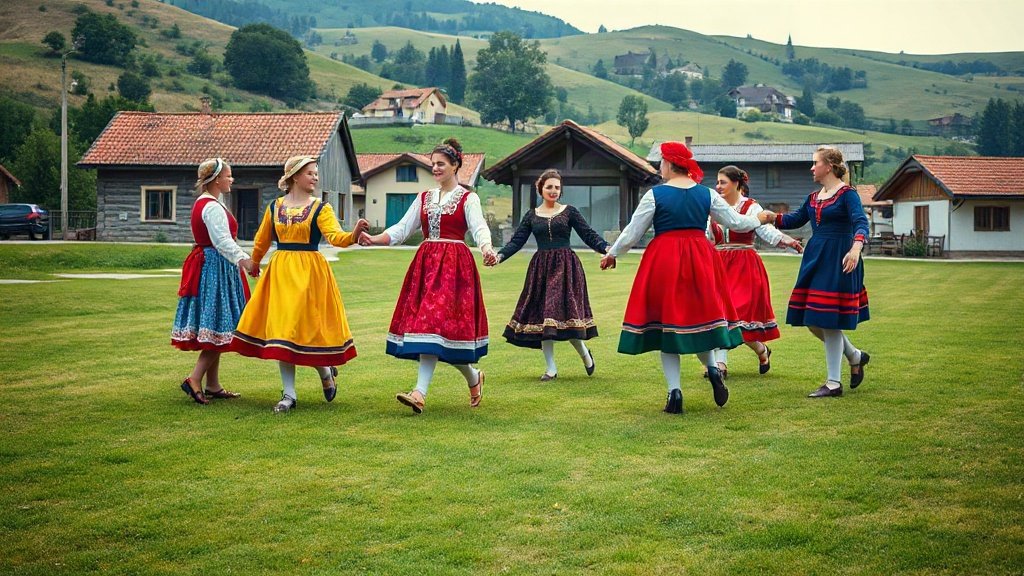
Illustration: AI-generated image
Sârba is one of the most widespread and beloved folk dances in Romania, a fast-paced circle dance that is a fixture at weddings, village festivals, and any celebration where people gather to dance. Known for its lively tempo, intricate footwork, and joyful energy, Sârba brings together dancers of all ages in a communal expression of happiness and vitality.
A Dance with Deep Roots
The origins of Sârba are ancient, with many folklorists tracing it back to the circle dances of the Dacians, the region's earliest inhabitants. The name itself is thought to derive from the Romanian word "sârbă," meaning "Serbian," suggesting a possible historical influence, though the dance has evolved into a distinctly Romanian form. Others link it to the verb "a sări," meaning "to jump," reflecting the dance's energetic hops and leaps. Regardless of its etymology, Sârba has been a mainstay of Romanian rural life for centuries, documented in ethnographic collections since the 19th century.
How Sârba Is Danced
Sârba is typically performed in a circle or a line, with dancers holding hands or linking arms. The circle moves counterclockwise, and the basic step consists of small, quick steps to the side, punctuated by stamps, heel clicks, and occasional spins. The music is in a lively 2/4 or 6/8 time, often played by a traditional band called a "taraf," featuring instruments such as the violin, cimbalom (hammered dulcimer), accordion, and double bass. The tempo can start moderately but often accelerates, challenging dancers to keep up and showcasing their skill and endurance.
There are many regional variations of Sârba, each with subtle differences in footwork and arm movements. In some areas, dancers perform a "bătută" (stamping pattern) during the dance, while in others they add intricate turns or syncopated steps. The dance is inclusive: while skilled dancers may perform solos or improvisations in the centre of the circle, everyone is welcome to join the main line and follow the leader's steps.
When and Where to Experience Sârba
Sârba is a highlight of any Romanian celebration. At weddings, it is often danced after the more solemn rituals, as a way to release joy and bring the community together. During village holidays, festivals, and Sunday dances (known as "joc"), Sârba is almost always on the programme. For visitors to Romania, folk festivals such as the "Hora de la Prislop" or local "zilele satului" (village days) offer the chance to see and even join in. Many cultural centres and folk ensembles also teach Sârba to beginners, and the simple basic steps can be learned by watching and following the person next to you.
A Dance of Community and Joy
Beyond its athleticism and musicality, Sârba carries deep social meaning. It is a dance of unity, as participants hold hands and move as one, reinforcing bonds within the community. For Romanians at home and abroad, Sârba is a powerful symbol of national identity and cultural pride. It is not merely a performance for audiences; it is a living tradition that invites everyone to take part, a reminder that joy is best shared. Whether you are a seasoned dancer or a curious visitor, joining a Sârba circle is one of the most direct ways to experience the warmth and vitality of Romanian culture.