Salată de Vinete: Romania's Smoky Aubergine Dip Explained
Discover salată de vinete, a creamy roasted aubergine spread that is a staple of Romanian appetisers. Learn how it is made and how to serve it at home.
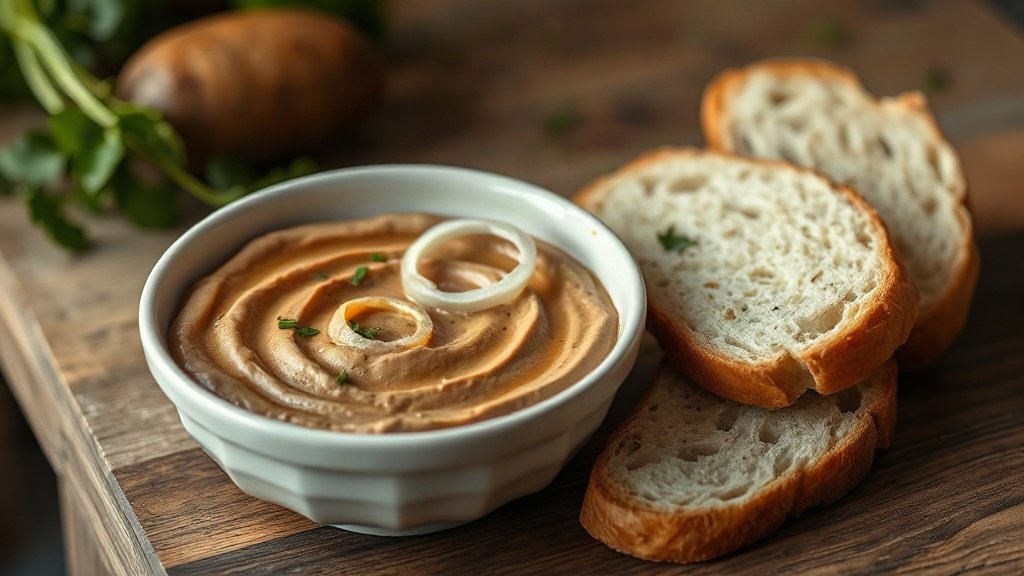
Illustration: AI-generated image
Salată de vinete is one of the most beloved starters in Romanian cuisine. This silky, smoky spread made from roasted aubergines (eggplants) appears on restaurant menus, at family gatherings and on festive tables throughout the year. Simple yet deeply satisfying, it showcases the Balkan influence on Romanian food while remaining distinctly local in its flavour and texture.
What is salată de vinete?
The name translates directly to 'aubergine salad', but this is not a leafy salad. Instead, it is a smooth, creamy dip or spread, similar in spirit to Middle Eastern baba ganoush or Greek melitzanosalata. However, the Romanian version has a character of its own: it is usually enriched with sunflower oil, finely chopped onion and sometimes a little mayonnaise, and it is rarely made with tahini or lemon juice. The result is a rich, umami-packed puree with a gentle smokiness from charring the aubergines over an open flame.
Salată de vinete is typically served cold or at room temperature, spread thickly on fresh bread or toast. It can be enjoyed as an appetiser, a light lunch or part of a larger spread of 'gustări' (small bites) alongside other dips, cold cuts and cheeses.
How it is made
The traditional method begins by roasting whole aubergines directly on a hot grill, gas burner or in a very hot oven. The skins are charred until completely blackened and collapsed, which infuses the flesh with a deep, smoky flavour. After the aubergines cool, they are peeled, and the flesh is left to drain in a sieve to remove any bitter juices. Then the real work begins: the cooked aubergine is chopped very finely by hand with a special wooden or metal blade, or pulsed briefly in a food processor — though many cooks insist on hand-chopping for a better texture. Some prefer a completely smooth puree; others leave it slightly chunky.
Next, sunflower oil is gradually beaten into the aubergine, much like making mayonnaise. This emulsion lightens the mixture and gives it a mousse-like consistency. Finely grated or very finely diced onion is folded in, along with salt and sometimes a touch of lemon juice or vinegar. A good salată de vinete should taste of aubergine first, with the onion and smoke as supporting players.
How to serve it
Salată de vinete is usually presented in a shallow bowl, its surface smoothed and often decorated with a few rings of raw onion, a drizzle of oil or a sprinkle of chopped parsley. It is eaten with fresh white or crusty bread, sometimes toasted. Many Romanians also enjoy it as a filling for sandwiches or as a dip for raw vegetables.
For a more substantial starter, it can be served alongside tomatoes, cucumbers and telemea (Romanian brined cheese). It also pairs well with cold meats, smoked fish or boiled eggs. In summer, it appears at almost every picnic or barbecue, and in winter it is a welcome reminder of sunny days.
Why it matters
Salată de vinete is more than just a dip — it is a symbol of home cooking and hospitality. Almost every Romanian family has its own recipe, with small variations in the ratio of onion to aubergine, the amount of oil or the addition of garlic or mayonnaise. Whether you encounter it at a traditional restaurant or make it yourself, this humble dish offers a true taste of Romanian comfort food.