Salată de Boeuf: Romania's Traditional Festive Salad Explained
A creamy, tangy mix of beef, vegetables, and pickles bound with mayonnaise, Salată de Boeuf is a staple at Romanian celebrations. Learn what makes it special and how to make it at home.
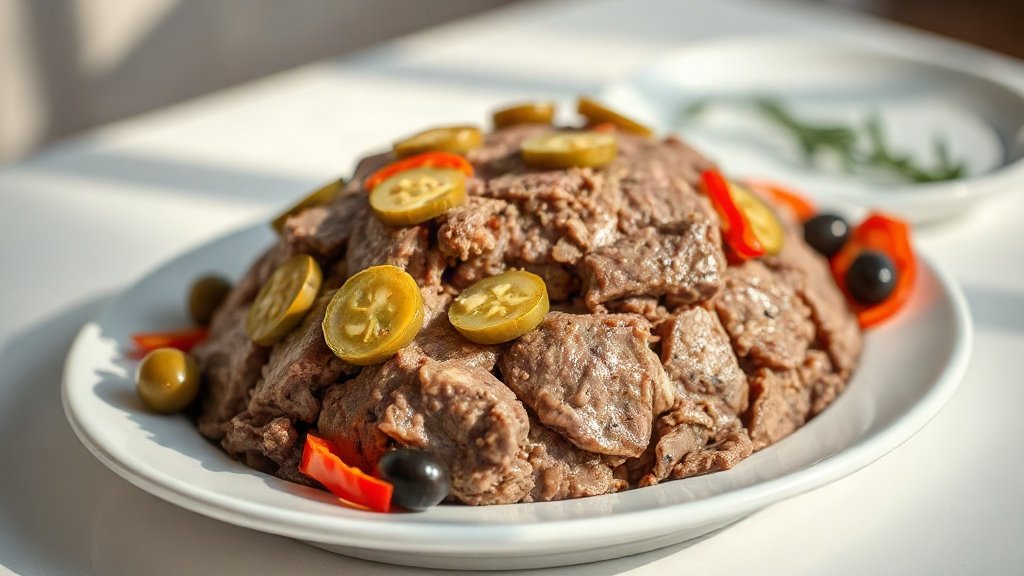
Illustration: AI-generated image
When Romanians gather for Christmas, Easter, or a family celebration, one dish is almost always on the table: Salată de Boeuf. Despite its French-sounding name, this salad is a deeply Romanian tradition, a rich and comforting combination of finely diced beef, root vegetables, and tangy pickles bound together with a generous amount of mayonnaise.
It is not an everyday dish. Preparing it takes time and patience, which is precisely why it is reserved for special occasions. The result is a smooth, slightly sweet, and sharp salad that can be served as a starter, a side, or even a light main course.
What is Salată de Boeuf?
Salată de Boeuf literally means "beef salad" in Romanian, but the name comes from the French salade de bœuf, reflecting the strong culinary influence France had on Romania in the 19th century. The dish is similar to the Russian Olivier salad and other Eastern European meat salads, but the Romanian version has its own distinct character: it always uses beef (usually boiled), and the dressing is almost always a homemade mayonnaise, often sharpened with a little mustard and lemon juice.
The defining texture is very fine. All the ingredients are cut into tiny, uniform cubes, about the size of a pea. This step is crucial and is often done by hand, though some families use a special vegetable dicer to speed things up.
Key Ingredients
The classic recipe includes:
- Beef: usually a lean cut like topside or silverside, simmered until tender. Some cooks use chicken or turkey, but then it becomes Salată de Pui.
- Potatoes: boiled and peeled, providing a soft, starchy base.
- Carrots: boiled, adding sweetness and colour.
- Parsnip or celery root: optional but common for extra flavour.
- Pickled gherkins: essential for the characteristic tang. Some recipes add a little of the pickle juice.
- Green peas: usually canned or frozen, stirred in at the end.
- Mayonnaise: the binding ingredient, often homemade with egg yolks, oil, and lemon juice or vinegar. Mustard is sometimes added.
Some families also include hard-boiled egg whites, diced apple, or a splash of white wine. The proportions vary from household to household, but the balance between creamy, savoury, and sour flavours remains the same.
How It Is Served
Salată de Boeuf is traditionally shaped into a dome or a ring on a platter, then decorated. The surface is usually covered with a thin layer of mayonnaise and topped with sliced gherkins, olives, strips of roasted red pepper, hard-boiled egg slices, or parsley. It is served cold, often alongside fresh bread or pâine de casă.
Because it is so rich, a small portion goes a long way. It is a common sight at festive buffets, next to other Romanian classics like sarmale and cozonac.
Making It at Home
If you would like to try making Salată de Boeuf, the process is straightforward but takes time. Here is a basic method:
- Boil about 500 g of beef in salted water with a bay leaf and some peppercorns until very tender, about 1.5–2 hours. Let it cool in the broth, then drain and dice finely.
- Boil equal weights of potatoes and carrots (about 300 g each) until soft. Peel and dice finely.
- Dice about 150 g of pickled gherkins and add to the bowl, along with 100 g of drained green peas.
- Make a mayonnaise using two egg yolks, a teaspoon of mustard, and about 250 ml of neutral oil, whisking until thick. Season with salt, pepper, and a little lemon juice.
- Fold the mayonnaise into the diced ingredients until everything is well coated. Taste and adjust seasoning.
- Chill for at least an hour before shaping and decorating.
Remember, the key to success is patience with the dicing. Take your time and aim for even, small pieces. The salad will hold together better and taste more refined.
Whether you are preparing for a holiday or simply want to explore a classic Romanian dish, Salată de Boeuf is a rewarding recipe that captures the spirit of a family celebration.