How to Make Ciorbă: Romania’s Beloved Sour Soup
Ciorbă is more than a soup – it’s a cornerstone of Romanian home cooking. Learn what makes it special, how to sour it properly, and how to make a simple vegetable version at home.
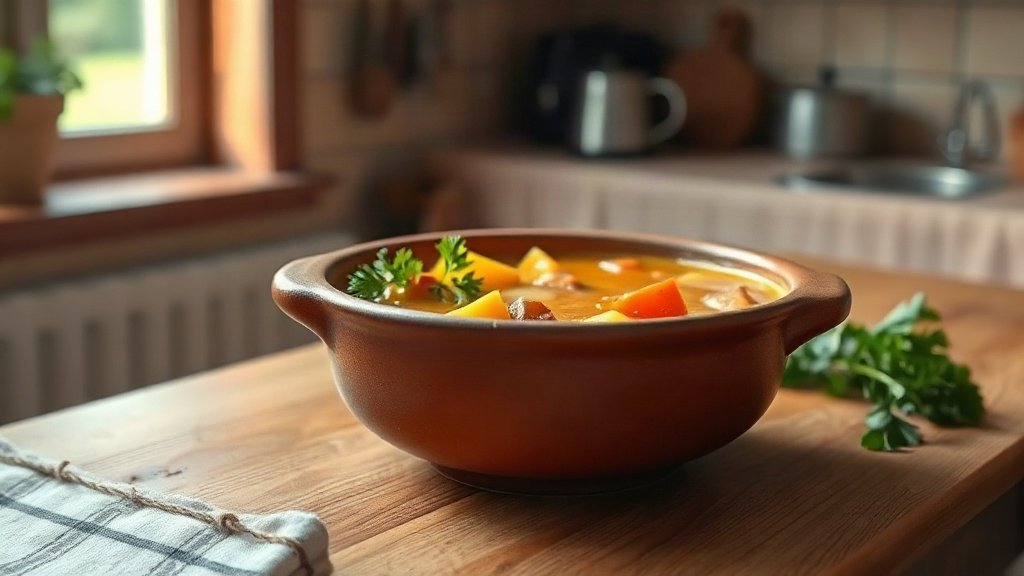
Illustration: AI-generated image
If you spend any time in a Romanian kitchen, you will soon meet ciorbă. This hearty, sour soup appears on family tables almost daily, in countless variations. It is warming, nourishing, and deeply satisfying – a true taste of home cooking. Unlike many Western soups, ciorbă has a distinctive tang that sets it apart. Understanding that sourness is the key to making an authentic bowl.
What Makes Ciorbă Different?
Ciorbă is a thin, broth-based soup packed with vegetables, meat, or both. The defining feature is its sour taste, achieved by adding a souring agent at the end of cooking. It is usually served hot, often with a dollop of smântână (soured cream) and fresh herbs. Romanians eat ciorbă as a first course or even as a light meal with bread. It is comfort food, but also a practical way to use seasonal produce.
The Souring Agents
The most traditional souring agent is borș, a fermented wheat bran liquid that gives a complex, slightly yeasty sourness. It is widely available in Romanian shops, but outside the country it can be harder to find. Good substitutes include:
- Lemon juice – fresh, bright, and easy to use.
- Vinegar – white wine or apple cider vinegar works well.
- Sauerkraut juice – from fermented cabbage, adds a deeper, tangier note.
- Soured cream – stirred in at the end, it adds richness along with mild acidity.
Whichever you choose, add it gradually and taste as you go. The soup should be pleasantly sour but not overpowering.
Popular Types of Ciorbă
There are dozens of regional recipes. Some of the most common include:
- Ciorbă de legume – a light vegetable soup with carrots, potatoes, onions, celery, and tomatoes.
- Ciorbă de perișoare – with small meatballs, often pork or a mix, and vegetables.
- Ciorbă de burtă – tripe soup, creamy and garlicky, a beloved classic.
- Ciorbă de fasole – bean soup, often with smoked meat for extra flavour.
- Ciorbă de pui – chicken soup with noodles or dumplings.
Vegetarian versions are just as popular, especially during fasting periods in the Orthodox calendar.
Basic Method for a Vegetable Ciorbă
Here is a simple recipe to try at home. Quantities are flexible; adjust to your taste.
- Prepare the vegetables: Finely chop one onion, two carrots, one parsnip (optional), one celery stick, and one red pepper. Dice two potatoes and a small celeriac if you like.
- Sauté the base: In a large pot, heat two tablespoons of oil. Add the onion, carrot, parsnip, and celery. Cook over medium heat for 5–7 minutes until softened.
- Add liquid: Pour in about 1.5 litres of water or vegetable stock. Add the potatoes, celeriac, and red pepper. Bring to a boil, then reduce heat and simmer for 20 minutes.
- Add tomatoes: Stir in two chopped ripe tomatoes or a tablespoon of tomato paste. Season with salt, pepper, and a bay leaf. Simmer for another 10 minutes.
- Sour the soup: Remove from heat. Stir in the juice of half a lemon or 2–3 tablespoons of vinegar, or a ladle of borș if you have it. Taste and add more if needed.
- Finish and serve: Let the ciorbă rest for 5 minutes. Serve hot, topped with fresh parsley or lovage, and a spoonful of smântână if you wish.
Serving and Accompaniments
Ciorbă is traditionally served with fresh bread, often a dense country loaf. A sprinkle of chopped lovage or dill adds freshness. Many Romanians also add a small hot pepper on the side for those who like extra heat. The soup is best enjoyed immediately, but it reheats well the next day – the flavours often deepen overnight.