Traditional Romanian Children's Games: A Guide to Playtime Classics
From hopscotch to tag, discover the simple, joyful games Romanian children have played for generations and how to enjoy them anywhere.
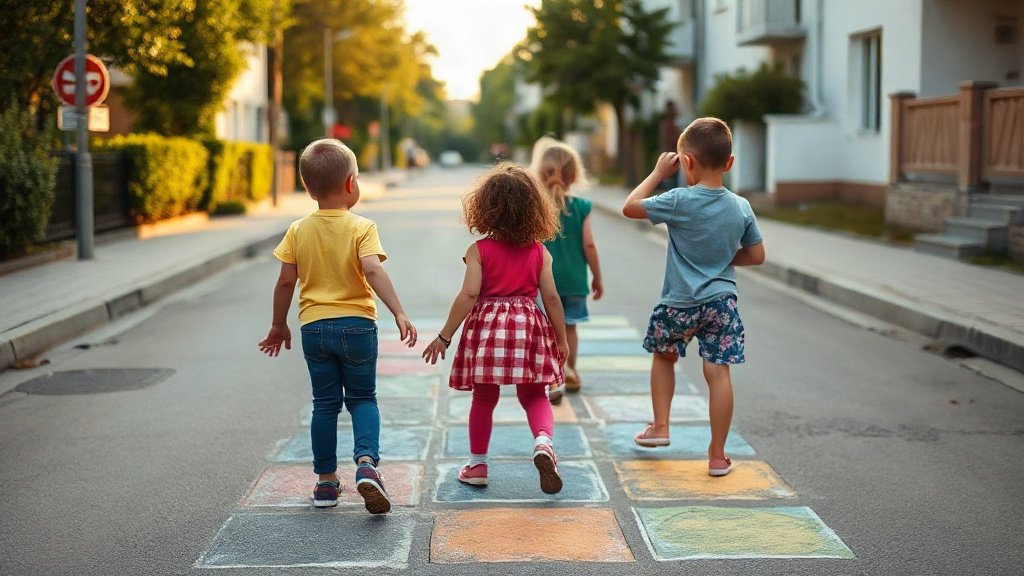
Illustration: AI-generated image
Long before screens and online games, Romanian children spent their free time outdoors, inventing games that needed little more than a piece of chalk, a ball or simply each other. Many of these games are still played in schoolyards, parks and quiet streets across the country. They are easy to learn, require minimal equipment and offer a lovely way to connect with local culture, whether you are raising children in Romania or simply curious about traditional pastimes.
Șotron (Hopscotch)
Șotron is the Romanian version of hopscotch, and it is a firm favourite among primary school children. To play, draw a grid of numbered squares on the pavement with chalk. The traditional pattern starts with a single square, followed by two side by side, then one, then two, and so on, often ending with a semi-circle or rectangle called the "sky" or "home".
Players take turns tossing a small stone or flat piece of tile onto square one, then hopping through the grid on one foot in the single squares and with both feet in the double squares. They must pick up the stone on the way back without losing balance or stepping on a line. If successful, they toss the stone onto the next number and repeat. The first player to complete the whole course wins. It is a wonderful way to develop balance, coordination and patience.
Baba Oarba (Blind Man's Bluff)
Baba Oarba, which translates as "blind old woman," is a lively chasing game played by children of all ages. One player is blindfolded and spun around gently while the others scatter around a defined play area. The blindfolded player then tries to catch the others using only sound and touch. The first person caught becomes the next "baba oarba".
In some variations, the other players may call out or clap to guide or confuse the seeker. It is best played in a safe, open space free of obstacles, and an adult should supervise younger children.
Țară, țară, vrem ostași (Country, Country, We Want Soldiers)
This game is a classic team game that blends chanting, strategy and physical strength. Two lines of children face each other, holding hands tightly. One team begins by chanting, "Țară, țară, vrem ostași!" (Country, country, we want soldiers!) The other team asks, "Pe cine?" (Whom?) The first team names a player from the opposing side. That chosen player then runs as fast as possible and tries to break through the linked hands of the first team. If they succeed, they return to their own team with a captive from the opposing side. If they fail, they join the first team. The game continues until one team has all the players.
De-a v-ați ascunselea (Hide and Seek)
Known all over the world, hide and seek is just as beloved in Romania. One child counts to a chosen number with eyes closed while the others hide. The seeker then calls out, "Cine nu e gata, îl iau cu lopata!" (Whoever is not ready, I will take with the shovel!) This traditional warning signals that the search is about to begin. The first person found becomes the next seeker, or the game can be played in rounds with a safe base to run back to.
Leapsa (Tag)
Leapsa is the Romanian name for tag. The person who is "it" must chase the others and touch one of them, calling "Leapsa!" to pass on the role. There are many regional variations: some versions freeze the player who is tagged, others add a safe zone such as a tree or a wall, and some use a ball that must be thrown to tag someone from a distance. It is simple, energetic and can be played almost anywhere.
These games require no expensive equipment and little preparation, making them perfect for family gatherings, school breaks or a spontaneous afternoon in the park. Teaching them to a new generation keeps a piece of Romanian childhood alive and builds joyful memories that transcend language and culture.