Lacul Sfânta Ana: A Guide to Romania's Volcanic Crater Lake
Discover Romania's only volcanic crater lake, a serene natural wonder in the Harghita Mountains, perfect for hiking and quiet reflection.
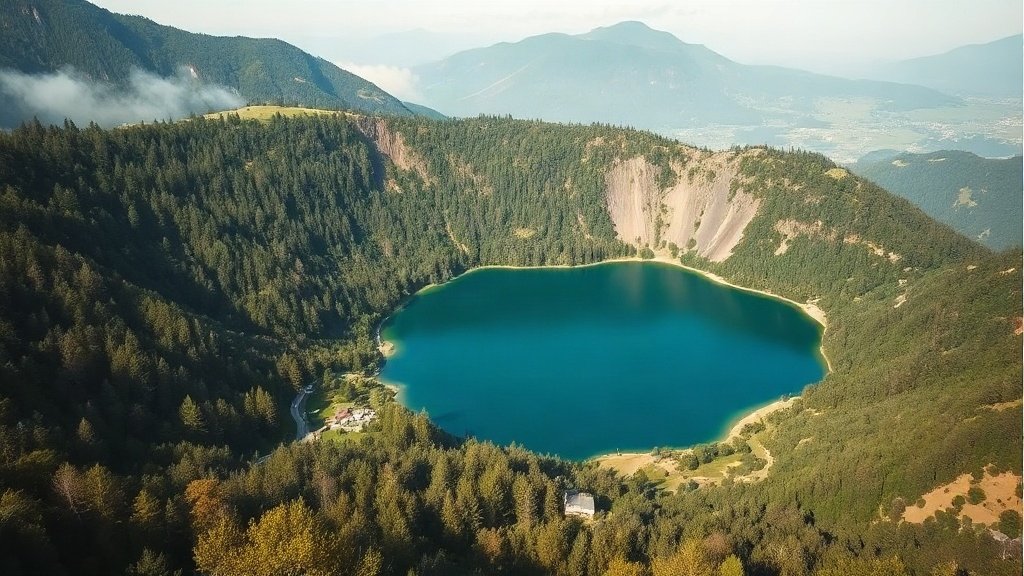
Illustration: AI-generated image
High in the Harghita Mountains of eastern Transylvania, hidden within the crater of an ancient volcano, lies one of Romania's most unusual natural treasures. Lacul Sfânta Ana – Saint Anne Lake – is the country's only volcanic crater lake, and a place of remarkable beauty that feels far removed from the bustle of everyday life.
Location and Access
The lake sits at an altitude of around 950 metres on the site of a double volcanic cone that last erupted tens of thousands of years ago. It lies just a short drive from the spa town of Băile Tușnad, known for its mineral waters and relaxed pace. The nearest larger cities are Miercurea Ciuc to the north and Brașov to the south, both under two hours away by car.
Reaching the lake is straightforward. A narrow forest road winds up from Băile Tușnad; during the warmer months, private cars can park in a designated area near the rim. From there, a gentle path leads to the viewing points. Those without a car can take a train to Băile Tușnad station and then either walk or arrange a local taxi for the final part of the journey.
What to See and Do
The lake itself is almost perfectly round, with a surface area of about 22 hectares and a depth of up to seven metres. Because it lies in a crater with no natural inlet or outlet, its water level depends entirely on rainfall and snowmelt. This unusual hydrology contributes to the lake's delicate ecosystem, which is protected as a nature reserve.
Swimming is not permitted in Lacul Sfânta Ana, but visitors can enjoy a leisurely walk around the crater rim, where several lookout points offer lovely views over the dark, still water framed by pine and beech forest. The short circular route takes less than an hour at a relaxed pace and is suitable for most fitness levels.
For those who want a longer hike, a marked trail continues over the nearby Ciumatu peak, offering panoramic views across the surrounding Csomád mountains and, on clear days, towards the distant Făgăraș range. The area is also crossed by the Via Mariae pilgrimage path, which links various sites in the region.
A Legend of the Lake
Like many natural wonders, Lacul Sfânta Ana has its own local story. According to legend, two brothers once agreed to marry two sisters, but one of the men was cruel and forced a young woman named Ana into marriage. On the wedding night, she fled into the hills, and the earth opened up to swallow her pursuers. In the place where she disappeared, a pure lake appeared, named in her honour. The tale is often told by locals and adds a layer of quiet mystery to the landscape.
Practical Tips
The best time to visit is from late spring to early autumn, when the access road is clear and the forest is alive with colour. Winter transforms the area into a snow-covered wonderland, but the road may be closed or require winter tyres, and the path can be icy. Always check weather conditions before setting out, as the mountain climate can change quickly.
There are no shops or restaurants at the lake itself, so bring water and snacks. Restrooms are available near the parking area. For accommodation, the nearby town of Băile Tușnad offers a range of guesthouses and hotels, and many visitors combine a trip to the lake with a soak in the town's renowned mineral baths.
Whether you come for a short walk, a full-day hike, or simply to sit in silence above the crater's edge, Lacul Sfânta Ana rewards those who make the journey with a sense of peace found in few other places in Romania.