Zacuscă: The Romanian Autumn Spread Worth Knowing
Every autumn, Romanian kitchens fill with the smell of roasting aubergines and peppers. Here is what zacuscă is, how it is eaten and how to choose a good jar.
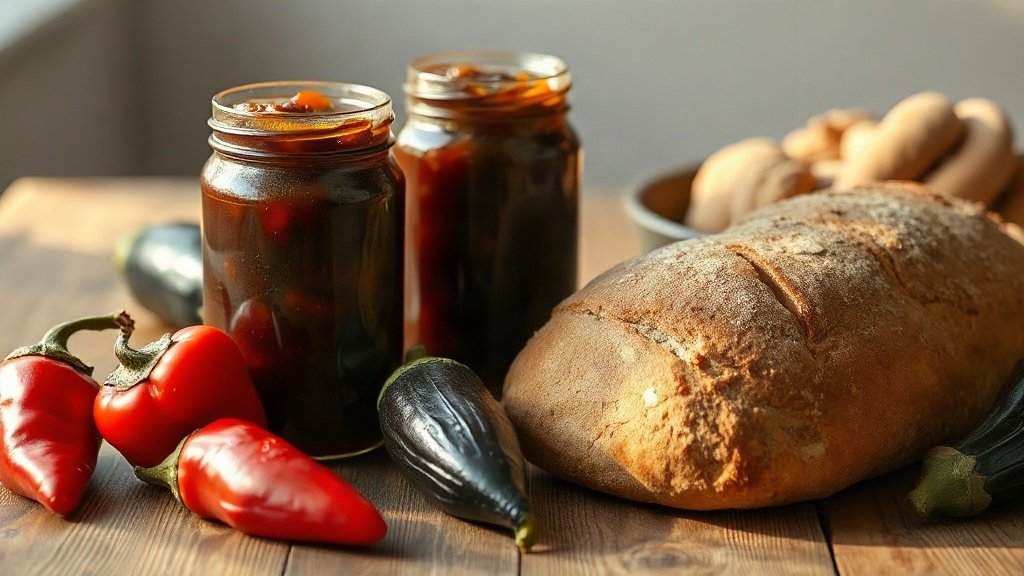
Illustration: AI-generated image
Walk through a Romanian neighbourhood in late September or October and you may catch a smoky, sweet smell drifting from a courtyard. Chances are someone is making zacuscă, the vegetable spread that sits in almost every Romanian pantry.
What is zacuscă?
Zacuscă is a slow-cooked relish of roasted aubergines and red peppers, cooked down with onions, tomato purée and oil until thick and glossy. Many households add carrots or celery root, and some stir in bay leaf and pepper. The texture sits somewhere between a chunky pâté and a jam, though it is savoury, not sweet.
Similar spreads exist across the Balkans and Eastern Europe, such as ajvar in Serbia and North Macedonia. The Romanian version is usually a little softer and more tomato-led.
Why autumn?
The tradition belongs to the end of the harvest. Peppers and aubergines are at their best in late summer and early autumn, and families have long made large batches to jar for winter. Roasting the vegetables over an open flame or in a hot oven, then peeling them, is the labour-intensive part. Many people turn it into a family or neighbourly occasion.
Common variations
- Vinete (aubergine only): the classic, dark and smoky.
- With mushrooms: a popular version that makes the spread richer and more earthy.
- With beans: sometimes called zacuscă with fasole, it is heartier and more filling.
- With fish or meat: less common, and often tied to fasting or festive habits in particular households.
Because zacuscă is plant-based in its traditional form, it is also a familiar choice during the fasting periods observed by Orthodox Christians in Romania, such as before Christmas and Easter.
How Romanians eat it
The simplest way is the best: spread it thickly on fresh bread, ideally a crusty loaf, with a slice of onion or a few olives on the side. It also appears on a cold platter with cheese, cured meats and pickles, and it makes a quick snack for guests.
Try it with a glass of țuică or a dry white wine if you are serving it as part of a spread, though plain tea or water works well for a casual lunch.
Choosing a good jar
- Look at the texture. It should be thick and cohesive, not watery, with visible small pieces of vegetable.
- Check the ingredient list. Vegetables should come first. Shorter lists tend to taste closer to homemade.
- Ask at the market. Producers at local food markets are usually happy to let you taste before you buy, and will tell you which version they make.
- Store it properly. Keep sealed jars in a cool, dark place, and refrigerate after opening.
A souvenir that travels well
For visitors, a jar of zacuscă is one of the easiest edible souvenirs to bring home. Wrap the jar well in your luggage, and check your airline's rules if you are flying with hand baggage only, as thick spreads can count as liquids.
Whether you buy it in a market, receive a jar from a friend or try your hand at making it, zacuscă is a quiet reminder that in Romania, autumn is as much about the pantry as the weather.