Tochitură: Romania's Hearty Pork Stew with Polenta and Egg
Discover tochitură, a rich and rustic Romanian pork stew from Moldova, traditionally served with mămăligă, a fried egg and crumbled cheese.
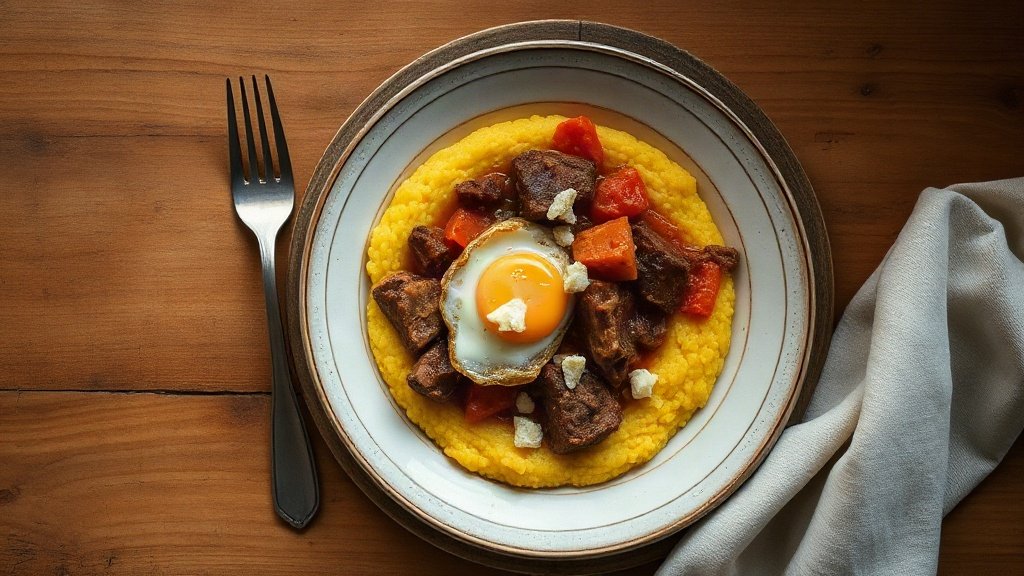
Illustration: AI-generated image
If you're exploring Romanian comfort food, you'll eventually come across tochitură – a rich, slow-cooked pork stew that feels like a warm hug on a cold day. While it's enjoyed across the country, it has particularly deep roots in the Moldova region of eastern Romania, where it's often considered a regional specialty.
What is tochitură?
At its heart, tochitură is a stew made from various cuts of pork, slowly simmered with onions, garlic, and a splash of wine or broth until the meat is tender and the sauce is thick and glossy. The name comes from the Romanian verb "a topi", meaning "to melt" or "to render", referring to the slow cooking process that breaks down the pork fat and melds the flavours together.
Traditionally, the dish uses a mixture of pork belly, shoulder, and sometimes liver or other offal, giving it a deep, savoury character. Smoked pork or bacon is often added for extra depth. The meat is usually cut into bite-sized pieces, browned, then braised gently with plenty of onions and garlic. Some versions include a spoonful of tomato paste or a few fresh tomatoes, but many purists insist on keeping it simple with just meat, onions, and seasoning.
How is it served?
Tochitură is never eaten alone. It's traditionally served on a bed of mămăligă – Romania's beloved polenta – which soaks up the rich, fatty sauce beautifully. A fried egg with a runny yolk is often placed on top, adding a creamy element when mixed into the stew. Crumbled telemea (a salty sheep's or cow's milk cheese) or brânză de burduf (a stronger, fermented cheese) is sprinkled over the dish, providing a tangy contrast to the rich pork.
In some Moldovan households, the plate is finished with a spoonful of mujdei, a fiery garlic sauce made with crushed garlic, salt, and oil or water. This cuts through the fattiness and brings the dish to life. Tochitură is hearty enough to be a main course on its own, but it's often served as part of a larger feast with pickles, fresh bread, and a glass of local red wine.
Regional variations
While the basic concept remains the same, recipes vary from one household to another. In Moldova, smoked pork and sausage are common additions, and the dish is sometimes cooked with a little white wine. In other parts of Romania, you might find versions that include mushrooms, bell peppers, or even a touch of sour cream stirred in at the end. Some cooks serve it with fried potatoes instead of mămăligă, though purists would argue that polenta is essential.
Making tochitură at home
If you'd like to try making tochitură yourself, the process is straightforward and forgiving. Start by cutting pork belly and shoulder into small cubes, then render them slowly in a heavy pot until the fat is released and the meat begins to brown. Add a generous amount of chopped onion and cook until soft and golden. Season with salt, pepper, and perhaps a bay leaf, then add a little water, broth, or wine, cover, and simmer gently for one to two hours until the meat is fork-tender. The liquid should reduce to a thick, unctuous sauce.
While the stew cooks, make a batch of mămăligă, fry an egg per person, and have some crumbled telemea or feta on hand. To serve, spoon the mămăligă onto a plate, top with the hot tochitură, and place the fried egg on top. Add a spoonful of garlic sauce if you like, and enjoy immediately. It's a dish that rewards patience and is perfect for sharing with friends on a chilly evening.
Whether you encounter it in a rustic countryside inn or make it in your own kitchen, tochitură is a true taste of Romanian hospitality – rich, honest, and deeply satisfying.