Romania's Woodcarving Heritage: A Craft of Symbol and Skill
Woodcarving is one of Romania's oldest folk arts, shaping everything from monumental gateways to everyday spoons and distaffs. Discover the symbols, techniques and regional styles behind this enduring craft.
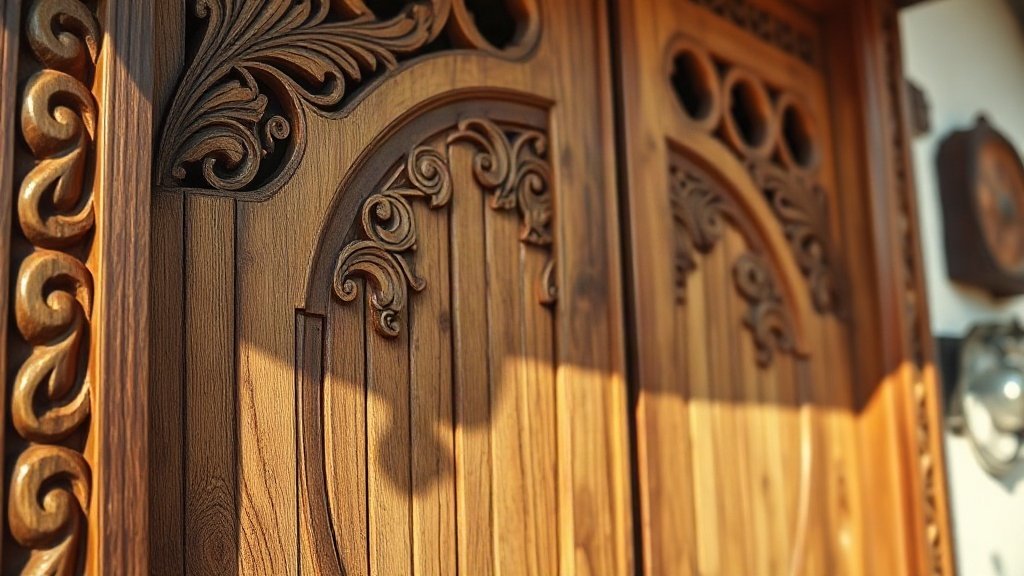
Illustration: AI-generated image
Woodcarving has been an integral part of Romanian rural life for centuries. From the monumental gates of Maramureș to the intricately carved spoons gifted at weddings, wood has served as both a practical material and a canvas for symbolism. This craft, passed down through generations, reflects a deep connection to nature, faith and community.
A Craft Rooted in Necessity and Belief
In a landscape rich with forests, wood was the most accessible material for building homes, crafting tools and creating religious objects. Carving evolved not just for function but to imbue objects with protective symbols. The tree itself held sacred meaning, and carvers often worked with oak, beech or lime wood, chosen for their durability and grain.
From Grand Gates to Everyday Objects
The most striking examples are the tall wooden gates of Maramureș, carved with geometric patterns, rosettes, and rope motifs meant to ward off evil. In contrast, smaller items like spoons, distaffs, and salt cellars were carved for daily use and often given as gifts during courtship or weddings. Each object carried specific symbols: the twisted rope for eternity, the sun for life, the tree of life for continuity.
Regional Styles and Techniques
Different regions developed distinctive styles. In Oltenia and Muntenia, carvers favoured deep relief work with floral motifs, while in Transylvania, especially in Saxon-influenced areas, more geometric patterns appear. Traditional tools are simple: chisels, gouges, and knives, with the carver often marking out designs freehand or using a compass for rosettes. The skill is learned through apprenticeship, often within families.
Symbols and Their Meanings
- The sun (soarele) – life and energy, often a central rosette.
- The twisted rope (funia) – eternity and the continuity of life.
- The tree of life (pomul vieții) – growth, fertility, connection between earth and sky.
- Stylised flowers and leaves – nature's bounty and beauty.
- Geometric patterns like diamonds and crosses – often protective, derived from ancient beliefs.
A Living Tradition
While modern materials have replaced wood in many contexts, the craft remains alive in villages and through folk art cooperatives. Master carvers continue to produce gates, furniture, and decorative pieces that are sought after by collectors. Museums such as the Village Museum in Bucharest and the Ethnographic Museum of Transylvania in Cluj-Napoca house extensive collections, offering a window into this rich heritage.
For visitors to Romania, seeking out carved gates in Maramureș or browsing traditional markets provides a tangible connection to the past. Woodcarving is not merely decorative; it is a language of symbols that speaks of resilience, faith and the beauty of everyday life.