Mucenici: Romania's Traditional March 9 Sweet Pastry Explained
Discover mucenici, the honeyed or syrup-soaked pastries Romanians enjoy on March 9 to mark the Forty Martyrs, with two regional styles and easy ways to make them at home.
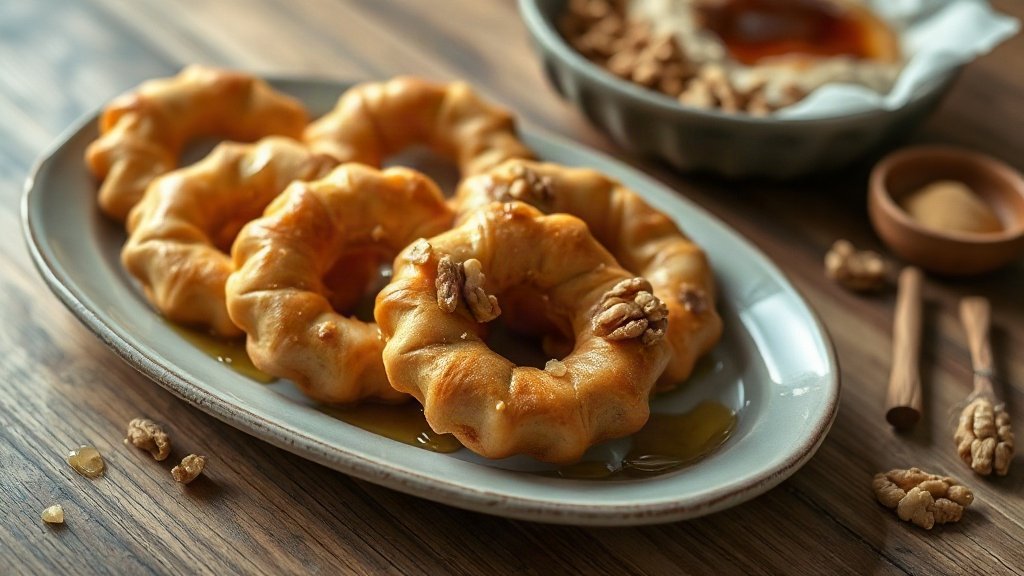
Illustration: AI-generated image
Mucenici are a sweet Romanian pastry traditionally eaten on 9 March to honour the Forty Martyrs of Sebaste, a group of Roman soldiers who, according to Christian tradition, were martyred in the 4th century. The name comes from the Romanian word for "martyrs", and the pastries are shaped to recall the figure eight or the number eight, symbolising the martyrs' crowns or the shape of the human body.
While the dish is most closely associated with this spring date, it is also enjoyed throughout the year as a comforting homemade treat. The two main regional styles reflect Romania's culinary diversity: in Moldavia, mucenici are baked as small, figure-eight-shaped breads brushed with honey and sprinkled with walnuts, while in Muntenia and Dobrogea, they take the form of small boiled dough shapes served in a sweet syrup flavoured with cinnamon and vanilla.
The Moldavian baked version
In the north-east of the country, especially in Moldavia, mucenici moldovenești are essentially a sweet bread dough. Flour, milk, eggs, butter, sugar and yeast are kneaded until smooth, then left to rise. The dough is divided and rolled into ropes, which are twisted into the traditional figure-eight shape. Before baking, the pastries are brushed with egg wash and baked until golden. Once out of the oven, they are generously brushed with honey and sprinkled with finely chopped walnuts. The result is a soft, slightly sweet bread with a fragrant honey-nut topping, perfect with a glass of warm milk or tea.
The Muntenian syrup-style version
In the south, particularly in Muntenia, mucenici muntenești are made quite differently. The dough is similar but often enriched with a little more sugar and sometimes flavoured with lemon zest. Instead of being shaped and baked, it is rolled thin and cut into small pieces, each about two to three centimetres long. Traditionally, these pieces are shaped like the number eight by pinching the middle, but many home cooks simply boil small strips. They are simmered in lightly salted water until they float, then drained. The final touch is a generous amount of syrup made from water, sugar, vanilla and cinnamon, sometimes with a splash of rum or lemon juice. The boiled mucenici are returned to the warm syrup to absorb the flavour, and the dish is served in bowls, topped with ground walnuts and extra cinnamon.
How to make mucenici at home
Whichever version you choose, mucenici are satisfying to prepare and require only basic ingredients. For the baked version, start with a simple enriched dough: combine 500g of strong white flour, 250ml of warm milk, 2 eggs, 50g of butter, 70g of sugar, a pinch of salt and 7g of dried yeast. Knead until smooth and elastic, then leave to rise for about an hour. Shape into figure eights, place on a lined baking tray, and let them proof for 30 minutes. Bake at 180°C for 15–20 minutes until golden. While still warm, brush with honey and sprinkle with walnuts.
For the syrup-style version, make a similar dough but with a little less butter and sugar, roll it out to about 5mm thick, and cut into small strips or pinch into eights. Boil in salted water for a few minutes until they rise to the surface. Meanwhile, make a light syrup by simmering 500ml of water with 200g of sugar, a cinnamon stick and a teaspoon of vanilla extract for 10 minutes. Drain the mucenici, add them to the syrup, and let them soak for at least 30 minutes before serving. Top with ground walnuts and a dusting of cinnamon.
Mucenici are best enjoyed warm, but both versions keep well for a day or two. The baked pastries can be reheated gently in the oven, and the syrup-style ones can be served at room temperature. Whether you prefer the honeyed bread of the north or the spiced syrup of the south, this ancient pastry offers a delicious taste of Romanian tradition.