Iron Gates: A Guide to Romania's Danube Gorge
The Iron Gates gorge on the Danube marks Romania's natural border with Serbia, offering dramatic scenery, hiking trails and ancient Roman relics.
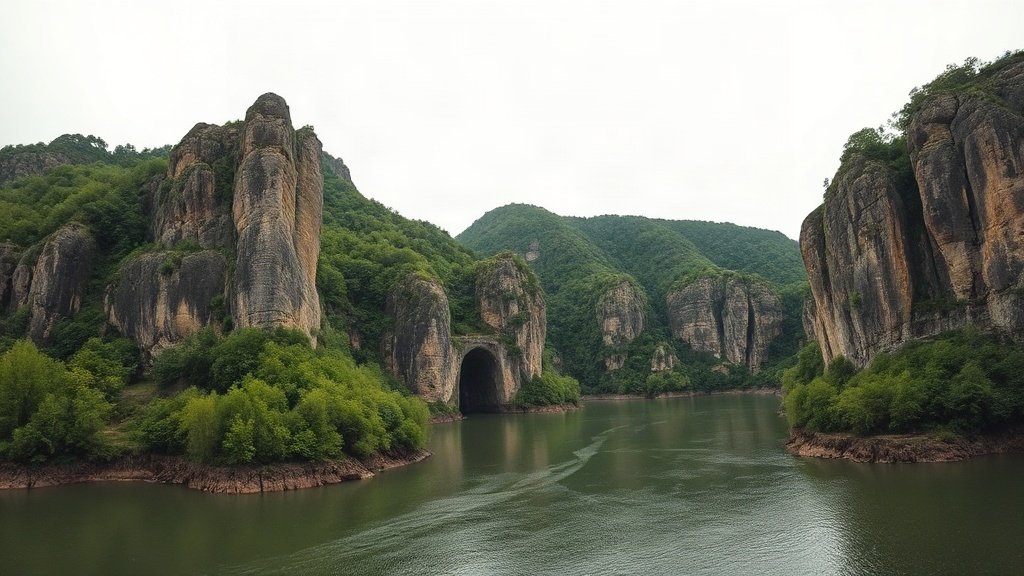
Illustration: AI-generated image
The Iron Gates (Porțile de Fier) is one of Europe's most spectacular river gorges, carved by the Danube as it cuts between the Carpathian and Balkan mountains. Stretching for over 100 kilometres along Romania's southwestern border with Serbia, this natural wonder combines sheer limestone cliffs, lush forests and a history that reaches back to Roman times.
What to see
The most iconic sight is the colossal rock sculpture of Decebalus, the last king of the Dacians, carved into a cliff on the Romanian bank near Dubova. Standing 55 metres tall, it is one of the tallest rock reliefs in Europe. Just downstream, the Tabula Traiana, a Roman memorial plaque carved into the Serbian side, commemorates Emperor Trajan's construction of a military road through the gorge in the first century AD.
Near the town of Orșova, the Iron Gates Museum offers insight into the region's archaeology and the construction of the massive hydropower dam that reshaped the landscape in the 1970s. The nearby ruins of the medieval fortress of Severin, overlooking the Danube at Drobeta-Turnu Severin, add another layer of history.
Hiking and viewpoints
For hikers, the Ciucaru Mare plateau above the village of Dubova provides some of the best panoramas of the gorge, with trails leading to viewpoints that reveal the river's winding course between the cliffs. The route to the Veterani Cave, a former hideout and strategic point, is another favourite, though the cave itself is often closed due to flooding. Marked trails vary in difficulty, and sturdy footwear is essential.
Those preferring a gentler experience can take a boat trip from Orșova or Eșelnița, gliding past the towering walls and spotting birds of prey overhead. Kayaking and canoeing are also possible in calmer sections.
Getting there and around
The main gateway towns are Orșova and Drobeta-Turnu Severin, both reachable by train or bus from major Romanian cities. From Orșova, local roads follow the river upstream, passing through the small resorts of Eșelnița and Dubova where guesthouses and campsites offer accommodation. Driving the DN57 road along the gorge is a scenic experience, with frequent pull-offs for photos. While the road is generally well maintained, it can be narrow in places, so care is needed.
When to visit
Spring and early summer bring lush greenery and higher water levels, while autumn offers mild temperatures and golden foliage. Summer can be hot, but the river breeze and shaded trails help. Winter is quiet, though some services are reduced. Whenever you go, the Iron Gates rewards those who take time to explore its dramatic landscapes and layered past.