Fasole Bătută: Romania's Garlicky White Bean Spread
This creamy, garlicky spread made from white beans is a staple of Romanian home cooking, often served as a starter with onions and bread.
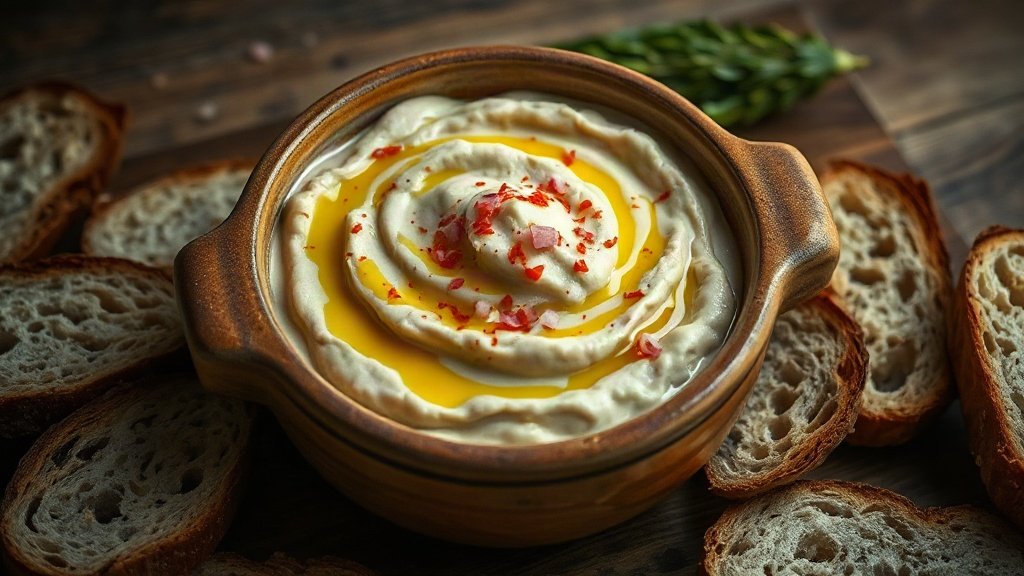
Illustration: AI-generated image
Fasole bătută is one of Romania's most comforting and versatile appetisers. Made from humble white beans, garlic, and oil, it transforms simple ingredients into a creamy, flavourful spread that appears on tables across the country, from everyday family meals to festive gatherings. Whether you encounter it in a rustic countryside inn or a city bistro, it is a dish that speaks to the heart of Romanian home cooking.
What is Fasole Bătută?
The name translates literally as "beaten beans," referring to the traditional method of mashing or pounding cooked white beans until they form a smooth paste. Typically, dried white beans such as cannellini or navy beans are soaked overnight, boiled until tender, and then combined with crushed garlic, salt, and sunflower or olive oil. Some cooks also incorporate finely chopped onion into the mixture, while others prefer to use onion only as a garnish on top.
Unlike hummus, which uses chickpeas and tahini, fasole bătută relies solely on the natural creaminess of white beans, enhanced by the pungent kick of raw garlic and the richness of good-quality oil. The result is a spread that is both hearty and surprisingly light, with a satisfying texture that can range from silky smooth to pleasantly rustic.
How It's Usually Served
Fasole bătută is typically served cold or at room temperature as a starter or side dish. It is spread generously on fresh bread—often a crusty country loaf—and finished with a scattering of finely chopped raw onion, a drizzle of oil, and sometimes a sprinkle of sweet or hot paprika. The onion adds a sharp, refreshing contrast to the creamy beans.
In many Romanian homes, it appears as part of a meze-style spread alongside other traditional appetisers such as salată de vinete, zacusca, and cured meats. It is also a common feature on fasting menus, as it is naturally vegetarian and can be made without any animal products, making it a reliable option during Orthodox fasting periods when oil is permitted.
Making It at Home
Creating your own fasole bătută is straightforward and requires only a few basic ingredients. Begin by soaking dried white beans in plenty of cold water for at least eight hours or overnight. Drain and rinse them, then simmer in fresh water until completely tender—this usually takes between one and two hours depending on the bean variety. Reserve some of the cooking liquid before draining.
While the beans are still warm, transfer them to a large bowl and mash them with a potato masher or fork for a chunkier texture, or use a food processor or blender for a smoother result. Add finely crushed garlic to taste, a generous pinch of salt, and gradually stream in oil while mixing, until the spread reaches a creamy, cohesive consistency. If it feels too thick, add a splash of the reserved bean cooking water.
Traditionally, the beans are pounded with a wooden pestle in a deep bowl, which incorporates a little air and yields a light, almost whipped texture. For an extra layer of flavour, some cooks sauté finely chopped onion in a little oil until golden and fold it through the mixture. However, the simplest version—just beans, garlic, salt, and oil—remains the most classic.
Tips for the Best Result
- Use good-quality dried beans and soak them properly; this improves both texture and digestibility.
- Don't overcook the beans—they should be tender but not falling apart, so the spread retains some body.
- Taste as you go when adding garlic; raw garlic can be intense, so start with one or two cloves and adjust.
- Add the oil slowly in a thin stream while mixing to help it emulsify and create a creamier consistency.
- Season generously with salt, as beans can take a lot; taste and adjust before serving.
- Let it rest for at least 30 minutes at room temperature before serving to allow the flavours to meld.
- Serve at room temperature rather than fridge-cold for the best flavour and spreadability.
Fasole bătută is a wonderful example of how Romanian cuisine transforms simple, affordable ingredients into something deeply satisfying. Whether you enjoy it as a quick snack on toast or as part of a larger spread, it is a dish that invites you to slow down and savour the moment.