Ciorbă de Perișoare: Romania's Hearty Meatball Soup Explained
This sour, comforting soup features tender meatballs, vegetables and lovage in a tangy broth that's a staple of Romanian home cooking.
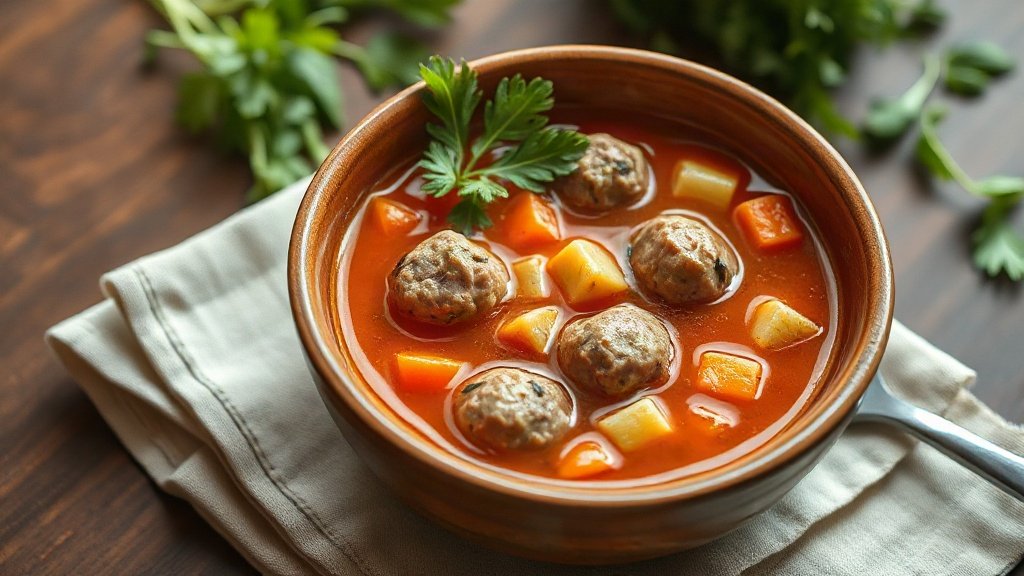
Illustration: AI-generated image
Ciorbă de perișoare is one of Romania's most beloved soups, found on family tables across the country. It combines tender pork and beef meatballs with a sour broth enriched with vegetables and plenty of fresh herbs, making it a complete meal in a bowl.
The word "ciorbă" refers to the sour soups that are a hallmark of Romanian cuisine, typically soured with borș (a fermented wheat bran liquid), lemon juice or vinegar. "Perișoare" means "little balls" – the small, flavourful meatballs that give the soup its name and substance.
A soup with deep roots
Like many Romanian dishes, ciorbă de perișoare has influences from Ottoman and Balkan cooking, but it has been adapted over generations to local tastes. It is particularly popular in the southern region of Muntenia, though you will find versions everywhere from the Danube Delta to Transylvania. It is a staple of home cooking rather than restaurant menus, often made on weekends or for family gatherings.
The soup is considered a comfort food, warming in winter but light enough for warmer months. It is also often recommended as a gentle, nourishing dish for children or those recovering from illness, thanks to its simple, wholesome ingredients.
What goes into the pot
The foundation of ciorbă de perișoare is a clear broth made with water, onions, carrots, celery and sometimes parsnip. The vegetables are simmered until tender; some cooks leave them in chunks, while others prefer a smoother base. The meatballs are traditionally made from a mixture of minced pork and beef, though some recipes use only pork or even turkey for a lighter version. The mince is blended with rice, grated onion, egg, fresh dill and parsley, and seasoned with salt and black pepper. The rice helps bind the meatballs and gives them a soft, almost melt-in-the-mouth texture.
Some families add a spoonful of tomato paste or a couple of ripe tomatoes to the broth for colour and a hint of sweetness, while others keep it pale and clear. A few recipes include smoked bacon or a ham bone for extra depth, but the classic version remains light and clean. The key is balancing the sourness so it enlivens rather than overwhelms.
The sourness comes from borș, a fermented liquid made from wheat bran and cornmeal that is unique to Romanian cuisine. If borș is not available, many cooks use lemon juice or a splash of vinegar. Fresh lovage (leuștean) is essential at the end – its celery-like flavour defines the soup. Borscht-like in its tang but with a distinct character, the broth should be bright and invigorating.
Serving and enjoying
Ciorbă de perișoare is always served hot, usually as a first course at lunch. It is traditionally accompanied by fresh bread and sometimes a spoonful of smântână (sour cream) stirred in at the table. Pickled hot peppers or a simple salad of tomatoes and cucumbers often follow. Many Romanians believe a good ciorbă should "make you sweat", so don't be surprised if you reach for a napkin.
If you want to try making it at home, keep the meatballs small – about the size of a walnut – so they cook quickly and absorb the broth. Be generous with fresh herbs, and add the lovage only in the last minute to preserve its aroma. The result is a soup that is both hearty and refreshing, a true taste of Romanian hospitality.