Ciorbă: A Guide to Romania's Sour Soups and How to Order Them
Sour soups are at the heart of Romanian home cooking. Here is how ciorbă differs from supă, what gives it that tang, and which varieties to try first.
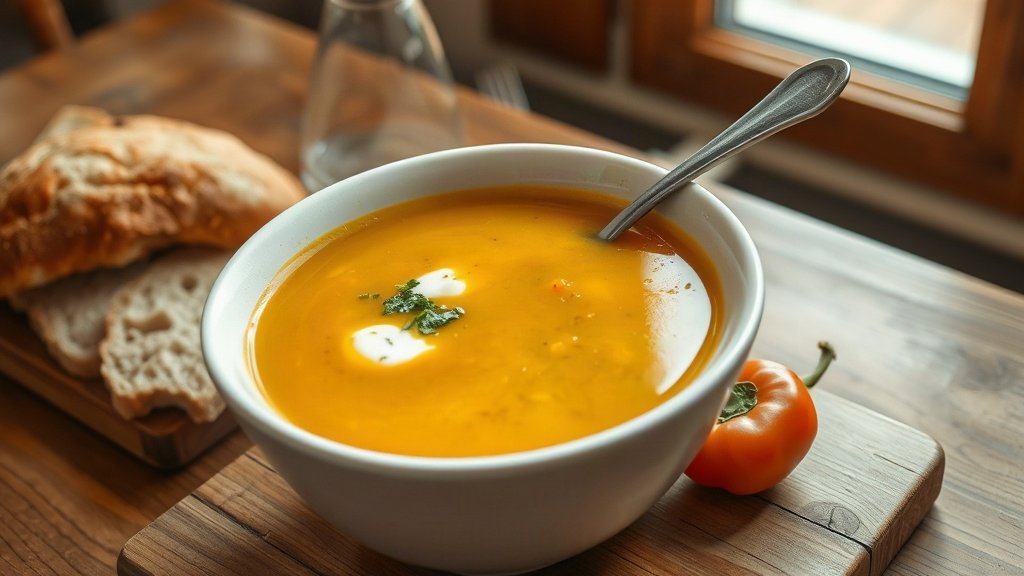
Illustration: AI-generated image
Ask almost any Romanian what a proper lunch begins with, and the answer is likely to be a bowl of soup. More specifically, it is likely to be ciorbă, the tangy, vegetable-rich soup that sits at the centre of the country's everyday cooking.
Ciorbă or supă?
The two words are not interchangeable. Supă usually means a clear, mild soup, often with noodles or small dumplings. Ciorbă is soured, which gives it a bright, slightly sharp flavour that is quite different from the creamy or purely savoury soups found elsewhere in Europe.
What makes it sour?
The tang can come from several traditional ingredients:
- Borș, a fermented liquid traditionally made from wheat or corn bran.
- Sauerkraut juice, often used in cabbage-based soups.
- Lemon juice or vinegar, a simple modern shortcut.
- Sorrel or other sour greens, used in spring and summer.
Varieties worth trying
Ciorbă de burtă is made with tripe and is usually finished with garlic, sour cream and vinegar. It is a classic, and a well-loved one, though it is an acquired taste for some visitors.
Ciorbă de perișoare is a gentler place to start. It contains small meatballs and vegetables, with a pleasant sourness and fresh herbs.
Ciorbă de legume is the vegetable version, and a good choice for vegetarians, though it is worth checking how it has been made.
Ciorbă de fasole cu afumătură combines beans with smoked meat for a hearty, warming bowl that suits colder months.
Ciorbă rădăuțeană, associated with the Bukovina region in the north, is a chicken soup enriched with sour cream and garlic.
How to eat it like a local
Ciorbă is often served with a few extras on the side or the table:
- Smântână (sour cream), stirred in to soften the acidity.
- Ardei iute (hot chilli pepper), taken in small bites between spoonfuls.
- Fresh bread, which is rarely far away.
- Chopped fresh dill, parsley or lovage, depending on the soup.
Many restaurants offer soup as the first course of a set lunch, so it is an easy way to try several kinds over a few days.
A season for every soup
Romanian cooks tend to follow the seasons. Lighter, greener soups appear in spring and summer, while bean and smoked-meat versions come into their own as the weather turns. If you are visiting in autumn or winter, a steaming bowl is a good way to understand why this dish has lasted so long on Romanian tables.
If you are cooking at home, start with a vegetable or meatball version. Once you have found a sourness you like, you can adjust it to taste with a little more lemon or borș.