Zacuscă: Romania's Smoky Vegetable Spread for Winter
Zacuscă is a slow-cooked spread of roasted aubergines, peppers and onions, preserved in jars to bring summer's flavour to the colder months.
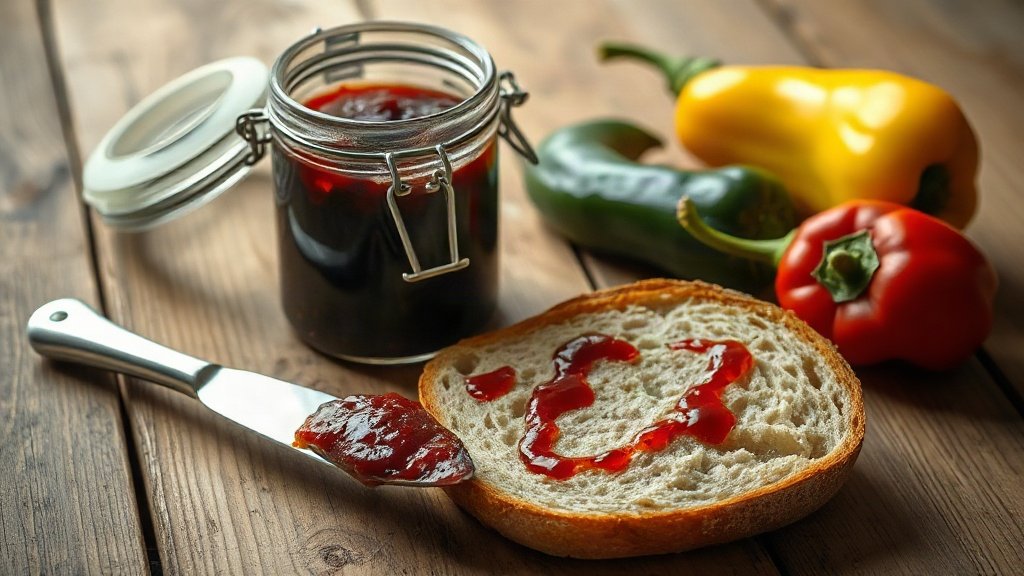
Illustration: AI-generated image
As autumn settles over Romania, kitchens fill with the rich, smoky scent of roasting vegetables. This is the season for making zacuscă, a thick, savoury spread that captures the taste of late summer in a jar. Made from aubergines, peppers, onions and tomato, it is a staple of Romanian pantries, enjoyed all winter long.
What is Zacuscă?
Zacuscă is a traditional Romanian vegetable spread, similar in spirit to Balkan ajvar but often richer and more complex. The base is always roasted aubergines and red peppers, which give it a deep, smoky flavour. Onions are slowly fried until sweet and golden, then combined with the roasted vegetables and tomato paste or fresh tomatoes. The mixture is simmered gently until thick and concentrated, then seasoned with salt, pepper and sometimes a little sugar or vinegar to balance the taste.
The result is a dark, glossy paste with a velvety texture and a robust, full-bodied flavour. It can be eaten simply on bread, but it also works as a dip, a side dish or a condiment for meats and polenta.
A Basic Zacuscă Recipe
While every family has its own method, the core process is the same. Start by roasting whole aubergines and red peppers until their skins are charred and blistered. This can be done on a barbecue, over a gas flame or in a hot oven. Once cool enough to handle, peel off the skins, remove the seeds from the peppers, and chop or mince the flesh. Some cooks prefer a coarse texture, while others pass the vegetables through a mincer for a smoother result.
In a large pot, slowly cook finely chopped onions in oil until soft and translucent, but not browned. Add the roasted vegetables and tomato paste, then cook over low heat, stirring often to prevent sticking. The zacuscă is ready when it thickens and a spoon drawn through the pot leaves a trail. Season at the end with salt, pepper and, if desired, a pinch of sugar or a splash of vinegar. Pour the hot mixture into sterilised jars, seal tightly and store in a cool, dark place.
Regional Variations
Zacuscă is endlessly adaptable, and many regions have their own signature version. In some parts of Transylvania, mushrooms are added for an earthy depth, while other areas include white beans, which give the spread a creamier texture and a boost of protein. Carrots, celery or hot peppers might also appear, depending on local tastes and what is abundant in the garden. Some cooks swap the tomato paste for fresh, ripe tomatoes, while others add a bay leaf or a few peppercorns during cooking for extra aroma.
Serving and Storing
Zacuscă is most commonly spread on fresh bread, perhaps with a slice of telemea cheese or a few olives. It also makes a wonderful addition to a meze platter, a topping for bruschetta or a filling for savoury pastries. A spoonful stirred into soups or stews adds instant depth. Properly sealed jars will keep for months in a cool pantry, and once opened, the spread should be refrigerated and consumed within a week or two.
Making zacuscă is a ritual that brings families together, often with several people peeling, stirring and filling jars at once. It is a practical way to preserve the harvest, but also a delicious reminder of summer's warmth when the days grow short.