How to Join a Hora: Romania's Traditional Circle Dance
The hora is a joyful circle dance that brings Romanians together at weddings, festivals and holidays. Here's how to join in with confidence.
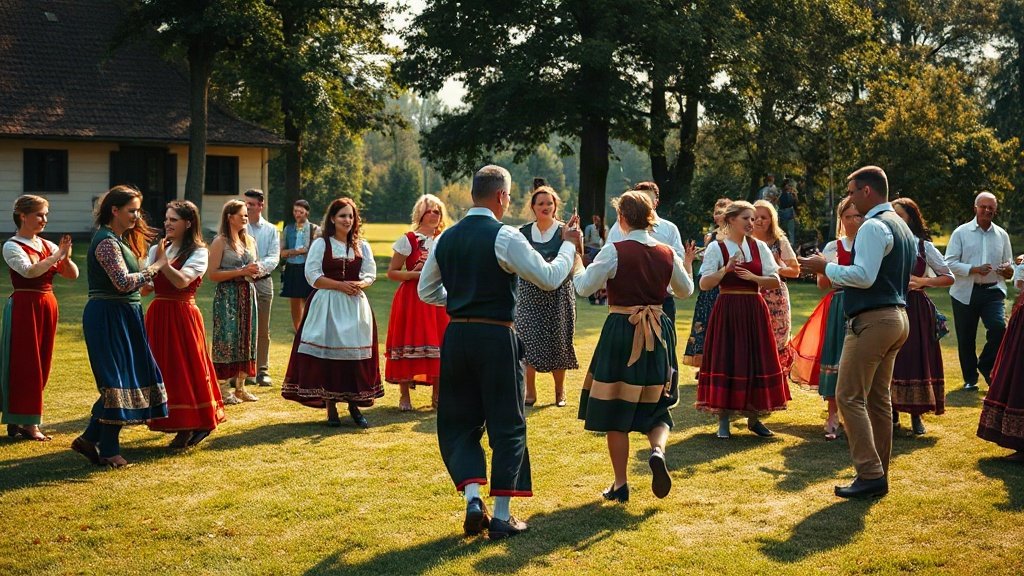
Illustration: AI-generated image
The hora is the heartbeat of Romanian celebration. When the music starts and hands link, a circle forms and everyone is welcome. If you are new to Romania, learning to join a hora is one of the fastest ways to feel part of the community. It needs no special skill, no partner and no previous dance experience — just a willingness to move with the group.
What is the hora?
The hora is a traditional circle dance found across Romania and the wider Balkans. Dancers hold hands or link arms, stepping in a simple pattern while the circle rotates, usually to the right. The tempo can range from slow and stately to fast and energetic, depending on the music and region. The dance symbolises unity, equality and shared joy, which is why it appears at almost every important social gathering, from weddings to village festivals.
When you'll encounter it
You will see the hora at weddings, baptisms, national holidays, folk festivals and even spontaneous gatherings where musicians play. At weddings, the hora is often danced after the ceremony and again late into the night. During public events, such as New Year's Eve in city squares or village days, large horas may form with dozens or hundreds of people. If you hear a lively, rhythmic tune with strings, accordion or panpipes and see people linking hands, it is almost certainly the hora.
How to join in
Joining is simple. Look for an open space between two dancers, smile and gently take the hands offered to you. Do not worry about making a mistake — the circle will carry you along. The basic step is the same for everyone, and beginners are always given room to learn. If you are unsure, stand near the middle of the circle, not at the very front, so you can watch others' feet.
Basic steps
The most common hora in Romania is the hora mare, danced to a 6/8 rhythm. The steps are repeated throughout:
- Step to the right with your right foot.
- Bring your left foot to meet it, stepping behind or in front.
- Step to the right again with your right foot.
- Lift your left foot slightly, then step on it to the right, shifting your weight.
In practice, the rhythm feels like: right, together, right, lift-step. The circle moves steadily to the right, but dancers also move slightly back and forward, giving the circle a gentle sway. Faster horas may have quicker steps, but the essential pattern remains.
Etiquette and tips
Hold hands firmly but not tightly — a relaxed grip allows the circle to move smoothly. Do not wear rings that might catch on others' fingers. Wear comfortable shoes; you may be dancing for a long time. If you need to leave the circle, do not break the line suddenly; gesture to a neighbour and step back, allowing the dancers on either side to close the gap. Above all, smile and enjoy the music. The hora is about collective joy, not perfection.
Once you have danced a hora, you will understand why it remains at the heart of Romanian social life. It turns strangers into neighbours and guests into participants. So next time the music starts, don't stand on the side — take a hand and step into the circle.