Vișinată: Romania's Sour Cherry Liqueur and How to Enjoy It
Discover vișinată, the ruby-red Romanian liqueur made from sour cherries. Learn how it's made, when to drink it and why it tastes like summer in a glass.
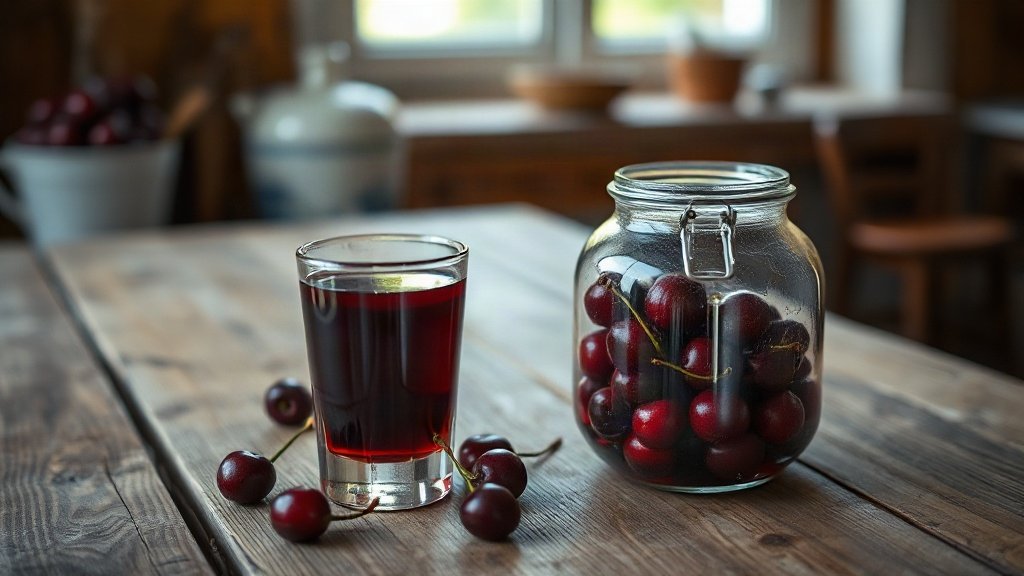
Illustration: AI-generated image
As the first sour cherries ripen in late June, kitchens across Romania fill with the scent of fruit and sugar. This is the season for making vișinată, a jewel-red liqueur that captures the sharp, sweet flavour of vișine – the small, tart cherries that grow in gardens and orchards throughout the country.
Not quite a wine, not a spirit, vișinată sits somewhere between a cordial and a liqueur. It is almost always homemade, passed down through generations, and its recipe varies from family to family. But the basic method is wonderfully simple: sour cherries, sugar and a clear fruit brandy such as țuică or vodka, left to macerate in a large glass jar, often on a sunny windowsill, for several weeks.
What Is Vișinată?
Vișinată is a traditional Romanian liqueur made from sour cherries (Prunus cerasus), sugar and alcohol. The cherries are often left whole, with their stones intact, which adds a gentle almond note from the kernels. The result is a deep ruby liquid, sweet but with a pleasant tartness, and usually between 20 and 30 percent alcohol by volume.
The name comes from vișină, the Romanian word for sour cherry. It is a close relative of vișinata, a similar drink found in neighbouring countries, but in Romania it holds a special place at family gatherings and celebrations.
How Is It Made?
Making vișinată is a summer ritual in many Romanian households. The classic recipe calls for three simple ingredients: sour cherries, sugar and strong alcohol. Some families use homemade țuică (plum brandy), others use neutral spirits such as vodka or even commercial fruit brandy.
The process is straightforward: clean the cherries, remove the stems but leave the stones, and fill a large glass jar about three-quarters full. Add sugar – typically in equal weight to the cherries, or a little less – then pour in the alcohol until the fruit is completely covered. Seal the jar and leave it in a warm place, such as a sunny windowsill, for at least four to six weeks. During this time, the cherries release their juice and flavour, and the sugar slowly dissolves into the liquid.
Some cooks stir the mixture gently every few days, while others simply let time do the work. When ready, the liqueur is strained and bottled, and the boozy cherries are kept aside – they make a delicious boozy garnish for desserts or a cheeky spoonful with coffee.
How to Drink Vișinată
Vișinată is versatile. It is often served chilled as an aperitif or, more commonly, as a digestif after a heavy meal. A small glass – no more than 50 ml – is all you need; its sweetness and fruitiness can be deceptive.
It also pairs beautifully with desserts, especially chocolate cakes, walnut torte or a simple bowl of fresh fruit. Some like to add a splash to sparkling wine or soda water for a longer, lighter drink. And in winter, a spoonful stirred into hot tea is a comforting home remedy for a sore throat – though that claim is based more on tradition than science.
A True Taste of Romanian Summer
Because vișinată is almost never produced commercially on a large scale, the best way to taste it is to be invited into a Romanian home, or to make it yourself. The recipe is forgiving, and the ingredients are easy to find in late spring and early summer, when sour cherries appear at markets.
If you visit Romania in June or July, keep an eye out for vișine at the piață. Buying a kilo or two and making your own vișinată is a lovely way to take a piece of Romanian summer home with you – though you will need patience while it macerates.
In a country known for its strong plum brandy, vișinată offers a gentler, sweeter alternative. It is a drink of hospitality, handed over with pride from a host to a guest, and it tastes of long summer afternoons, ripe fruit and a tradition that has been passed down through generations.