Ursul: Romania's Bear Dance of Winter Renewal
Discover the ancient custom of the bear dance, where costumed performers bring luck and drive away evil spirits during the darkest days of the year.
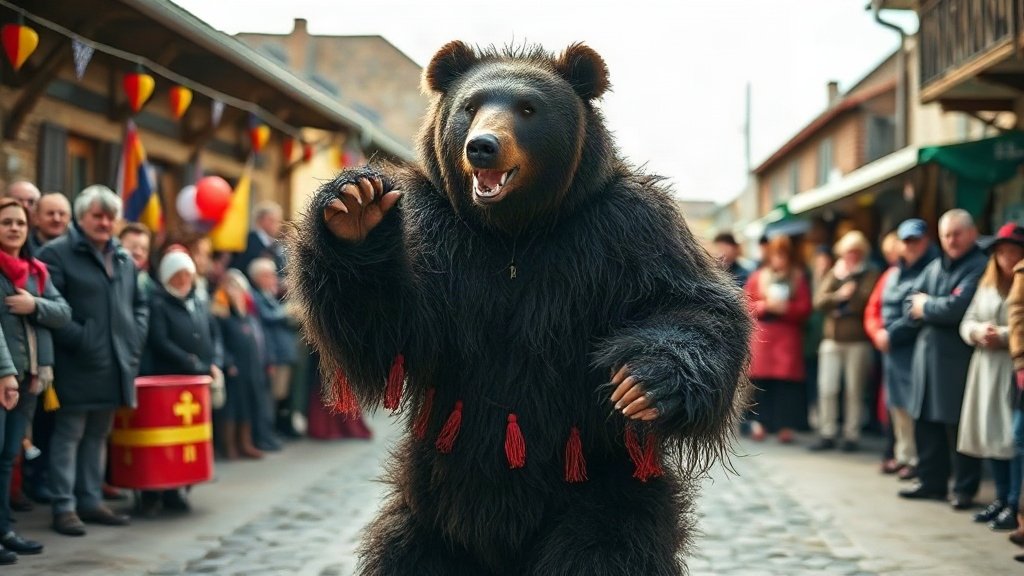
Illustration: AI-generated image
In the heart of winter, as the old year gives way to the new, villages across Romania's Moldova region echo with the growls and heavy steps of the Ursul — the bear dance. More than mere entertainment, this dramatic ritual carries centuries of belief in death, rebirth and the cleansing of evil spirits.
A Dance with Ancient Roots
The bear dance predates Christianity, rooted in agrarian societies that revered the bear as a symbol of strength, fertility and the cycle of nature. In Romanian folklore, the bear hibernates and re-emerges, mirroring the death and rebirth of the natural world. By imitating the bear, communities hoped to awaken the earth, ensure bountiful harvests and ward off misfortune.
The Costume and the Performance
Traditionally, the bear costume was made from a real bearskin, though today synthetic fur or sheepskin is often used. The dancer wears the heavy pelt over his head and back, his face hidden, while red tassels, ribbons and bells adorn the costume. A ursar (bear tamer) leads the bear on a chain or rope, accompanied by musicians playing drums, flutes and sometimes the cobza.
The dance itself is a rhythmic, stomping procession through the village. The bear lurches, rolls on the ground, and playfully chases onlookers, while the tamer cracks a whip and shouts commands. The performance is both chaotic and controlled, symbolising the taming of wild forces for the community's benefit.
Ritual and Symbolism
Every element carries meaning. The bear's death-like collapse at the end of the dance, followed by its resurrection, represents the end of winter and the coming of spring. The loud bells and whip cracks are believed to drive away malevolent spirits. Villagers often give the performers money, food or drink, a gesture that invites good luck into their homes for the year ahead.
A Living Tradition
Today, the bear dance remains a cherished part of winter festivities, especially in rural Bacău and Neamț counties. While some performances have moved to festival stages, many troupes still walk from house to house, keeping the tradition alive for new generations. Visitors lucky enough to witness it will find a powerful blend of theatre, music and ancient belief.