The Zmeu: Romania's Dragon of Folk Tales
Meet the zmeu, the shape-shifting antagonist of Romanian fairy tales, and discover why this complex creature still captures the imagination.
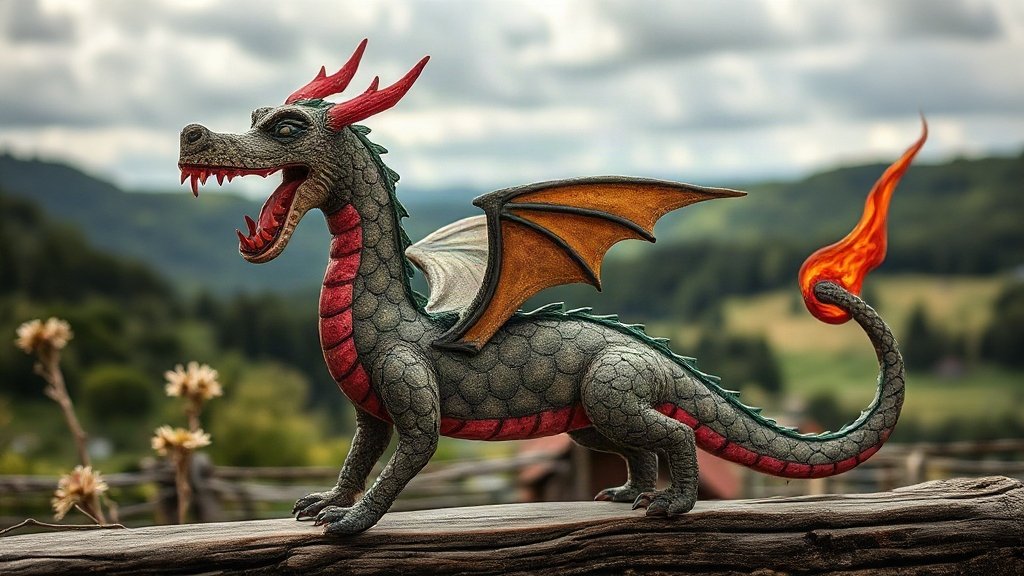
Illustration: AI-generated image
In the rich tapestry of Romanian folklore, few figures loom as large as the zmeu. Often translated as 'dragon', this creature is far more than a simple beast: it is a shape-shifter, a kidnapper, a formidable adversary to heroes, and occasionally a tragic figure. Understanding the zmeu offers a window into the fears, values, and imagination of traditional Romanian village life.
The zmeu typically appears as a giant, humanoid figure with dragon-like features—scaly skin, sometimes wings, and the ability to breathe fire or control the weather. Unlike the Western dragon that hoards treasure in a cave, the zmeu is often a powerful lord who lives in a palace in the 'other realm' (tărâmul celălalt) and abducts beautiful maidens, especially princesses, to be his brides. This act sets the stage for countless tales in which a young hero, often Făt-Frumos, must journey to the zmeu's domain, outwit or overpower him, and rescue the captive.
In Ion Creangă's beloved story 'Harap Alb' (The White Moor), the zmeu appears as a formidable foe who tests the hero's cunning and courage. Similarly, in Petre Ispirescu's 'Tinerețe fără bătrânețe și viață fără de moarte' (Youth Without Age and Life Without Death), the hero encounters zmei as guardians of the mystical realm. These tales, passed down orally for centuries and later collected by folklorists, cement the zmeu's role as the archetypal antagonist whose defeat symbolises the triumph of good over evil, order over chaos.
Yet the zmeu is not always purely evil. Some stories depict zmei as wise, powerful beings who can be helpful if treated with respect. They are associated with natural forces—storms, mountains, and forests—and often possess magical objects like a flying horse, a self-playing musical instrument, or a bottomless purse. This ambiguity makes the zmeu a compelling figure, reflecting the awe and fear that rural communities felt towards the untamed natural world.
The word 'zmeu' is believed to derive from the Slavic 'zmey', meaning serpent or dragon, reflecting the shared mythological heritage of Eastern Europe. Unlike the multi-headed dragons of some Balkan tales, the Romanian zmeu usually has one head and is distinguished by its human-like qualities: it rides a horse, wields a club, and can speak. This anthropomorphism makes the creature a more complex and relatable villain, capable of emotions like jealousy and love.
Today, the zmeu continues to appear in Romanian literature, art, and even modern media. Its image adorns folk pottery, wood carvings, and painted eggs, while contemporary writers and filmmakers reinterpret the myth for new audiences. The zmeu remains a powerful symbol of the challenges that must be overcome and the resilience of the human spirit.
For visitors to Romania, encountering the zmeu in local crafts or through storytelling is a delightful way to connect with the country's deep cultural roots. Whether you spot a stylised dragon on a traditional rug or hear a tale by the fireside, the zmeu invites you into a world where magic is real and every hero has a dragon to face.