Steagul de Nuntă: Romania's Colourful Wedding Flag Tradition
Discover the meaning and rituals behind steagul de nuntă, the decorated wedding flag that leads Romanian marriage celebrations.
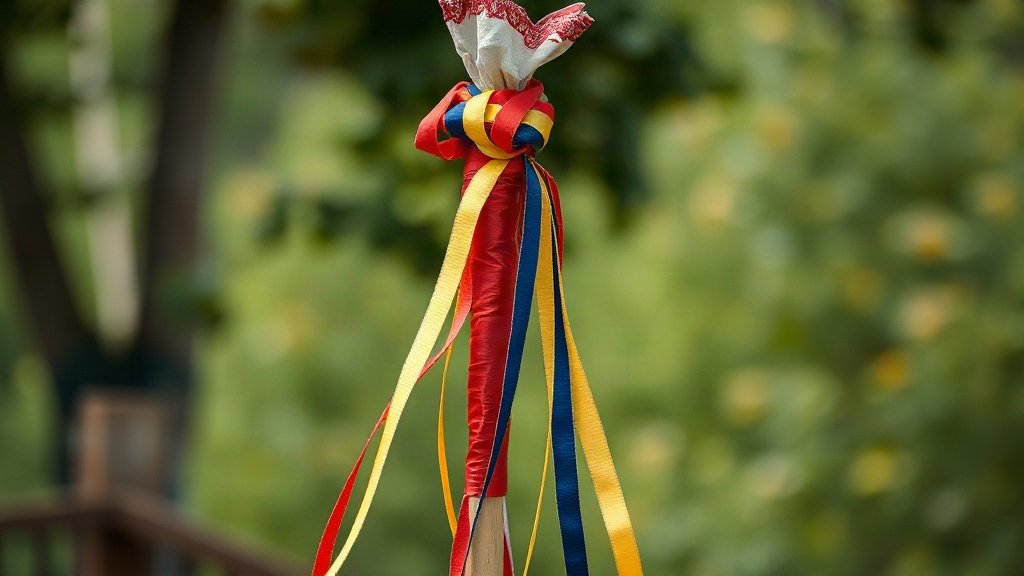
Illustration: AI-generated image
At a traditional Romanian wedding, before the bride and groom make their entrance, a splash of colour often appears at the head of the procession. This is the steagul de nuntă — the wedding flag — a handcrafted banner that carries centuries of symbolism and joy. More than just decoration, the flag plays a central role in the festivities, marking the start of the celebration and guiding the party from house to church and beyond.
The Making of the Flag
The wedding flag is typically created by the groom's friends or young men from the village on the eve of the wedding. It consists of a long wooden pole, often painted or wrapped in cloth, topped with a handwoven towel (ștergar) or a piece of embroidered fabric. Ribbons in bright colours—red, white, blue, and green—stream from the top, and fresh flowers, basil, or wheat ears are often tied to the pole.
Each element carries meaning:
- The pole symbolises strength and stability, reflecting the foundation of the new family.
- The cloth or towel represents purity and the domestic skills the couple will share.
- The ribbons are wishes for a colourful, joyful life, with red for love, white for peace, and green for fertility.
- Flowers and wheat stand for beauty, abundance, and the hope of a prosperous union.
In some regions, small bells are attached, adding a cheerful jingle as the flag is waved.
The Ritual of the Flag
On the wedding day, a young man chosen as the stegar (flag bearer) carries the flag at the front of the bridal procession. He often dances with it, spinning and waving the pole high, while the crowd follows. The flag leads the way to the church for the ceremony and later to the reception, where it is planted in the ground or displayed prominently.
The flag's journey is not merely symbolic. During the celebrations, the stegar may perform a special dance with the flag, sometimes balancing it on his palm or forehead, to the delight of guests. At the end of the night, the flag is either broken and its pieces shared for good luck, or given to a young child, symbolising the passing on of tradition and the hope of future weddings.
Where to Experience It
While modern weddings may skip this custom, many rural communities across Transylvania, Maramureș, and Bucovina still uphold it. Visitors who are invited to a traditional village wedding will likely see the flag in action. Folk ensembles and cultural festivals also recreate the ritual, offering a glimpse into this vibrant aspect of Romanian heritage.