Sarmale: Romania's Beloved Cabbage Rolls Explained
Discover the history, regional variations and serving traditions behind Romania's most iconic dish, made with pickled cabbage leaves and a savoury filling.
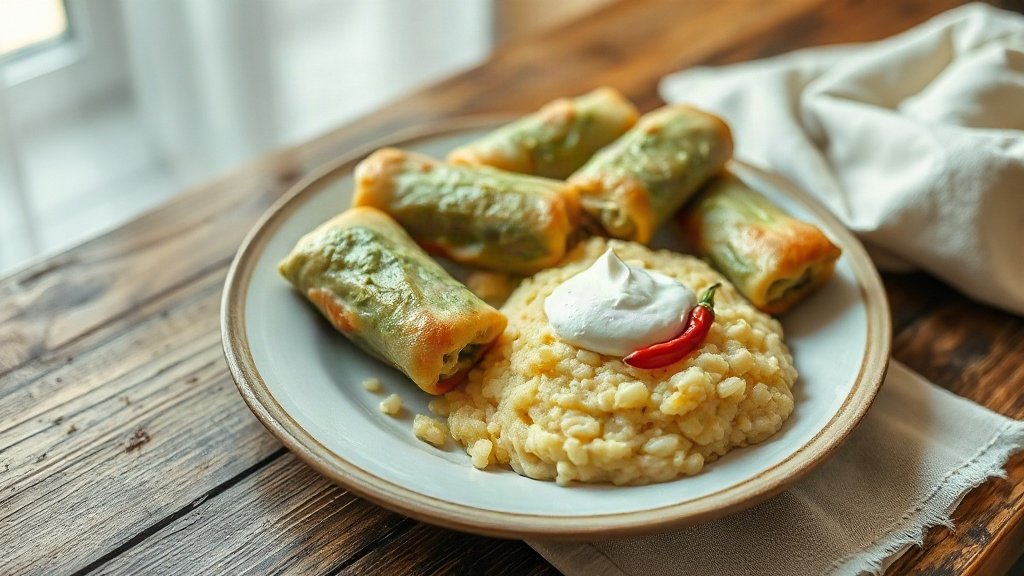
Illustration: AI-generated image
Few dishes say “Romania” quite like sarmale – tender rolls of pickled cabbage leaves wrapped around a rich, savoury filling. They are the centrepiece of festive tables, a staple of Sunday lunches, and a comfort food that carries generations of family tradition. For visitors, trying sarmale is an essential part of understanding Romanian food culture.
What goes into sarmale?
At its heart, sarmale is a dish of humble ingredients transformed by patience. The classic filling combines minced pork (sometimes mixed with beef), rice, finely chopped onions, and a blend of herbs – usually fresh dill, thyme, and sometimes a little paprika. The mixture is rolled into whole pickled cabbage leaves, which give the dish its characteristic tang. The rolls are then packed tightly into a pot, layered with smoked pork ribs, bacon, or a chunk of smoked ham, and simmered slowly in a tomato-based sauce, often with a splash of sauerkraut juice.
Regional variations
While the basic idea is consistent, sarmale vary across the country. In Transylvania and Banat, they tend to be smaller and more delicate, sometimes made with fresh cabbage leaves rather than pickled ones. In Dobrogea, near the Black Sea, vine leaves replace cabbage, giving a lighter, slightly more acidic result – a style shared with neighbouring Greece and Turkey. Vegetarian versions, often filled with rice, mushrooms, and herbs, are increasingly common, particularly during fasting periods in the Orthodox calendar, when meat is avoided.
How sarmale are cooked and served
The key to great sarmale is low, slow cooking. The rolls need several hours over gentle heat for the flavours to meld and the cabbage to become meltingly soft. They are traditionally served hot, with a generous spoonful of mămăligă (polenta) and a dollop of smântână (sour cream). A pickled hot pepper or a slice of fresh chilli on the side is a common – and welcome – addition. Some cooks add a spoonful of the pot’s cooking liquid over the top, which is rich and deeply savoury.
When and where to enjoy sarmale
Sarmale are not an everyday dish; they are reserved for moments that matter. No Romanian Christmas or Easter table is complete without them, and they are equally at home at weddings, christenings, and family gatherings. Visitors will find sarmale on the menu of most traditional Romanian restaurants, where they are often listed as a “traditional dish” or “speciality of the house”. For the most authentic experience, however, nothing beats being invited to a home-cooked meal – sarmale made by a Romanian grandmother are widely considered the gold standard.
A taste of Romania
More than just a recipe, sarmale represent the Romanian approach to food: resourceful, generous, and deeply tied to family and celebration. Whether you try them in a rustic countryside inn or a bustling city restaurant, they offer a delicious introduction to the country’s culinary soul.