Salată de Boeuf: Romania's Festive Meat and Vegetable Salad Explained
Discover the story behind Romania's beloved holiday salad, made with finely chopped vegetables, meat, and mayonnaise, and learn how it's traditionally prepared and served.
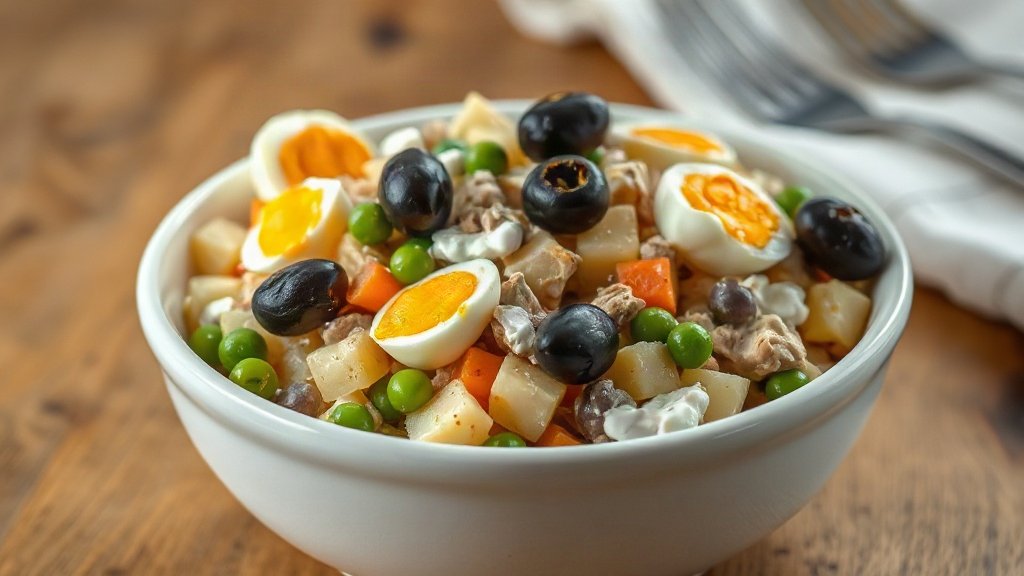
Illustration: AI-generated image
Salată de boeuf is a cornerstone of Romanian festive tables, a rich and creamy salad that appears at Christmas, Easter, New Year, and weddings. Despite its name meaning “beef salad,” it is often made with chicken or a mix of meats, bound together with generous amounts of mayonnaise and studded with finely diced vegetables and pickles. It is a dish of French origin that has been wholeheartedly adopted and adapted in Romanian home kitchens, becoming a symbol of celebration and togetherness.
Origins and Name
The dish traces its roots to the French salade de boeuf, a classic composed salad that became popular in Romania during the 19th century, when French culinary influence was strong among the upper classes. Over time, Romanian cooks adapted it to local tastes and available ingredients, and it evolved into a finely chopped, mayonnaise-based salad that is more akin to a bound salad than the original French version. The name stuck, even though today’s home cooks often use chicken, turkey, or a combination of boiled meats rather than beef.
Traditional Ingredients
A classic salată de boeuf contains boiled potatoes, carrots, parsnip, and celery root, all diced into very small cubes. To these are added cooked peas, finely chopped pickled cucumbers (often the small, sour cornichon type), and diced boiled meat—usually chicken breast or beef. Hard-boiled eggs are separated: the yolks are mashed into the mayonnaise to enrich it, while the whites are diced and folded into the salad. The whole mixture is bound with a generous amount of mayonnaise, seasoned with salt, pepper, and often a touch of mustard.
How It Is Made
The key to a good salată de boeuf is uniformity and patience. All vegetables and meat should be cut into evenly sized, tiny cubes—no larger than half a centimetre—so that each spoonful delivers a balanced mix of flavours and textures. The vegetables are boiled separately until just tender, then drained well and cooled completely before dicing. The mayonnaise is typically homemade, using egg yolks, oil, lemon juice or vinegar, and mustard, but good-quality shop-bought mayonnaise is common in busy households. Once everything is mixed, the salad is mounded onto a serving platter and decorated.
Serving and Decoration
Salată de boeuf is always served cold, as a starter or side dish. The presentation is an important part of the tradition: the salad is often shaped into a dome or ring, then covered with a thin layer of mayonnaise and decorated with sliced hard-boiled eggs, olives, strips of pickled red pepper, parsley leaves, or delicate patterns made with peas and carrot dice. It is a dish that invites creativity, and many families have their own signature decoration, often involving the initials of the host or a festive motif.
Variations Across Romania
While the core recipe is consistent, regional and personal variations abound. Some cooks add diced apple for a touch of sweetness, while others include chopped gherkins or capers for extra tang. In some households, the meat is omitted entirely during Orthodox fasting periods, replaced with additional vegetables or even flaked fish, though the dish is then technically a different salad. A vegetarian version with only vegetables and no meat or eggs is also popular at summer gatherings.
Making It at Home
To make salată de boeuf at home, plan ahead: the vegetables and meat need time to boil, cool, and be finely diced. Use waxy potatoes that hold their shape, and avoid overcooking the carrots and parsnip so they remain slightly firm. Homemade mayonnaise is well worth the effort; it gives the salad a silkier texture and fresher taste. Mix the salad gently to avoid crushing the vegetables, and let it rest in the refrigerator for at least an hour before serving so the flavours meld. Serve it chilled, with fresh bread or pâine de casă, and enjoy a true taste of Romanian celebration.