Romanian Wedding Traditions: A Guide to Customs and Celebrations
From the decorated bread to the circle dance, Romanian weddings are rich with meaning. Discover the key customs and what to expect as a guest at a traditional celebration.
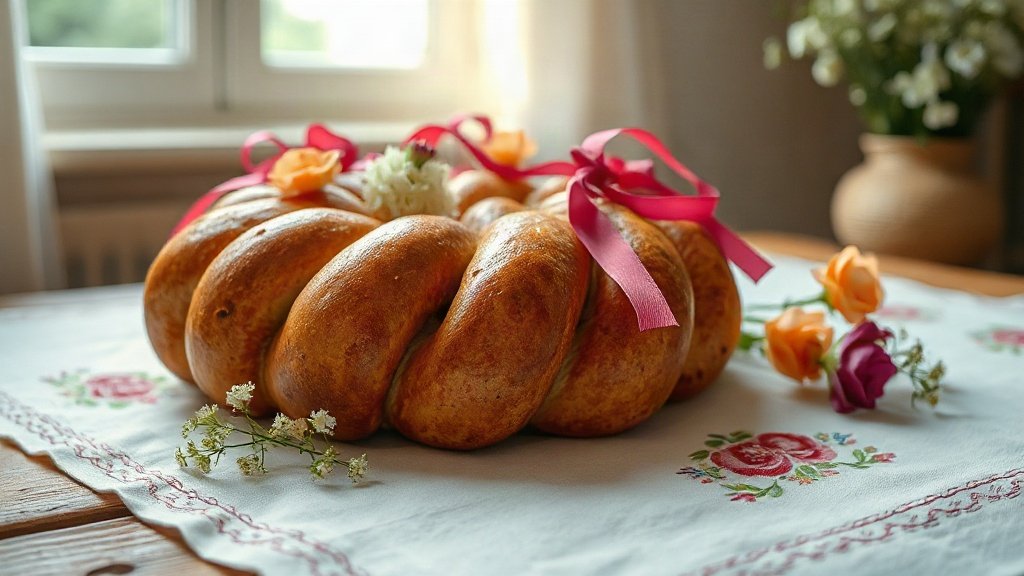
Illustration: AI-generated image
Romanian weddings are a vibrant blend of religious ritual, folk custom, and community celebration. Even in modern times, many couples incorporate traditional elements that have been passed down for generations. This guide walks you through the key moments and explains what a guest can expect.
Before the Wedding
Pețitul (the formal asking) and logodna (the engagement) mark the beginning of the journey. In villages, the groom's family visits the bride's family to ask for her hand, often bringing symbolic gifts: a bottle of țuică (plum brandy) and a decorated colac (braided bread). The steagul (wedding flag) is prepared by the godparents or young unmarried men and displayed prominently at the celebration. Meanwhile, wreaths called cununi are woven from flowers, wheat, and basil—these will be used during the ceremony.
The Wedding Day
The day begins with the dressing of the bride, accompanied by songs of farewell to her family—joyful laments that celebrate her transition. The groom's friends perform a mock shaving ritual, using a wooden razor for humour, and then the groom and his party, led by the nași (godparents), travel to the bride's house. There they may find a playful "gate" of young villagers demanding a symbolic payment or a dance from the bride before allowing entry. The couple then heads to the church, often in a lively procession with musicians.
The Religious Ceremony
Orthodox and Greek Catholic wedding services are rich with symbolism. The couple exchanges rings, is crowned with the cununi—symbolising their new kingdom and the sacrifices of family life—and shares a cup of wine to represent the mingling of joys and sorrows. They then circle the altar three times in the dansul lui Isaia (dance of Isaiah), a solemn and moving moment. As they leave the church, guests shower them with rice, wheat, or flower petals for fertility and prosperity.
The Celebration
The wedding feast is a highlight, featuring dishes like sarmale (stuffed cabbage rolls), mămăligă (polenta), and roasted meats. The centrepiece is often the colacul miresei, a large decorated bread that the couple breaks over their heads—whoever gets the larger piece is said to rule the household. The hora circle dance is essential; guests join hands and step in unison. During the dansul miresei, guests pin money to the bride's dress as a gift. A playful tradition is furtul miresei (stealing the bride), where friends "kidnap" her and the groom must negotiate her return, often with a dance or a round of drinks.
Modern Adaptations
Today, many couples blend these customs with contemporary elements, but the spirit of community, music, and shared food remains central. As a guest, expect warm hospitality, abundant food, and an invitation to dance regardless of your skill. Embrace the celebration—you are part of the story now.