Romanian Sunday Lunch: A Guide to the Weekly Feast
The Sunday lunch is a cherished ritual in Romania, bringing family and friends together for a long, multi-course meal. Here's what to expect and how to enjoy it.
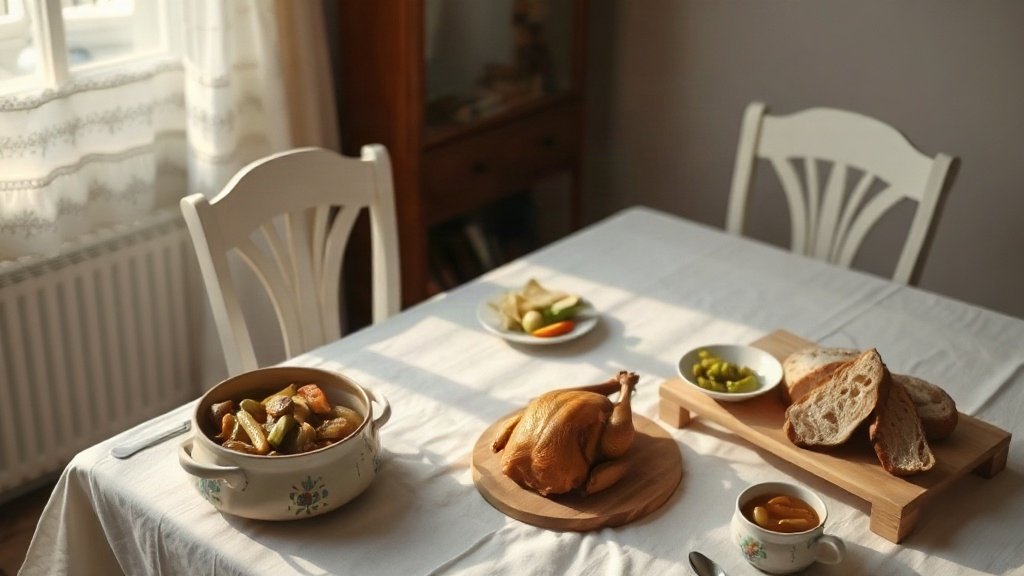
Illustration: AI-generated image
In Romania, Sunday lunch is more than a meal — it's the anchor of the week. For many families, it's the one time everyone gathers around the table, often for several hours, to share food, stories and a sense of togetherness. If you're invited to a Romanian home for a Sunday lunch, consider it a genuine honour and a window into the culture.
The rhythm of the meal
Don't expect a quick bite. A Romanian Sunday lunch is a leisurely affair, often starting around 1 or 2 p.m. and stretching well into the afternoon. The table is set with care, and the host usually prepares far more food than anyone can eat. Courses arrive gradually, and there's no rush to leave — in fact, lingering is part of the pleasure.
What's on the table
The menu varies by region, season and family traditions, but certain elements are almost universal. Expect a soup, a hearty main course, a selection of side dishes, and a sweet finish. Bread is always present, often a rustic country loaf, and it's considered polite to try a little of everything.
The soup course
Lunch typically begins with ciorbă, a sour soup that can be made with meat, vegetables or both. The sourness comes from borș (fermented wheat bran), lemon juice or vinegar, giving the soup a distinctive tang. Common varieties include ciorbă de perișoare (meatball soup), ciorbă de legume (vegetable soup) and ciorbă de burtă (tripe soup, often reserved for special occasions). A dollop of sour cream is a frequent garnish.
The main course
The centrepiece is usually a substantial meat dish, often roasted or stewed. Pork, chicken and lamb are favourites, but the most iconic Sunday main is sarmale — cabbage rolls stuffed with minced meat and rice, cooked slowly with smoked bacon and tomato. They are frequently served with mămăligă (polenta) and a spoonful of sour cream. Other typical mains include roast chicken with garlic and herbs, or a rich pork stew such as tochitură.
Sides and salads
Alongside the main, you'll find an array of sides and salads. Mămăligă is a staple, especially in rural areas; cartofi țărănești (country-style potatoes) and murături (pickles) add texture and acidity. Salads might include a simple tomato and cucumber salad, or salată de varză (cabbage salad) dressed with oil and vinegar. In winter, zacuscă (a roasted pepper and aubergine spread) often appears on the table as a starter.
Desserts and drinks
No Sunday lunch ends without something sweet. Papanași (fried doughnuts topped with sour cream and jam) are a beloved classic, but simpler offerings like plăcintă cu mere (apple pie) or a slice of cozonac (sweet bread with nuts or cocoa) are just as common. Coffee, usually strong and dark, is served afterwards. Homemade țuică (plum brandy) or vișinată (sour cherry liqueur) may be offered as a digestive.
The social code
Romanian hospitality is generous and heartfelt. You'll likely be urged to eat more, even when you're full. Accept at least a small portion to show appreciation, and compliment the food genuinely. It's customary to arrive on time, but don't be surprised if the meal starts a little late — it's all part of the relaxed pace. If you're invited, a small gift like flowers, wine or chocolates is a lovely gesture.
Experiencing a home-cooked Sunday lunch is one of the most authentic ways to understand Romanian food culture. If you don't have a local friend to invite you, look for rural guesthouses (pensiuni) that offer traditional family-style meals — they often recreate the same welcoming atmosphere and abundant table.