Romanian Glass Icons: A Transylvanian Folk Art Tradition
Discover the history and craft of painting icons on glass, a unique folk art from Transylvania that brings colour and faith into homes.
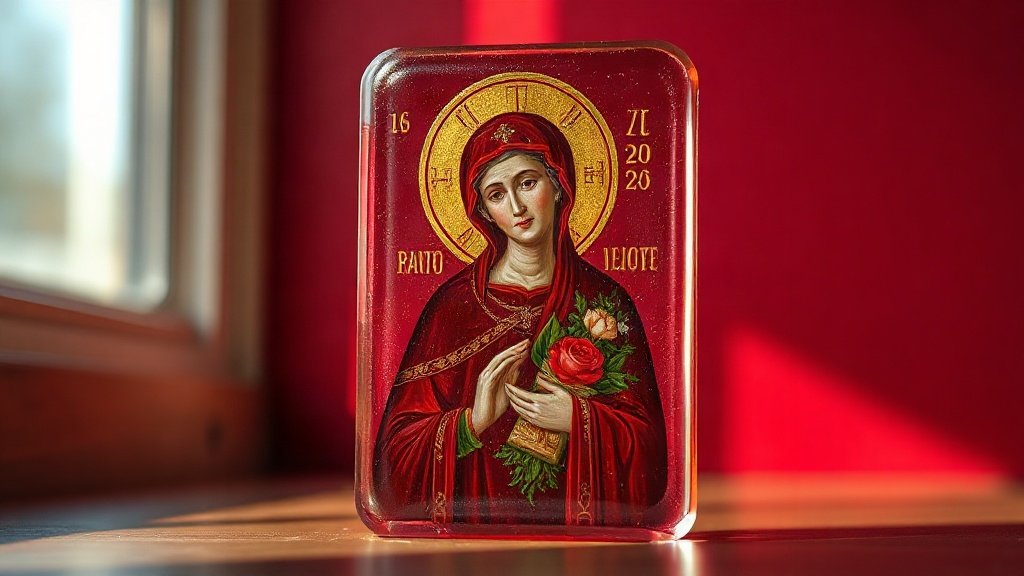
Illustration: AI-generated image
Walk through any ethnographic museum in Romania and you will likely spot a corner filled with small, glowing rectangles: icons painted not on wood or canvas, but on glass. These luminous works are a hallmark of Transylvanian folk art, created by peasant artists for centuries and still produced today.
A tradition from Transylvania
Glass icon painting emerged in Transylvania in the 17th and 18th centuries, spreading from urban centres to rural villages. The region's diverse population – Romanians, Hungarians, Saxons – all contributed to the craft, but it became particularly associated with Romanian Orthodox communities. Icons were meant for the home: hung on the wall, placed in the "beautiful corner" (colțul frumos) of the house, or carried by travellers. They were cheaper than wooden icons and their bright colours brought light and comfort.
How they are made
The technique is called reverse painting on glass. The artist works on the back of a sheet of glass, painting the finest details first – eyes, facial features, lettering – then the main colours, and finally the background. Because the finished image is viewed through the glass, the process is reversed from usual painting: what is painted first appears frontmost. Gold or silver leaf is often applied for halos and highlights. Natural pigments and simple brushes were traditionally used. The final step is to back the painting with a piece of wood or cardboard for protection.
Subjects and symbols
Most glass icons depict religious subjects: Christ Pantocrator, the Virgin Mary with Child, saints such as St George or St Nicholas, and scenes from the lives of the martyrs. Yet the artists added local touches: saints wear Romanian folk costumes, landscapes in the background resemble Carpathian villages, and decorative floral borders frame the image. Geometric patterns and vivid colours – deep reds, blues, greens, and gold – give the icons a joyful, almost naïve character.
The icons were not just decorative; they served a devotional purpose. Families prayed before them, lit candles, and asked for protection. Despite their simple style, they followed strict iconographic rules inherited from Byzantine art, but the folk artists reinterpreted them with freedom and imagination.
Where to experience them today
Original glass icons are preserved in museums across Romania, including the Museum of the Romanian Peasant in Bucharest, the ASTRA National Museum Complex in Sibiu, and many county museums in Transylvania. Some villages, such as Nicula in Cluj County, have long histories of icon painting and still host workshops. Reproductions and new works are sold at craft fairs and in folk art shops, making them popular souvenirs.
A living heritage
Though the golden age of glass icons passed, the tradition has not died out. Contemporary artists and iconography schools continue to teach the reverse-painting technique, and the icons are still used in homes and churches. For visitors, they offer a glimpse into the spiritual and artistic world of rural Transylvania – a world where faith, craftsmanship, and a love of colour came together in a humble pane of glass.