Romania's Woven Rugs: A Guide to Scoarțe and Regional Patterns
Scoarțe are traditional flat-woven rugs and wall hangings that bring colour and meaning into Romanian homes. Discover their symbols, techniques and where each region leaves its mark.
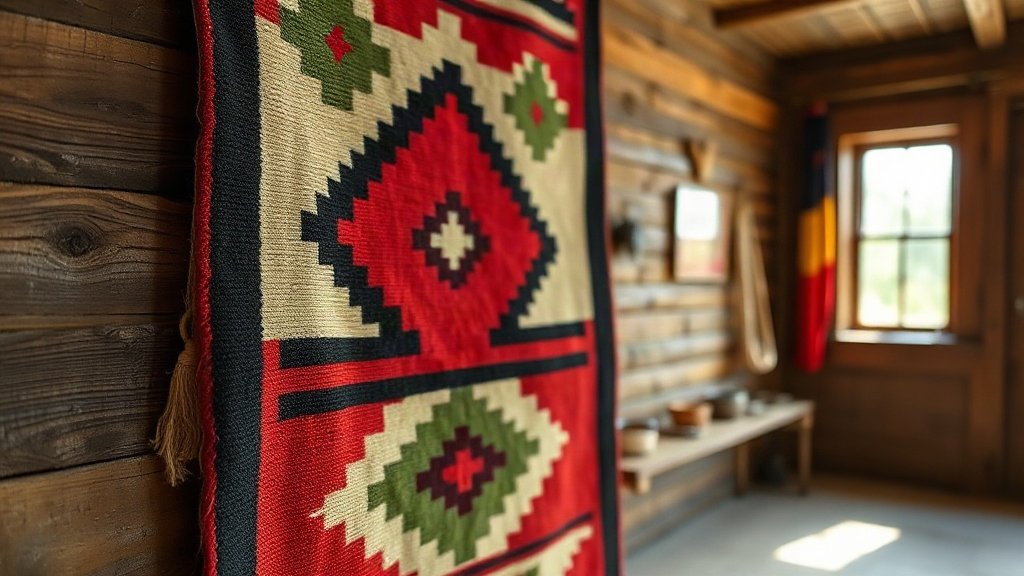
Illustration: AI-generated image
Walk into a traditional Romanian home and you will likely see bursts of colour hanging on whitewashed walls or laid across wooden benches. These are scoarțe (singular: scoarță), flat-woven rugs and tapestries that have been part of rural life for centuries. More than decoration, each one is a record of skill, identity and belief.
Scoarțe are woven on looms, usually by women, using wool from local sheep. The warp is often cotton or hemp, while the weft is wool dyed in rich reds, blacks, greens, yellows and blues. Traditionally, dyes came from plants, bark, roots and insects; today many weavers use synthetic colours, but the patterns remain timeless.
Patterns that speak a language
Every region has its own visual vocabulary. Common motifs include the tree of life, the sun, stars, diamonds, ram's horns, birds, and the rooster. These shapes are not chosen at random. The diamond often represents fertility and protection, the sun stands for life and light, and the tree of life symbolises connection between earth and heaven. Some patterns are so old that their original meaning has been lost, but they survive as part of the local heritage.
Regional styles at a glance
- Maramureș: Bold, geometric stripes and zigzags in deep reds and browns, often with a simple, heavy texture suited to the region's wooden homes.
- Oltenia: Known for brighter colours and more floral or curved motifs, sometimes with a central medallion.
- Muntenia: Large, stylised flowers and leaves in reds and greens on a dark background, often used as wall hangings.
- Moldova: Horizontal bands filled with diamonds, hooks and stylised animals, often in red, black and white.
- Banat: Delicate, fine weaving with intricate patterns influenced by neighbouring cultures, often in softer tones.
From dowry chest to museum wall
Scoarțe were essential items in a bride's dowry. A young woman would weave several before marriage, demonstrating her patience and artistry. They were used on beds, benches, floors and walls, and the best pieces were kept for special occasions or given as gifts. Today, old scoarțe are prized by collectors, and many ethnographic museums in Romania include them in their collections. They can still be found in village households, especially in Maramureș and Bucovina, where the tradition of weaving continues.
If you visit a local fair or a rural guesthouse, take a moment to look closely at the patterns. Each rug has a story, and every thread connects the present to a craft that has been passed down through generations.