Pălincă: Romania's Double-Distilled Fruit Brandy Explained
Pălincă is Romania's fiery double-distilled fruit spirit, traditionally made from plums, apples or pears. Here's how it's produced, how to serve it, and why it's cherished across Transylvania.
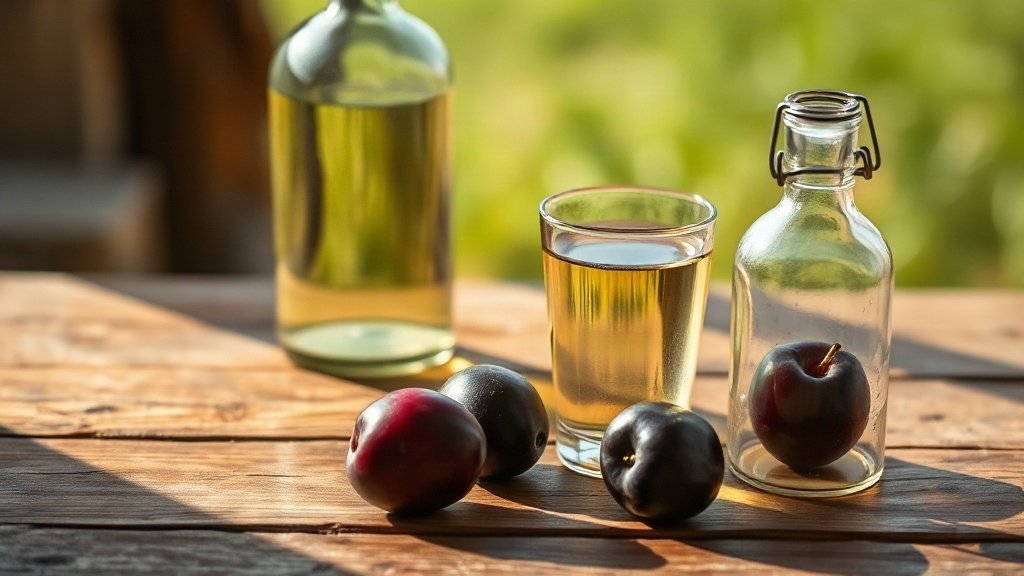
Illustration: AI-generated image
Pălincă is Romania's answer to fruit brandy, but with a character all its own. Unlike the single-distilled țuică, pălincă undergoes a second distillation, resulting in a stronger, smoother spirit that often reaches 40–55% alcohol by volume. It is deeply woven into the social fabric of Transylvania and Maramureș, where no celebration feels complete without a small glass raised in good health.
What exactly is pălincă?
Pălincă is a clear, colourless spirit distilled from fermented fruit. The most common base is plum, but apples, pears, apricots, and even quince or cherries are also used. The fruit is mashed and left to ferment naturally, often in large wooden barrels, before being distilled twice in copper stills. The second distillation is what separates pălincă from țuică: it concentrates the alcohol and refines the flavour, giving pălincă a cleaner, more intense fruit aroma.
Traditional home distillation remains common in rural areas, though commercial production is regulated. Many families in Transylvania proudly produce their own pălincă each autumn, using recipes passed down for generations. The quality can vary enormously, from fiery and rough to remarkably smooth and complex.
Fruits and regional styles
The choice of fruit shapes the character of pălincă. Plum pălincă, known as pălincă de prune, is the most widespread, with a deep, jammy flavour. Apple and pear versions are lighter and often more fragrant, while apricot pălincă is considered a delicacy, prized for its silky texture and honeyed notes.
Regional preferences also play a role. In Maramureș, plum pălincă is the undisputed king, while in parts of Bihor and Satu Mare, apple and pear spirits are more common. Some distillers age pălincă briefly in oak barrels, lending a subtle golden colour and vanilla undertones, though the classic style remains crystal clear.
How to drink pălincă
Pălincă is rarely drunk casually; it is a ritual. It is served at room temperature in small tulip-shaped glasses, never chilled. The glass is filled only a third full, and the first sip is taken slowly to appreciate the aroma. A common toast is “Noroc!” (good luck) or “Sănătate!” (to your health).
It pairs wonderfully with hearty Romanian food. Try it before a meal as an aperitif, alongside a plate of smoked meats and cheeses, or after dinner with a slice of cozonac. In winter, some people warm pălincă gently with honey and pepper—a traditional remedy for colds and a comforting nightcap.
Pălincă in Romanian hospitality
Offering a guest homemade pălincă is a profound gesture of welcome. In many villages, no visit is complete without the host bringing out a bottle and insisting you share a glass. Refusing is considered impolite. The drink is also central to weddings, baptisms, and funerals, marking each milestone with a communal sip.
When travelling in Transylvania, you may be invited to taste a local batch. Accept graciously, take small sips, and remember that pălincă is meant to be savoured, not rushed. It is a spirit that carries the taste of orchards, the labour of autumn, and the warmth of Romanian hospitality in every drop.