Mujdei: Romania's Traditional Garlic Sauce Explained
Mujdei is a simple yet punchy garlic sauce that accompanies many Romanian dishes, from grilled meats to fish. Here's how to make it and what to eat it with.
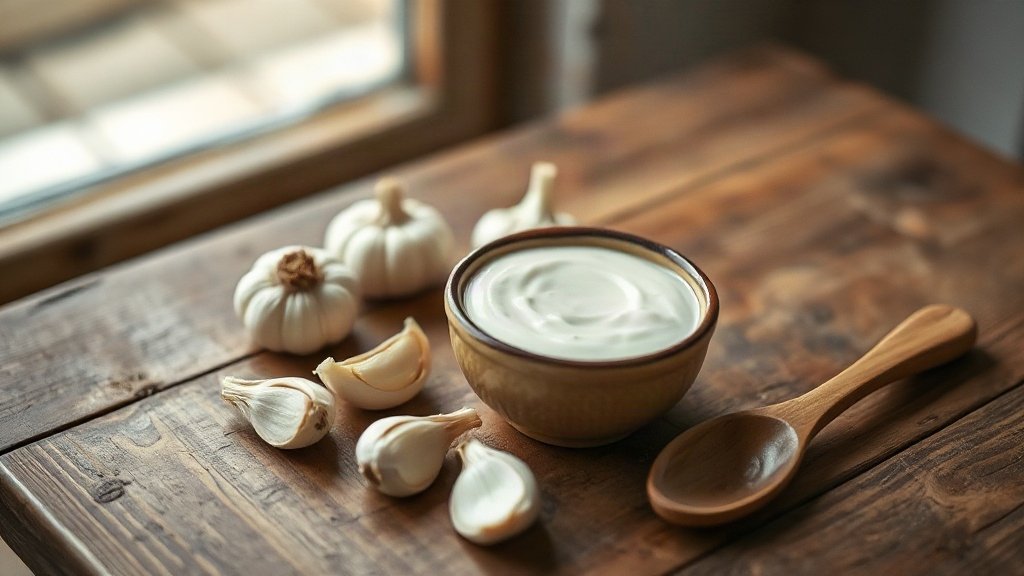
Illustration: AI-generated image
Mujdei is one of Romania's most beloved condiments: a sharp, garlicky sauce that adds a punch of flavour to everything from grilled meats to fried fish. Made with just a handful of ingredients, it's a staple in homes and restaurants across the country, and once you try it, you'll understand why.
Despite its simplicity, mujdei has a devoted following. It's often compared to aioli or skordalia, but it has its own distinct character: thinner, sharper, and unapologetically garlic-forward.
What is mujdei?
Mujdei (pronounced moozh-DAY) is a sauce made primarily from crushed garlic, water or oil, and salt. Sometimes a little vinegar or lemon juice is added for acidity, and occasionally a spoonful of sour cream or yogurt to soften the intensity. The name comes from the Turkish word mücde, meaning "good news", reflecting how happily it is received at the table.
There are two main styles: a simple, rustic version made with garlic, water, and salt, which is thin and potent; and a richer version that includes oil, making it creamier and closer to a mayonnaise. Both are served cold, usually as an accompaniment to hot dishes.
How to make mujdei at home
Making mujdei is quick and requires no cooking. The traditional method uses a wooden pestle and a small bowl or piuliță, but a regular garlic press or blender works just as well.
For a basic mujdei, you'll need:
- 6–8 garlic cloves, peeled
- 1/2 teaspoon salt
- 1–2 tablespoons water, or more to reach desired consistency
- Optional: 1–2 tablespoons sunflower oil, a splash of vinegar or lemon juice
Crush the garlic with the salt until it forms a paste. Slowly add water while stirring, then season to taste. If using oil, drizzle it in gradually while whisking to create an emulsion. Adjust the thickness: some prefer it thin enough to drizzle, others like it spoonable. Let it sit for 10–15 minutes before serving so the flavours meld and mellow slightly.
Variations across Romania
Although the core recipe is consistent, regional twists abound. In Transylvania, mujdei is often enriched with sour cream (smântână), making it milder and creamier. In Moldova, a little vinegar is common, adding a bright tang. Along the Black Sea coast, where fish is abundant, version with olive oil and lemon is favoured. Some cooks add a pinch of sugar to balance the sharpness, while others stir in finely chopped fresh dill or parsley.
For a milder version, roasted garlic can be used in place of raw, giving a sweeter, more mellow flavour. This is a good introduction for those who find raw garlic too intense.
What to eat with mujdei
Mujdei is incredibly versatile. It is the classic companion to mititei (grilled skinless sausages), where its pungency cuts through the rich meat. It's also served with grilled chicken, pork chops, and lamb. Fried fish—especially carp or pikeperch—is almost unthinkable without a bowl of mujdei on the side. Vegetarians enjoy it with roasted vegetables, boiled potatoes, or as a dip for fresh bread.
In fact, a simple slice of crusty bread spread with mujdei is a beloved snack, especially alongside a bowl of ciorbă (sour soup). It also works as a condiment for mămăligă (polenta) or stirred into bean stews for extra kick.
Trying mujdei in Romania
When dining out in Romania, you'll often find mujdei listed on menus under "sosuri" or offered automatically with grilled dishes. Don't be shy about asking for it—it's a point of pride for many cooks. If you're buying it from a market or shop, look for a fresh, aromatic garlic smell; commercial versions can be overly salty or dominated by preservatives.
Whether you make it at home or order it in a traditional restaurant, mujdei is a simple pleasure that captures the bold, unpretentious spirit of Romanian cuisine.