Mujdei: Romania's Fiery Garlic Sauce and How to Use It
Mujdei is a simple but punchy garlic sauce found on tables across Romania. Learn how it's made, how to tame its heat and the best dishes to pair it with.
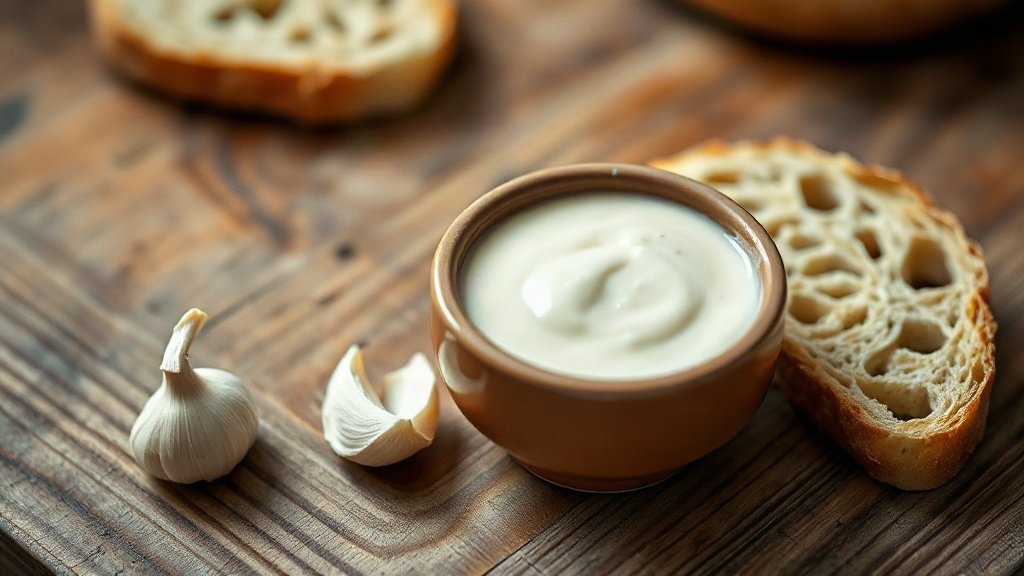
Illustration: AI-generated image
If you have ever eaten grilled meat or fried fish in Romania, you have likely encountered a small bowl of white, intensely garlicky sauce on the side. That is mujdei, one of the country's most beloved condiments. Made from just a few pantry staples, it packs a serious punch and is a staple in homes and traditional restaurants alike.
What exactly is mujdei?
Mujdei is a cold sauce based on crushed garlic, thinned with water or oil, and often sharpened with a little salt and sometimes vinegar or lemon juice. The name comes from the Romanian word must de ai, which translates roughly to "must of garlic", reflecting how the garlic is pounded until it releases its juices and becomes almost creamy.
Unlike aioli or toum, mujdei is typically not emulsified with egg or large amounts of oil. The simplest version uses only garlic, salt and water, creating a thin, translucent liquid that is spooned over food rather than used as a dip. A richer version replaces some or all of the water with sunflower oil, which mellows the sharpness and gives the sauce a slightly thicker texture.
How is mujdei made?
The traditional method is to use a wooden or ceramic mortar and pestle. Garlic cloves are crushed with a little coarse salt until they break down into a paste. The salt acts as an abrasive and also tempers the garlic's bite. Water or oil is then added gradually while stirring, and the sauce is left to rest for a few minutes so the flavours can develop. Some cooks add a splash of vinegar or a squeeze of lemon juice for brightness, but purists keep it simple.
In modern kitchens, a garlic press or a small blender can speed things up, but the texture is slightly different. The key is to avoid over-processing; mujdei should have a little body from the crushed garlic, not be perfectly smooth.
Regional and household variations
Every family has its own version. In the south of Romania, mujdei is often made with just garlic, water and salt, and it can be almost liquid. In Moldova, it is common to add a little sunflower oil and sometimes a spoonful of sour cream, which turns it into a creamier, milder sauce. A splash of tomato purée or a pinch of hot paprika appears in some recipes, but these are modern twists rather than strict tradition.
The amount of garlic is also a matter of pride. A good mujdei should make your eyes water slightly, but it should never overpower the main ingredient completely. As a rule of thumb, one clove of garlic per person is considered moderate; two is generous; three is for garlic lovers only.
How to eat mujdei
Mujdei is most famously served with mici, Romania's grilled skinless sausages, but it is equally at home with grilled pork or chicken, fried fish, boiled potatoes, or even a simple slice of fresh bread. It is also a classic accompaniment to sarmale, the stuffed cabbage rolls, where its sharpness cuts through the richness of the minced meat and pork.
For a quick snack, Romanians sometimes spread a little mujdei on a slice of crusty bread and top it with a piece of salty cheese or a slice of tomato. It also works surprisingly well with roasted vegetables or stirred into a bowl of hot bean soup.
If you find the sauce too intense, let it sit for ten minutes after mixing; the garlic will mellow slightly. Alternatively, add a little more water or a dollop of sour cream. Just remember that mujdei is best eaten fresh — it loses its vigour after a few hours.