How to Play Romanian Card Games: Tabinet, Rentz and More
Learn the rules of Romania's most beloved card games, from Tabinet to Rentz, and be ready for your next social gathering.
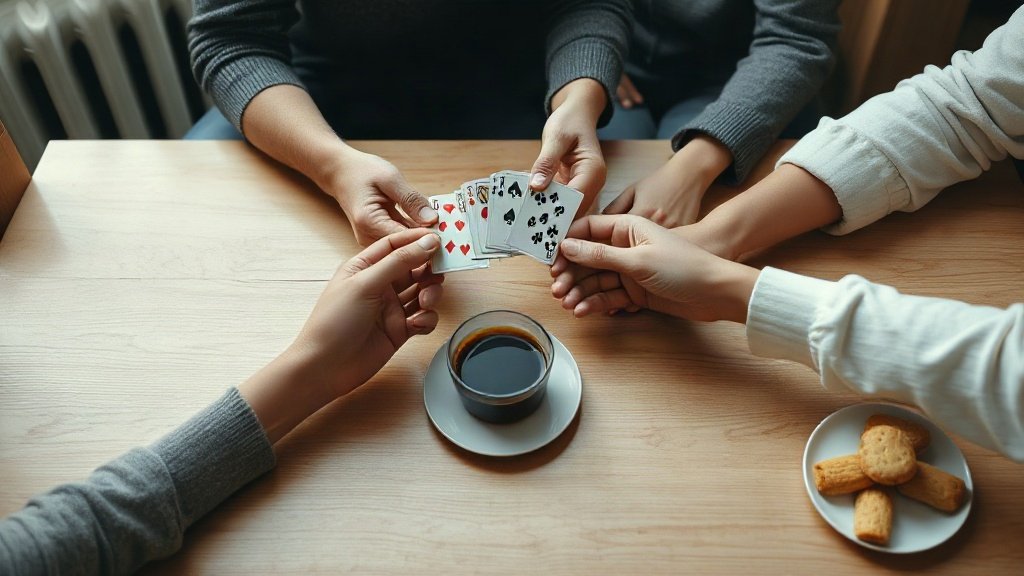
Illustration: AI-generated image
Card games are a cornerstone of Romanian social life, from long winter evenings in villages to relaxed afternoons on apartment balconies. Knowing how to play a few local favourites is a wonderful way to connect with friends, family and neighbours. This guide covers three widely played games — Tabinet, Rentz and Cruce — along with the unwritten rules of card-table etiquette.
The deck and basic terms
Romanians usually play with a standard 52-card deck, though some games use a German-suited deck with bells, acorns, leaves and hearts. For the games below, a French deck (with hearts, diamonds, clubs and spades) is common. Card values differ: Ace is often 11 points, Ten is 10 points, King 4, Queen 3, Jack 2, and the rest zero. Points matter in most games because they determine scoring.
Tabinet: the strategic favourite
Tabinet is a fishing-style game for two to four players, though two is best. The goal is to collect cards from a central pool and score points through combinations. Deal four cards to each player and four to the table. On your turn, play one card. If it matches the rank or equals the sum of one or more cards in the pool, you capture those cards along with your played card, and keep them in your scoring pile. If no match is possible, your card joins the pool. Capturing all remaining cards in the pool is a “tabinet” and earns a bonus point. After the draw pile is exhausted, players count points: each ace is 11, ten is 10, and the two of clubs is worth 2 extra, plus a point for most cards, most spades, and the ten of diamonds. The first to a set total, often 101, wins a round; play can continue over several rounds.
Rentz: the trick-taking challenge
Rentz is a trick-taking game for three to five players, lasting several hands with changing objectives each hand. Deal eight cards per player, then reveal the contract for that hand from a predetermined sequence: no tricks, no hearts, no queens, no king of hearts, and finally rentz (all of the above combined). Players must follow suit if possible; otherwise they may discard any card. In “no tricks,” taking any trick costs penalty points; in “no hearts,” every heart card captured is a penalty; and so on. Scoring is based on penalty points accumulated over the series, and the player with the lowest total after all hands wins. Rentz requires both memory and nerve, and is a favourite at gatherings because it blends luck with sharp decisions.
Cruce: a simple game for all ages
Cruce (Romanian for “cross”) is a straightforward partnership game for four players sitting opposite each other. The deck is reduced to 24 cards: 9s through Aces. Deal six cards each, and the dealer turns up a trump card. Players bid by announcing how many tricks their partnership will win, starting from the player to the dealer’s left. Bids range from one to six, and a player must outbid the previous bid. The winning bidder names the trump suit, then leads. Partners work together to fulfill the contract; each trick won counts toward the bid. Scoring is simple: fulfill the bid and earn points equal to the bid; fail and lose that many. Games are often played to a set number of points, and Cruce’s quick pace makes it ideal for teaching children or breaking the ice.
Card table etiquette
Romanian card games are social affairs, so good manners matter. Arrive on time if you are expected, and avoid giving unsolicited advice unless asked. It is customary to offer refreshments — coffee, tea or a small snack — before play begins. Keep your cards close and avoid sighing dramatically when luck turns; patience is prized. If you are new, announce it honestly; most players will gladly explain rules and may even let you retract a mistaken play once or twice. Finally, never leave mid-game without a genuine reason, as that disrupts partnerships and may be seen as rude.
With these three games in your repertoire, you will be ready to join a friendly game anywhere in Romania, from a village porch to a city living room. All you need is a deck of cards and a willingness to learn.