How to Make Plăcintă cu Brânză Dulce: Romania's Sweet Cheese Pie
Discover the comforting flavours of plăcintă cu brânză dulce, a Romanian sweet cheese pie made with fresh cow's cheese, raisins and a golden, flaky pastry. Follow our simple recipe for a taste of home.
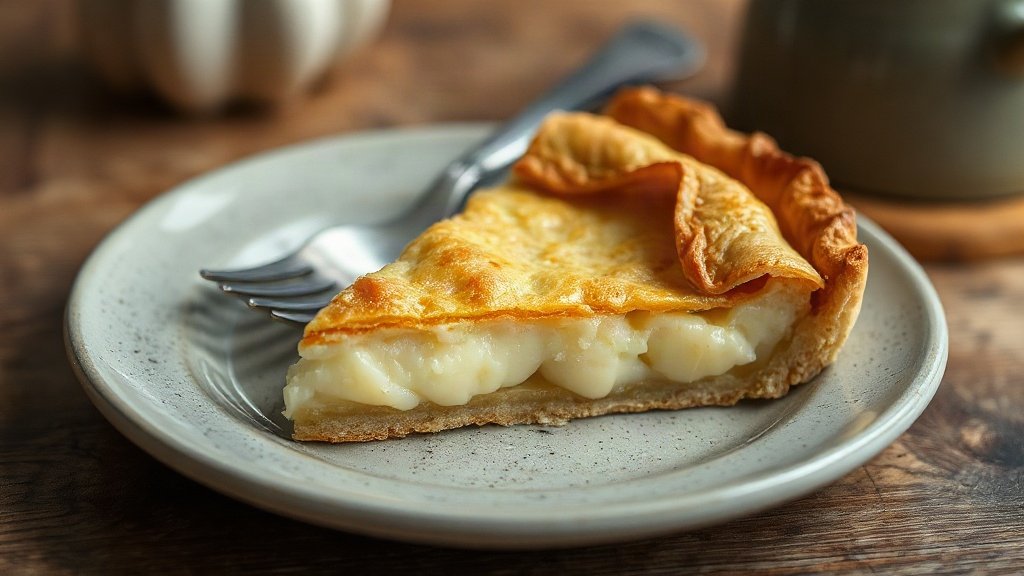
Illustration: AI-generated image
Plăcintă cu brânză dulce is a beloved Romanian sweet pie, a simple yet comforting dessert that appears on tables across the country, from Sunday lunches to festive gatherings. Unlike its savoury cousin plăcintă cu brânză sărată, this version uses fresh, unsalted cow's cheese—known locally as brânză dulce—mixed with sugar, eggs and often a handful of raisins or a hint of lemon zest. The result is a golden, flaky pastry with a creamy, lightly sweetened centre that pairs perfectly with a cup of tea or coffee.
What Makes It Special
At its heart, this pie celebrates two pillars of Romanian home cooking: fresh dairy and handmade pastry. Brânză dulce is similar to ricotta or a very fresh cottage cheese, but with a slightly drier, crumblier texture. It is widely available in Romanian markets and from local producers, often sold by weight from large tubs. The pastry can be either a simple yeasted dough, rolled thin like a strudel, or shop-bought filo sheets for a quicker version. Many families have their own method, passed down through generations, and no two pies taste quite the same.
A Simple Recipe to Try at Home
This version uses a basic yeasted dough that is forgiving and yields a beautifully layered pie. For the dough, you will need about 500 grams of plain flour, 7 grams of dry yeast, 250 millilitres of warm milk, 50 grams of sugar, 50 millilitres of sunflower or vegetable oil, one egg and a pinch of salt. Dissolve the yeast and sugar in the warm milk and leave for ten minutes until frothy. Mix the flour and salt, then add the yeast mixture, oil and egg. Knead until smooth and elastic, cover and let rise in a warm place for about an hour or until doubled.
While the dough rises, prepare the filling. Combine 500 grams of brânză dulce with 100 grams of sugar, two eggs, a teaspoon of vanilla extract, the grated zest of one lemon, and, if you like, 50 grams of raisins soaked in warm water. Mix well until creamy but still slightly chunky. Taste and adjust the sweetness to your preference.
When the dough has risen, divide it into two or three balls. On a lightly floured surface, roll each ball into a thin sheet roughly the size of your baking tray. Layer the first sheet into a greased tray, spreading one-third of the filling on top. Repeat with the remaining sheets and filling, finishing with a top layer of dough. Brush the surface with beaten egg and bake in a preheated oven at 180°C for about 35–40 minutes, until deep golden brown. Allow to cool slightly before slicing, as the filling sets a little on standing.
A Faster Filo Version
If you are short on time, use shop-bought filo pastry: brush each sheet with melted butter, layer five or six sheets, then spread the filling and cover with five or six more buttered sheets. The result is a crisp, shatteringly flaky pie. Some bakers add a little semolina to the filling to absorb moisture and prevent a soggy bottom. Others swap the raisins for dried cranberries or chopped walnuts for extra texture.
Serving and Storing
Plăcintă cu brânză dulce is best enjoyed warm or at room temperature, dusted with icing sugar if desired. It is a common sight at family gatherings and is often served alongside a glass of cold milk or a strong coffee. Leftovers keep well in the fridge for a couple of days and can be gently reheated in the oven to restore crispness. For those who prefer a less sweet treat, reduce the sugar in the filling and add a pinch of salt to bring out the cheese's natural tang.
Finding the Right Cheese
If you cannot find brânză dulce, you can substitute ricotta or a well-drained cottage cheese, though the texture will be slightly wetter. Look for fresh cheese in Romanian shops or at farmers' markets, where it is often sold unpackaged. Choose a cheese that is mild and slightly crumbly, without added salt. The quality of the cheese makes all the difference, so it is worth seeking out a good local product.