Horezu Pottery: A Visitor's Guide to Romania's UNESCO Craft Village
Discover the centuries-old ceramic tradition of Horezu, where skilled artisans shape and paint distinctive pottery. Plan a visit to this living craft village in the foothills of the Carpathians.
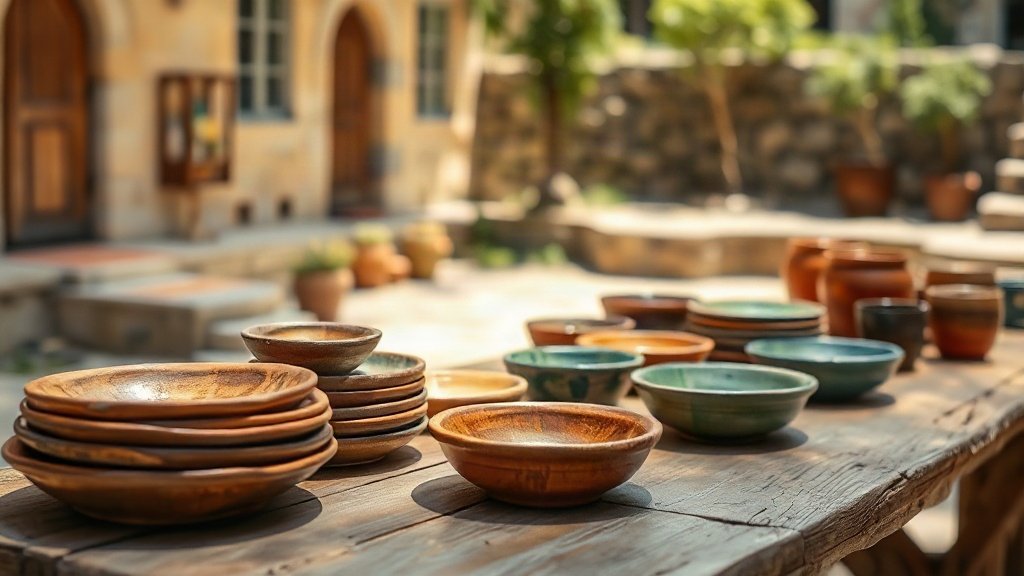
Illustration: AI-generated image
In the rolling hills of Vâlcea County, the small town of Horezu has been quietly perfecting a single art form for over three centuries. Its hand-painted ceramics, known simply as Horezu pottery, are so distinctive that UNESCO added the craft to its Intangible Cultural Heritage list. For travellers, a visit here offers a rare chance to watch master potters at work and take home a piece of living tradition.
A craft shaped by history
Horezu's pottery tradition dates back to the 17th century, when local monks encouraged the production of ceramic wares for the nearby monastery. The region's rich clay deposits and abundant forests for firing kilns made it an ideal centre. Over generations, families of potters developed signature motifs and techniques, many of which are still used today.
The most recognisable Horezu pieces are plates, bowls and jugs in earthy tones of rust red, ochre, green and brown. Traditional decoration uses a cow horn and goose feather to draw fine lines and spirals, often combined with stylised leaves, birds or fish. No two pieces are exactly alike, as each is painted freehand.
Seeing the artisans at work
The best way to appreciate the craft is to visit the potters' quarter on the outskirts of Horezu, sometimes called "Ulita Olarilor" (Potters' Lane). Here, family workshops open their doors to visitors, and you can watch as a lump of clay is thrown on a foot-powered wheel, then left to dry before being decorated and fired in a wood-burning kiln.
Most artisans are happy to demonstrate their skills and explain the process, though they may not speak much English. A smile and a few basic Romanian phrases go a long way. Visiting a workshop also gives you the chance to buy directly from the maker, ensuring an authentic piece and supporting local craftspeople.
What to buy
Popular items include decorative wall plates, serving bowls, soup tureens and traditional drinking mugs called căni. Smaller pieces such as egg cups or small dishes make excellent, lightweight souvenirs. If you plan to use your pottery for food, ask whether it is safe for the oven or dishwasher—many traditional pieces are purely decorative.
When selecting a piece, look for fine, confident brushwork and a rich, glassy glaze. Don't be afraid to ask about the potter who made it; many families date their lineage back several generations, and you may be told stories of the craft's history as you browse.
Combine with Horezu Monastery
While in the area, set aside time for the Horezu Monastery, a UNESCO World Heritage site just a short walk or drive from the pottery workshops. Founded in 1690, it is a masterpiece of Brâncovenesc architecture, with elegant arcades, a richly decorated church and serene gardens. The monastery's monks no longer produce pottery, but the connection between the two sites remains strong.
Practical tips
Horezu is about a two-hour drive from Bucharest or around an hour from Sibiu. The town is small and walkable, and parking is generally easy to find near the workshops. There is no formal entrance fee to the potters' quarter, though some workshops may appreciate a small tip if you take photographs or receive a lengthy demonstration.
Bring cash, as many artisans do not accept card payments. If you are buying fragile items, ask for extra wrapping—potters are usually skilled at packing, but you may want to bring your own bubble wrap for long journeys. Finally, remember that the craft is seasonal; while many workshops operate year-round, the busiest and most colourful time to visit is during the summer months, when outdoor drying racks are full of freshly made pieces.