Historians and officials split over fate of Hitler's burned Eagle's Nest
After a fire destroyed Hitler's former mountain retreat, the Eagle's Nest, historians and Bavarian officials disagree on whether to rebuild or demolish the site.
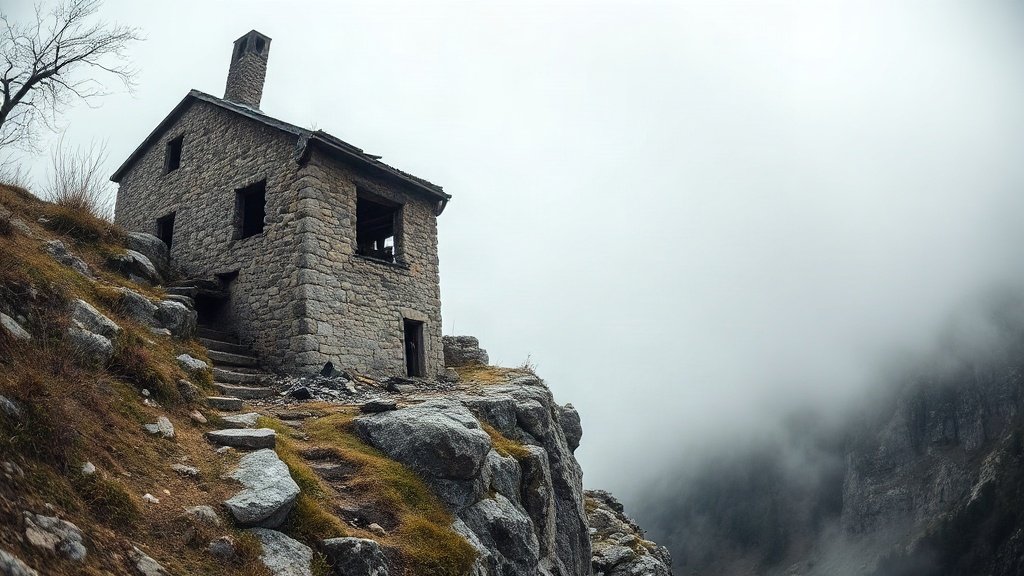
Illustration: AI-generated image
The Eagle’s Nest, Adolf Hitler’s mountain retreat in the Bavarian Alps, was almost completely destroyed by fire on 23 October 2026. Now, historians and regional officials are locked in a debate over whether the site should be rebuilt or left to nature.
The Kehlsteinhaus, as it is known in German, was constructed in 1938 as a venue for Hitler to entertain senior Nazi officials. After the Second World War, it became a popular tourist attraction and restaurant, managed by the state of Bavaria. Investigators believe the fire may have been started deliberately, and a 33-year-old man with a history of mental health problems has been detained in a secure psychiatric hospital, according to local media reports.
Some historians argue that the ruins should be cleared and the mountainside returned to its natural state. Richard J. Evans, a professor at the University of Cambridge and a specialist on Nazi Germany, told media that the building was a Nazi vanity project and that simply removing the rubble would be appropriate. He pointed to the Berlin bunker where Hitler died, which was filled with concrete and turned into a children’s playground.
Bavarian officials have taken a different view. Interior Minister Joachim Herrmann and Culture Minister Markus Blume both support rebuilding, with Herrmann saying that a ruin cannot simply be left in place. Blume added that any reconstruction should not cost taxpayers anything.
Sven Keller, director of the Obersalzberg Documentation Centre, warned that abandoning the site in its current state could encourage neo-Nazi pilgrimages, as extremists might visit without oversight. However, he also said that an identical reconstruction is not feasible. Historian Isabel Heinemann from the University of Munich suggested that the ruins should be preserved and partially rebuilt in a modern style so that the site’s complex history remains visible.
The debate comes at a time when far-right movements are gaining attention in Germany and Austria, adding urgency to discussions about how to handle places associated with the Nazi past. Bavarian authorities have said they will seek a solution in consultation with historians.