Everyday Superstitions in Romania: A Practical Guide
From whistling indoors to giving knives as gifts, learn the everyday superstitions that shape Romanian social life and how to navigate them gracefully.
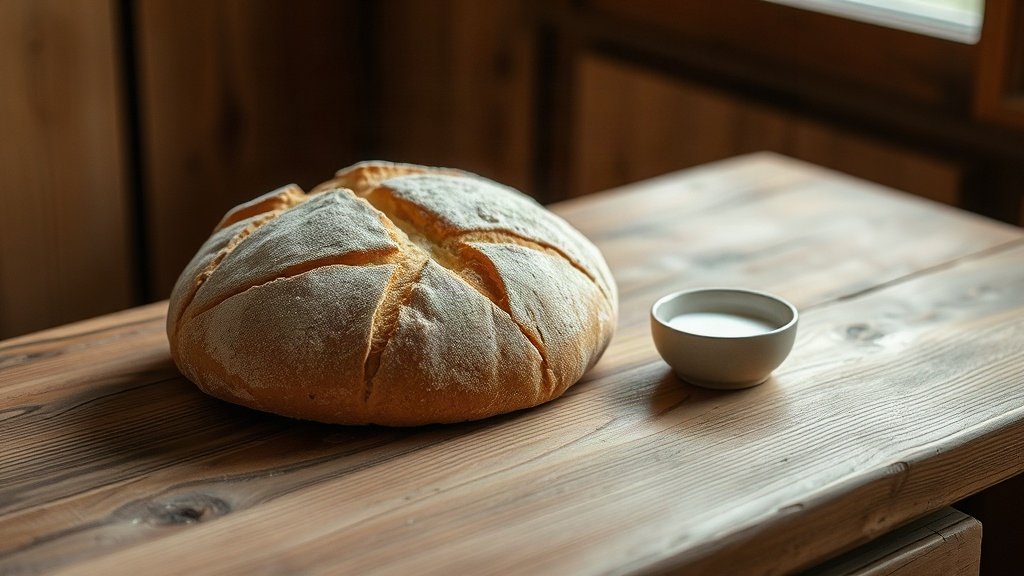
Illustration: AI-generated image
Common Superstitions in Daily Life
Romanians often hold onto a rich set of beliefs that guide everyday actions, even if not everyone takes them literally. Understanding these can help you avoid awkward moments and show respect for local customs.
One of the most common is not whistling indoors. Many believe that whistling inside the house will “whistle away” your money, leaving you poor. So if you catch yourself whistling while working around the home, you might get a gentle reminder from a Romanian friend.
Another widespread belief concerns sitting at the corner of a table. It is said that if you sit at the corner, you will not get married. This is often mentioned jokingly to single friends, but you may notice people avoid that spot at gatherings.
Putting bread upside down on the table is also considered bad luck, as bread is a sacred food. Similarly, leaving a knife stuck in a loaf of bread is avoided because it is seen as an insult to the staple food.
Gift-Giving and Money Taboos
When giving a knife or any sharp object as a gift, Romanians often expect a small coin in return. The recipient will give the giver a coin, symbolically “buying” the knife, so that the friendship is not cut. If you receive a knife without a coin, you can hand over a small amount of money to keep the bond intact.
Flowers also carry superstition. Never give an even number of flowers, as even numbers are reserved for funerals. Always give an odd number, and be aware that red flowers symbolise love, while yellow can signify jealousy or separation in some traditions.
If you find money on the street, picking it up is generally fine, but some believe that money found in the morning brings good luck, while money found in the evening might bring misfortune.
Home and Table Rules
When you visit a Romanian home, you might notice that the host will not let you leave without eating or drinking something. Refusing food can be seen as impolite, but you can politely take a small portion.
Spilling salt is considered bad luck, but throwing a pinch of the spilled salt over your left shoulder is said to counteract it. This is a common practice you might see during meals.
If you drop a fork, it is believed that a woman will visit; if you drop a knife, a man will come. This is more of a playful saying than a strict rule.
Personal Superstitions
Itching palms are interpreted as signs: an itchy right palm means you will receive money, while an itchy left palm means you will give money away. If your ears are burning, someone is talking about you – right ear for good words, left ear for bad.
Stepping on someone’s foot accidentally is said to mean you will have an argument with that person, but you can avoid it by asking them to step on your foot in return.
If you see a black cat cross your path, it is considered bad luck, similar to other cultures, but in Romania it can also mean that you should change your route or be extra careful.
Navigating Superstitions Gracefully
As an expat or visitor, you don’t need to follow every superstition, but being aware of them will help you understand jokes and avoid causing offence. If you accidentally break a “rule”, a smile and a simple apology are usually enough. Many Romanians will happily explain the belief behind it, turning the moment into a friendly cultural exchange.
Embracing these little traditions can make your everyday life in Romania richer and more connected to the local community.