Cozonac: Romania's Festive Sweet Bread Explained
Cozonac is Romania’s beloved sweet yeast bread, filled with walnuts, poppy seeds or Turkish delight and enjoyed at Christmas and Easter. Here’s what makes it special and how to make your own.
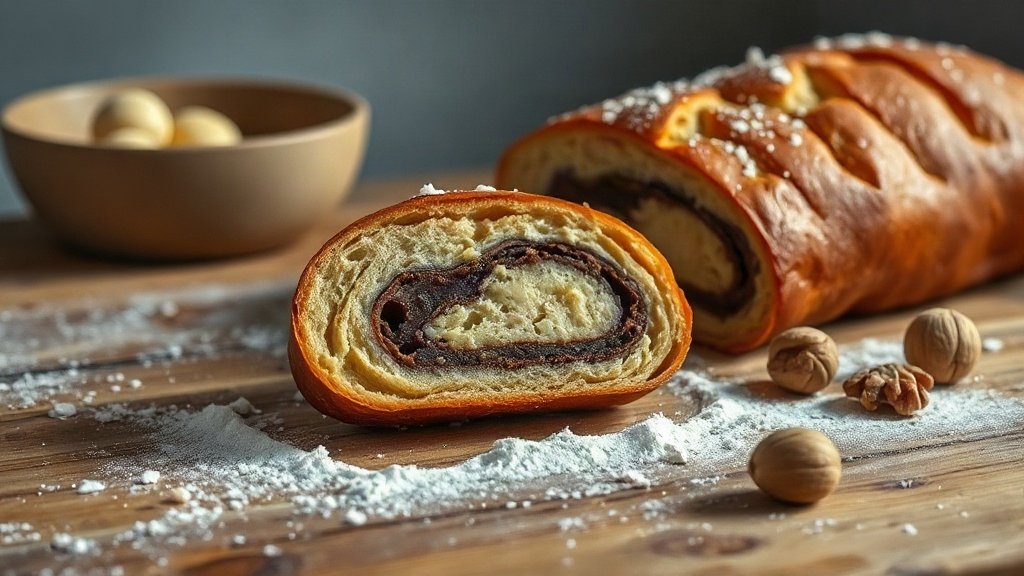
Illustration: AI-generated image
Cozonac is Romania’s iconic sweet yeast bread, a rich, tender loaf laced with rum and vanilla and typically swirled with a filling of ground walnuts, cocoa or Turkish delight. It is the centrepiece of holiday tables at Christmas and Easter, but many families also bake it for weddings, christenings and other celebrations. If you have only tried supermarket versions, making your own cozonac at home is a rewarding project that fills the kitchen with an unforgettable aroma.
What makes cozonac special?
Unlike everyday bread, cozonac is enriched with eggs, butter, milk and sugar, giving it a soft, slightly sweet crumb that falls somewhere between brioche and challah. The dough is often flavoured with grated lemon or orange zest, vanilla and a generous splash of rum or essence. After the first rise, it is rolled out, spread with a thick paste of ground walnuts, sugar and cocoa (or poppy seeds, or pieces of rahat – Turkish delight), then rolled up like a Swiss roll and baked in a tall loaf tin. The result is a golden, domed bread with a beautiful spiral of filling in every slice.
When is cozonac eaten?
Cozonac is strongly associated with Christmas and Easter, when it appears alongside other festive dishes such as sarmale, piftie and painted eggs. However, it is not strictly seasonal: Romanian bakeries sell it year-round, and many home cooks prepare it for Sunday lunches or when guests are expected. In rural areas, cozonac was traditionally baked in a wood-fired oven, and every household had its own closely guarded recipe passed down through generations.
Key ingredients and variations
The base dough is fairly consistent across the country: flour, milk, eggs, sugar, butter or oil, yeast and salt. What varies is the filling. The most common is a walnut paste made from finely ground walnuts, sugar, cocoa powder and a little milk or rum. Others prefer poppy seed filling, sometimes mixed with honey and raisins. A third popular version uses rahat (Turkish delight) pieces scattered over the dough along with walnuts. Some bakers add raisins soaked in rum directly to the dough, while others keep the dough plain and let the filling shine. A few regional twists include adding a little cinnamon or cardamom, but the classic flavour is unmistakably vanilla and lemon.
How to make cozonac at home
Making cozonac from scratch takes time, but the steps are straightforward. For two large loaves, you will need about 1 kg of strong white flour, 250 ml of warm milk, 150 g of sugar, 4 eggs, 100 g of melted butter, 25 g of fresh yeast (or one sachet of dried yeast), a pinch of salt, grated zest of one lemon, a teaspoon of vanilla extract and a tablespoon of dark rum. For the filling, mix 300 g of ground walnuts with 150 g of sugar, 2 tablespoons of cocoa powder, a little milk to bind, and a splash of rum.
Start by dissolving the yeast in the warm milk with a teaspoon of sugar. Let it sit for ten minutes until frothy. In a large bowl, combine the flour, remaining sugar and salt. Make a well and add the yeast mixture, eggs, melted butter, lemon zest, vanilla and rum. Mix with a wooden spoon or a stand mixer fitted with a dough hook until the dough comes together, then knead for about ten minutes by hand (or five in the mixer) until smooth and elastic. Cover and leave to rise in a warm place for one to two hours, or until doubled in size.
Punch down the dough and divide it in two. On a lightly floured surface, roll each piece into a rectangle about 1 cm thick. Spread half of the walnut filling evenly over each rectangle, leaving a border. Roll up tightly from the long side, pinching the seam. Place each roll seam-side down in a greased 30 cm loaf tin. Cover loosely and leave to rise again for 45 minutes to an hour, until puffy.
Preheat the oven to 180°C (160°C fan). Brush the tops of the loaves with beaten egg for a shiny crust. Bake for 40–50 minutes, until deep golden brown and a skewer inserted into the centre comes out clean. If the top browns too quickly, cover loosely with foil. Cool in the tins for ten minutes, then turn out onto a wire rack to cool completely before slicing.
Serving and storing
Cozonac is best enjoyed fresh, still slightly warm, with a glass of cold milk or a cup of coffee. It keeps well for several days wrapped in a clean tea towel or stored in an airtight container. Leftover slices can be toasted and buttered, or used to make French toast for a decadent breakfast. In Romania, it is a symbol of hospitality and generosity – no celebration is complete without a loaf or two on the table.