Corvin Castle: A Visitor's Guide to Romania's Gothic Masterpiece
Discover the fairytale towers and dark legends of Corvin Castle, one of Transylvania's most dramatic medieval fortresses.
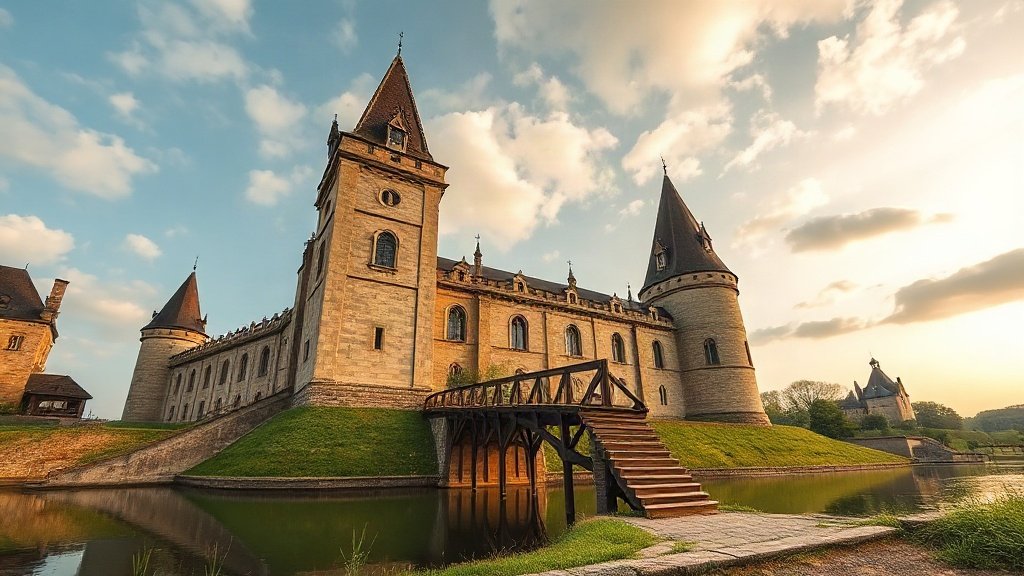
Illustration: AI-generated image
Tucked away in the industrial town of Hunedoara, Corvin Castle rises like a Gothic fantasy from the pages of a storybook. With pointed towers, drawbridges and a history that spans more than six centuries, it is often considered one of the most beautiful medieval castles in Eastern Europe. For travellers seeking a less crowded alternative to Bran Castle but with equal drama, Corvin delivers in spades.
History and Architecture
Built in the 15th century by John Hunyadi, a leading military and political figure of the Kingdom of Hungary, the castle was designed both as a fortress and a noble residence. Over the centuries it was expanded and restored, blending Gothic, Renaissance and Baroque elements. Its imposing silhouette, complete with high defensive walls, bastions and a deep moat, encapsulates the spirit of Transylvanian medieval architecture.
The castle’s most striking feature is its long, slender Knights' Hall, supported by marble pillars and adorned with ribbed vaults. The Diet Hall, the Council Hall and the circular stairways speak of a time when kings and knights walked these corridors. Though later periods brought decline, extensive restoration in the 19th and 20th centuries returned much of its former glory.
The Legend of the Raven
No visit to Corvin Castle is complete without learning the legend that gave the family its name. According to local lore, John Hunyadi was the illegitimate son of King Sigismund of Luxembourg and a beautiful woman named Elisabeth. To protect her honour, the king married her to a loyal knight named Voicu and gave the child a golden ring as a token of recognition. One day, while the family travelled, a raven stole the ring. John’s older brother shot the raven and recovered the ring, and from that day the raven with a ring in its beak became the family emblem. The Latin name Corvinus comes from corvus, meaning raven, and the bird appears throughout the castle’s decoration.
What to See
Start in the outer courtyard, where the well – said to have been dug by Turkish prisoners promised freedom – plunges 30 metres into the rock. Then walk across the wooden drawbridge into the inner stronghold. Highlights include the Knights' Hall, the gothic Chapel and the spiral staircases that seem made for photographs. Climb the towers for sweeping views over the town and the surrounding hills. The castle also houses a small museum with medieval weapons, furniture and artefacts.
The torture chamber and bear pit, while grim, offer a glimpse into the harsher realities of the period and are popular with visitors. Allow at least two hours to explore at a leisurely pace; the castle is larger than it first appears.
Practical Tips
Corvin Castle is located in Hunedoara, about 20 km south of Deva and easily reached by car or train from major Transylvanian cities such as Cluj-Napoca, Sibiu or Alba Iulia. The castle is open to visitors year-round, though winter hours are shorter. Wear comfortable shoes – many floors are uneven and staircases are steep. Photography is allowed, but avoid using drones without permission. Consider visiting early in the morning or on weekdays to enjoy the castle with fewer crowds.