Colacul: Romania's Ritual Braided Bread and Its Deep Symbolism
The colac is a braided, ring-shaped bread that appears at nearly every significant Romanian life event, carrying profound meanings of unity, continuity, and the cyclical nature of life.
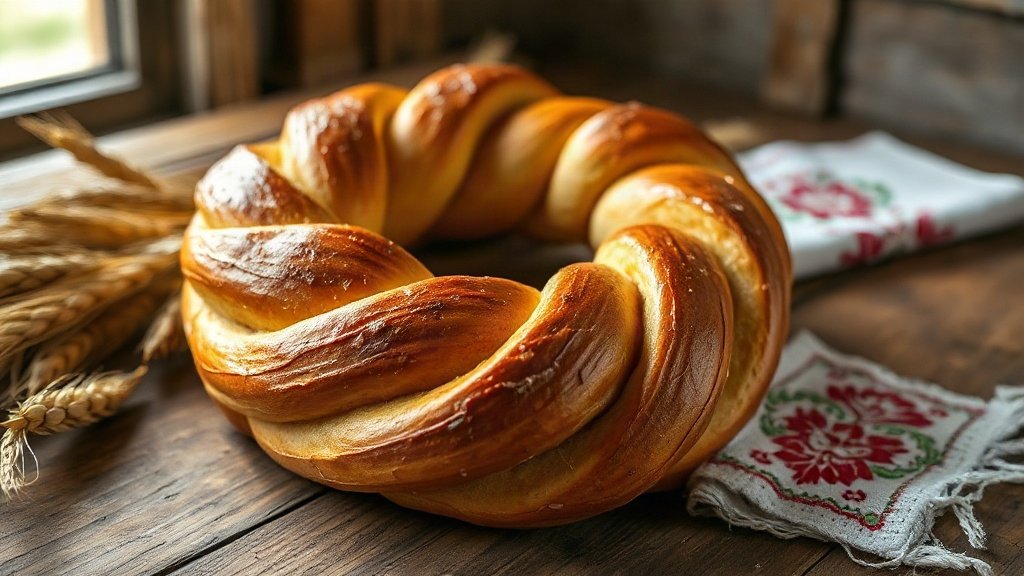
Illustration: AI-generated image
In Romania, the colac (plural: colaci) is much more than a loaf of bread. This braided, ring-shaped or oval bread appears at nearly every significant life event, from births and weddings to funerals and religious holidays. Woven from simple ingredients, the colac carries profound meanings of unity, continuity, and the cyclical nature of life.
A Symbol of Life and Unity
The circular or braided shape is not accidental. The ring represents the sun, eternity, and the unbroken circle of life and community. Braiding three strands symbolises the Holy Trinity in Orthodox Christian tradition, while also echoing pre-Christian beliefs about the interconnection of earth, sky, and underworld. Sharing a colac is an act of solidarity: breaking bread together seals bonds between families and neighbours.
Occasions for Colaci
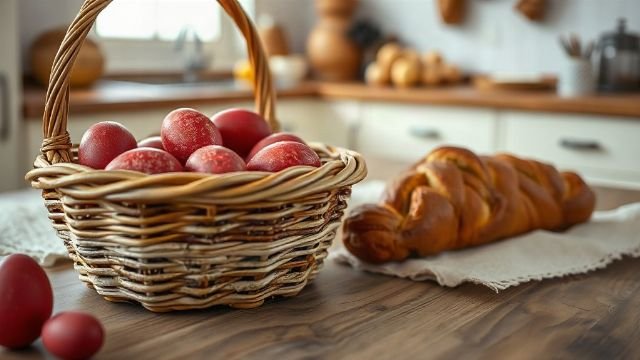
Colaci are central to many Romanian customs. At weddings, the godparents (nași) receive elaborately decorated colaci, sometimes baked into large, ornate shapes symbolising fertility and prosperity. At funerals and memorial services, colaci are distributed to mourners as a way of honouring the deceased and acknowledging communal support. During Christmas and Easter, special colaci are prepared: the Christmas colac may be round with a cross on top, while the Easter colac is often braided and studded with coloured eggs for the holiday table.
Crafting the Colac
Traditionally, the colac is made from a simple dough of wheat flour, water, yeast, and salt, sometimes enriched with eggs or milk for festive occasions. The dough is divided into long ropes, which are then braided or twisted into rings, spirals, or intricate knots. Regional variations exist across Romania, from the tall, twisted colac of Maramureș to the flat, round colac of Oltenia. The baking itself was once surrounded by ritual: the woman of the house would say prayers while shaping the bread, and the oven would be blessed before baking. Today, colaci are still made at home for special events or bought from local bakeries, but their symbolic weight remains undiminished.
For visitors to Romania, encountering a colac at a celebration is a chance to witness a living tradition that connects the present with centuries of custom. Whether offered at a wedding, a christening, or a holiday table, this humble bread carries the warmth of Romanian hospitality and the deep roots of its folk culture.