Bran Castle: Romania's Iconic Fortress of History and Legend
Perched on a rocky outcrop in Transylvania, Bran Castle draws visitors with its medieval architecture and enduring associations with the Dracula myth.
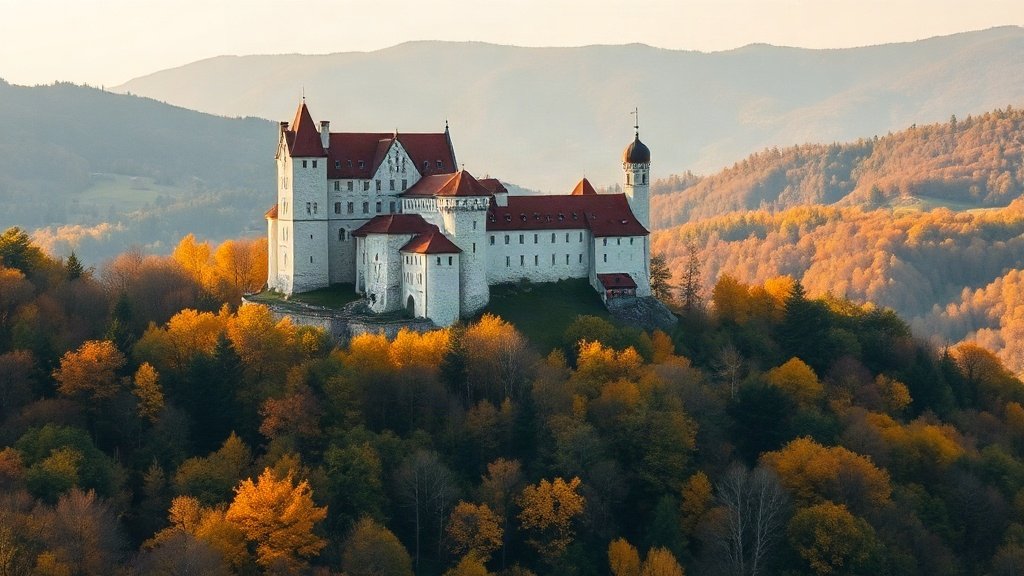
Illustration: AI-generated image
High on a rocky bluff in the Carpathian Mountains, Bran Castle looks as though it has been lifted straight from the pages of a Gothic novel. For many visitors, it is the definitive image of Transylvania, yet its real history is far richer than the vampire tales that have made it famous.
A Fortress with a Long History
The castle's origins date back to the early 13th century, when the Teutonic Knights built a wooden fort in the area. The stone fortress we see today was erected in the 14th century by the Saxons of nearby Brașov, who were granted the site by the Hungarian king to defend the Bran Pass, a vital trade route between Transylvania and Wallachia.
For centuries, Bran served as a customs point and defensive stronghold, collecting taxes from merchants and protecting the region from invaders. Its strategic position made it a prized possession, and it changed hands several times over the years.
In the early 20th century, the castle entered a new chapter. In 1920, it was gifted to Queen Marie of Romania, who fell in love with its romantic, medieval charm. She restored and furnished it, turning it into a summer residence and a symbol of the Romanian royal family. After the Second World War, the castle was seized by the communist regime and later became a museum, which it remains today.
Exploring the Castle
Visitors enter through a narrow stone courtyard, where the castle's asymmetrical towers and red-tiled roofs create a fairy-tale atmosphere. The interior is a maze of steep staircases, hidden passages and cosy rooms, many of which still display furniture and art from Queen Marie's time.
Highlights include the music room, the royal bedroom and a small chapel. A secret stone staircase, tucked inside a wall, connects the first and third floors – a detail that fuels the imagination of every visitor. From the upper terraces, there are sweeping views over the surrounding forests and the village below.
The Dracula Connection
No visit to Bran Castle is complete without confronting the legend. Bram Stoker never travelled to Romania, but his 1897 novel Dracula described a castle perched on a rock above a river valley – a description that many believe was inspired by Bran, though Stoker may have based it on images he had seen of other fortresses.
The association with Vlad III, the 15th-century Wallachian prince known as Vlad the Impaler, is equally tenuous. While Vlad is a national hero in Romania for his resistance against the Ottomans, there is no strong evidence that he ever lived at Bran, though he may have passed through the area. Nevertheless, the castle has embraced its role as "Dracula's Castle" for tourism, and you'll find plenty of vampire-themed souvenirs in the surrounding market.
Planning Your Visit
Bran Castle is located about 30 kilometres southwest of Brașov, a city well connected by train and bus to Bucharest. From Brașov, regular buses and minibuses run to the village of Bran, and the journey takes under an hour. If you drive, there is a car park near the castle entrance.
The castle is open to visitors throughout the year, though it is busiest during the summer months and around Halloween, when special events add to the spooky atmosphere. To avoid crowds, consider visiting early in the morning or on a weekday in spring or autumn.
Wear comfortable shoes, as the castle has many steps and uneven stone floors. And allow at least an hour to explore the rooms and enjoy the views from the terraces. For up-to-date information on opening hours and ticket prices, check the castle's official website before you go.