Apuseni Mountains: A Visitor's Guide to Romania's Karst Wonderland
Discover the Apuseni Mountains, a region of caves, gorges and traditional villages that remains one of Romania's least crowded natural escapes.
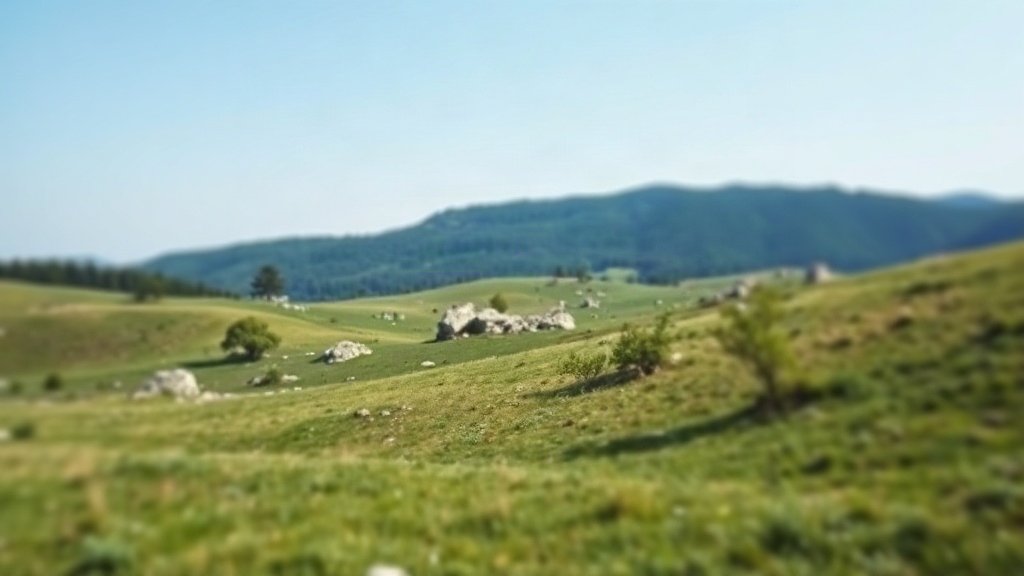
Illustration: AI-generated image
The Apuseni Mountains, in western Transylvania, are a hidden gem for travellers who love limestone scenery, deep forests and a slower pace of life. Unlike the soaring peaks of the Făgăraș or the busy trails of Bucegi, the Apuseni offer gentle ridges, rolling hills and a remarkable underground world carved by water over millennia. It is a region where you can hike for hours without meeting another soul, then spend the evening in a village where haystacks still dot the meadows and horse-drawn carts are a common sight.
Getting There and Around
The most convenient bases for exploring the Apuseni are Cluj-Napoca to the north and Oradea to the west. Both cities have airports and good road connections. From either, the journey into the mountains takes about one to two hours by car. Public transport is limited once you leave the main towns, so hiring a car is by far the best way to explore. The roads are generally well maintained but can be narrow and winding, especially in the higher areas. A GPS or offline map is strongly recommended.
What to See and Do
The heart of the Apuseni is the Padis Plateau, a high karstic area dotted with sinkholes, springs and ancient forests. Here you will find some of the region's most dramatic sights, including the Cetățile Ponorului, a colossal natural amphitheatre where a river disappears into a cave system. Marked trails lead around the rim and down into the chasm, though the full circuit requires a good level of fitness.
Elsewhere, the Apuseni are famous for their caves. The Scărișoara Ice Cave, with its permanent glacier, and the Bears' Cave, known for its bear skeletons, are the most popular, but dozens of smaller caves and potholes dot the region. Many are accessible only with a guide or proper caving equipment.
For a taste of traditional life, visit the villages of Rimetea, with its whitewashed houses and twin mountain backdrop, or the scattered hamlets of the Moti Land, where locals still practice transhumance and produce cheese in mountain huts. Hiking trails connect many villages, passing through flower-filled meadows and over wooden bridges.
Where to Stay and Eat
Accommodation is mostly in family-run guesthouses, known as pensiuni, which offer simple rooms and home-cooked meals. This is the best way to experience local hospitality and cuisine. Expect dishes based on potatoes, cabbage, pork and dairy, with plenty of forest mushrooms in season. The region's smoked cheese, brânză de burduf, is a speciality worth trying.
Best Time to Visit
Late spring through early autumn is the ideal period. June brings lush greenery and wildflowers, while September offers warm days and clearer skies. Winters are cold and snowy, and many mountain roads become impassable without a four-wheel drive. For hikers, the shoulder seasons are particularly pleasant, with fewer visitors and cooler temperatures.
Practical Tips
Trail markings follow the national system of coloured stripes on trees and rocks, but signage can be sparse, so carry a detailed map or use a GPS app. Weather changes quickly in the mountains, so pack layers and waterproofs even in summer. Mobile phone coverage is patchy in the valleys, so download offline maps before you set out. Finally, remember that this is a rural area where people live close to nature: close gates behind you, take your rubbish home, and respect local customs.